Standing Water in Yard After Rain: 5-Step Diagnosis Checklist
Key Takeaways
-
Standing water is a symptom, not the problem.
-
The fix depends on whether it’s surface runoff, roof discharge, seepage, or soil compaction.
-
Clay soil slows infiltration, but that doesn’t automatically mean you need a French drain.
-
The most important question: Where is the water coming from, and where can it go?
-
Start with the simplest controls (roof + grading) before trenching.
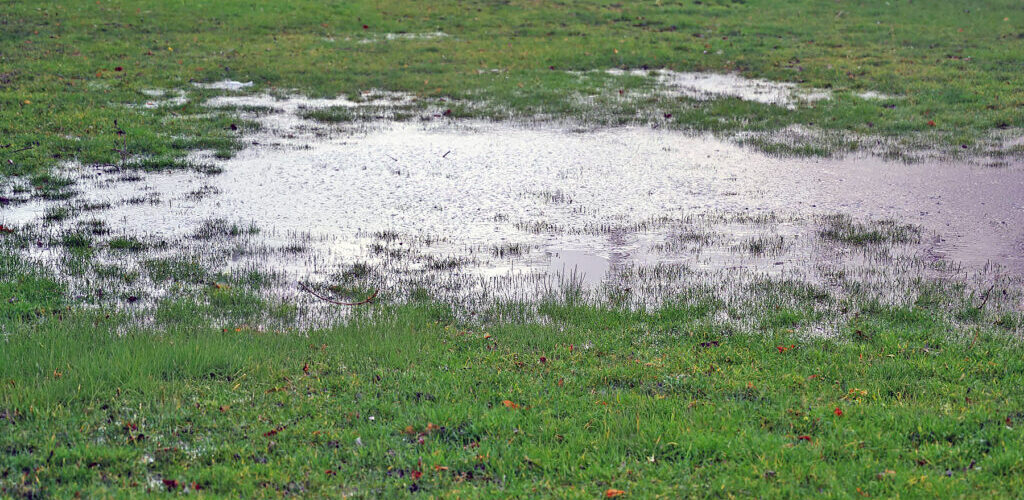
Standing water after rain is one of the most common drainage complaints in Southern Oregon yards.
But before anyone suggests trenching, piping, or excavation, the first step is diagnosis.
In the field, most yard water issues fall into four categories. The checklist below helps you figure out which one you’re actually dealing with.
If you want the bigger picture first: Drainage and Water Control in Southern Oregon.
Field move: the fastest way to diagnose yard water is to watch one decent rain. During the next storm, do three quick checks:
- Walk the perimeter and note any downspout overflow or splash-out.
- Look for moving water (a shallow “sheet flow” path) across the lawn.
- Check the low spot itself: is it being fed, or just holding water?
Here’s a 5-step checklist to diagnose standing water in your yard.
Step 1: How Long Does the Water Sit?
The timeline matters more than most people think. How quickly the water disappears is often the first clue about whether you’re dealing with surface flow — or something deeper.
Drains Within 24–48 Hours
- Likely surface runoff or minor compaction
- May improve with grading or shallow swales
- Often seasonal
Quick compaction clue: if footprints sink into the lawn during wet months, or water pools in the same shallow depressions even on “mild” storms, compaction and surface shaping are often bigger levers than underground pipe.
Sits for Days or Weeks
- Could be poor infiltration soil (clay)
- Could be seepage from uphill
- Could be a failed drainage system
If water consistently lingers in the same band on a slope, that leans toward seepage, not just surface flow.
Step 2: Where Is the Water Coming From?
Once you’ve looked at timing, shift your focus upstream. Water rarely “starts” where it pools — it usually begins higher and travels.
A) Is It Roof Runoff?
Look for:
- Downspouts discharging near corners
- Underground downspout lines backing up
- Concentrated flow paths from one roof section
Field note: if one corner of the yard is always wetter than the rest, start by confirming roof water isn’t being concentrated there.
If a buried downspout line is backing up (or the discharge point is too close), fix that before you dig anything: Downspout drain line clogged (signs + what actually fixes it).
B) Is It Surface Runoff Crossing the Yard?
Look during active rain:
- Is water moving across the lawn?
- Does it follow a shallow path?
- Is it coming from uphill properties?
If yes, shaping the flow may solve it. Start here: Swales for Surface Drainage.
Surface water problems are often solved above ground, not below it.
C) Is It Seepage or Lateral Flow?
Clues:
- Wet strip along the uphill side of the yard
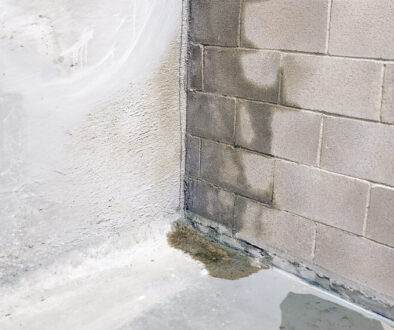
- Damp soil near retaining walls
- Crawlspace moisture on one side of the home
- Recurring wet band after long rains
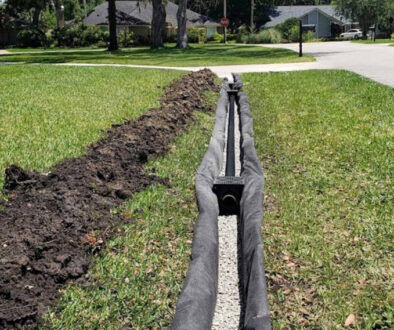
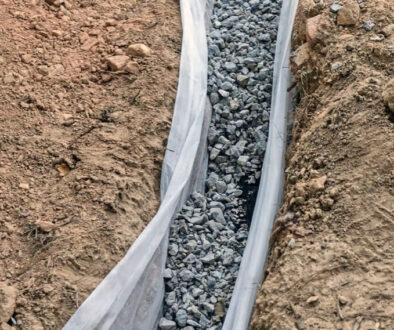
This is where French drains often make sense — if they have a real discharge plan. If your yard is clay-heavy or drains slowly in winter, read this next: Do French Drains Work in Clay Soil and Poor Infiltration Areas?.
Step 3: What Kind of Soil Do You Have?
Clay-heavy soils:
- Drain slowly when saturated
- Can crack when dry (and seem fine in summer)
- Often causes winter pooling
If your yard looks fine in summer but stays wet all winter, clay or poor infiltration may be the driver. Here’s the deeper breakdown: Do French drains work in clay soil and poor infiltration areas?
Step 4: Does the Water Have Somewhere to Go?
This is the question most homeowners skip.
Even if you:
- install a French drain
- dig a trench
- add rock
If the system has no discharge point, it becomes a wet trench.
Possible discharge paths:
- daylight outlet
- properly designed dry well
- approved storm tie-in (where allowed)
If your lot is flat and there’s no clear outlet, design matters more than pipe choice.
If someone proposes a dry well as the “outlet,” make sure it’s actually designed for your soil and loading — not just a hole filled with rock. More here: Dry wells in Southern Oregon: when they work (and when they don’t).
Step 5: Are You Treating the Symptom or the Cause?
Here’s the fast diagnostic summary:
| Symptom | Likely Cause | Typical First Move |
|---|---|---|
| Water moves across yard | Surface runoff | Swale / grading |
| Wet band on slope | Seepage | Curtain drain |
| Pooling at corner | Roof discharge | Downspout correction |
| Entire yard soggy | Clay + compaction | Surface control + selective drainage |
| Drain installed but yard still wet | Outlet failure | Inspect discharge |
When a French Drain Makes Sense
A French drain is usually appropriate when:
- Water is moving through soil, not just across it
- There’s a clear discharge plan
- Placement intercepts flow uphill of the wet zone
If the scenario matches seepage/lateral flow and you have a real discharge path, a French drain can be the right tool. Here’s the full overview: French drains in Southern Oregon (pros and cons).
If you’re pricing it out, start here: French drain cost in Southern Oregon.
Quick Takeaway
Standing water after rain is rarely solved by “just digging a trench.”
Start by answering:
- Is it surface runoff, seepage, roof discharge, or clay saturation?
- Where does the water start?
- Where can it safely discharge?
Once those three are clear, the right solution becomes obvious — and usually simpler than you think.
When to Call a Pro
Call for help when:
- Water is near the foundation or crawlspace
- The lot is flat and the outlet isn’t obvious
- You suspect hillside seepage
- You’re considering trenching without a clear discharge plan
- Multiple fixes have failed
Final Field Note
In drainage work, the mistake is rarely “not enough pipe.”
It’s usually this:
Water was collected… but never given a reliable place to go.
FAQs
-
Most often it’s surface runoff, clay-heavy soil, roof discharge concentration, or seepage from uphill. The fix depends on which one you’re dealing with.
-
Minor pooling may drain within 24–48 hours. Water that lingers for days suggests infiltration or discharge issues.
-
Not always. Surface runoff problems are often solved with grading or swales before trenching is needed.
-
Clay drains slowly when saturated. During winter rains, this can cause pooling even when the yard looks fine in summer.
-
Often correcting roof discharge or reshaping surface flow is cheaper than installing a full drain system.