“No Outlet” Drainage Problems (What To Do When Gravity Can’t Win)
A “no outlet” yard drainage problem means water can’t reliably leave the area by gravity—so it ponds, backs up, or resurfaces during storms. This guide explains the practical options when slope can’t win: reroute, regrade, intercept, infiltrate (with overflow), or pump.
Key Takeaways
“No outlet” means gravity drainage can’t reach a safe discharge point—so water collects, backs up, or resurfaces somewhere inconvenient.
Most “failed drainage systems” are actually no outlet systems pretending to be gravity systems.
Your best options are usually: reroute to daylight, regrade to create fall, intercept and redirect, or pump.
Infiltration can work in the right soil, but without overflow planning it becomes a buried holding tank.
If water is reaching a crawlspace, slab edge, or interior, treat it as high-stakes drainage, not a casual DIY project.
What “No Outlet” Actually Means
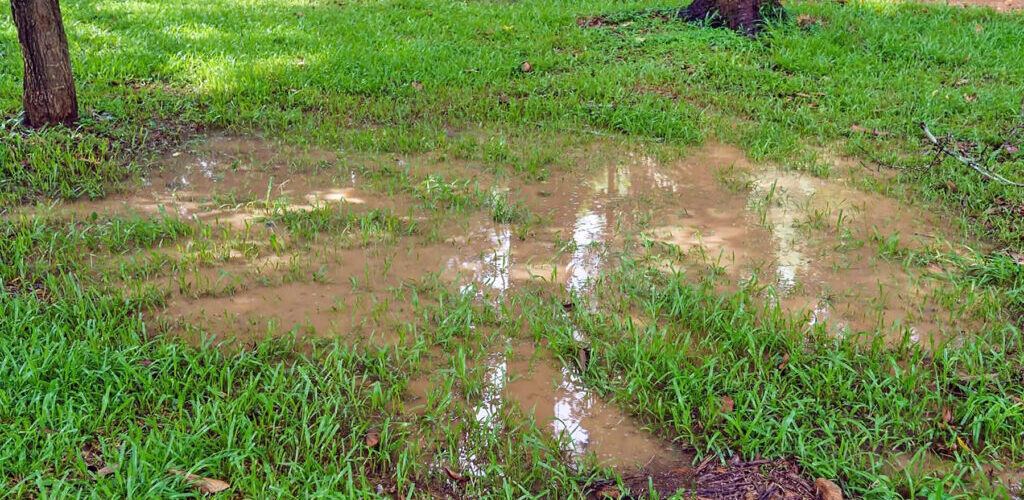
A “no outlet” drainage problem is exactly what it sounds like: water can’t reliably leave the problem area by gravity. The yard is a bowl, the lot is low, the outlet is uphill, or the only “exit” is through soil that can’t infiltrate fast enough in winter.
In the field, these look like:
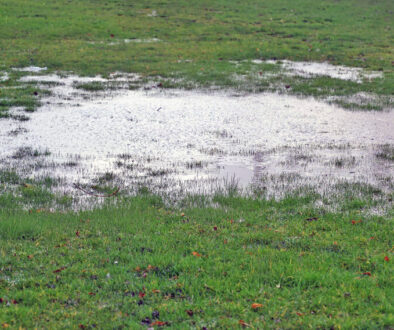
- a low backyard that stays wet long after storms
- a side yard trapped between structures and fences
- a driveway/garage slab that acts like a dam
- a drain line that “worked” until the first big storm, then backed up
The core issue: if water can’t move downhill to a safe exit, pipes and basins don’t magically create a slope.
If you want the bigger “whole-path” framework (source → flow → collection → discharge), start with Drainage and Water Control in Southern Oregon.
The Four Situations That Create “No Outlet” Problems
Before you choose a fix, it helps to identify *which* kind of “no outlet” you actually have. Most situations fall into a few repeat patterns, and each one points to a different best-first move. The most common is simply elevation: the low area is below every place you’d want the water to go.
1. The Yard Is Lower Than The Street or Any Safe Exit
If the low spot is below where you’d want to discharge (street, ditch, downhill side), gravity can’t move water there without help.
2. The Lot Has Flat Grades or “Back-Pitched” Areas
Even small flat zones can behave like no outlet during heavy rain—especially when soil saturates, and water can’t soak in.
3. Your “Outlet” Is Really Just Infiltration
A dry well or gravel pit might be the only “exit.” If the soil can’t infiltrate during winter saturation, your system becomes a storage.
4. The Drain Terminates Where Water Can’t Leave
Pop-ups in low soggy spots, daylight outlets buried by mud, or outlets discharging into already-saturated ground are common versions of “no outlet.”
The Quick Diagnosis Test (Field-Friendly)
Use this before you buy anything:
- If the area stays wet 24–72 hours after the last decent rain, treat it as a saturation/no outlet scenario.
- If your drain outlet isn’t visible and verifiable, assume it’s not reliable until proven otherwise.
- If you can’t describe where water goes during a hard storm, you don’t have a discharge plan yet.
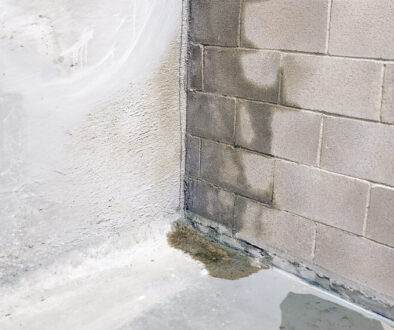
- If water shows up near the foundation or slab edge, prioritize safety and structure-adjacent planning.
What Works When Gravity Can’t Win
Once you’ve confirmed gravity can’t win as the site exists today, the question becomes whether you can change the rules of the game. The most reliable long-term solution is still the simplest: create a true gravity outlet by regrading, rerouting, or both—so water has somewhere to go without mechanical help.
Option 1: Create A Gravity Outlet (Regrade or Reroute)
This is the best long-term fix when it’s possible: make a fall where there wasn’t a fall.
Works best when:
- you can regrade enough to move water away from the low area
- you can reroute discharge to a safe downhill location
- the water source is mainly surface runoff (not hillside seepage)
If your issue is roof water feeding the low zone, fix that first with downspout discharge distance and routing.
Option 2: Intercept and Redirect (Surface or Subsurface)
Sometimes you can’t “drain the bowl,” but you can stop water from entering it.
Examples (conceptually):
- intercept surface water before it crosses into the low area
- intercept subsurface seepage before it reaches the yard/foundation zone
If you’re deciding whether this is surface flow or subsurface saturation, start with surface drainage vs underground drainage.
Option 3: Infiltration (Dry Wells and Similar)
Infiltration can be a smart tool when the soil infiltrates, and the incoming water is relatively clean.
Failure pattern to avoid: infiltration installed as the “outlet” with no overflow plan. That turns into a buried holding tank when the soil is saturated.
If you’re considering infiltration, read about dry wells in Southern Oregon before you commit.
Option 4: Pumping (Sump Pumps for Yard Drainage)
Pumping is the “create an outlet” option—useful when you truly can’t get gravity to a safe discharge point.
- the yard is lower than every safe gravity exit
- water can be collected predictably into a basin
- you have a safe discharge location
- you plan for maintenance and failure points
If you’re weighing the pump decision, start here: sump pumps for yard drainage in Southern Oregon.
Why Common Solutions Fail In No Outlet Yards
A lot of “drainage products” aren’t bad—they’re just being asked to solve a no-outlet problem they were never designed to handle. When the yard has nowhere to shed water, even good components turn into bottlenecks. The most common example I see is a pop-up emitter placed in the wettest part of the yard.
Pop-Up Emitters Installed In Low, Soggy Spots
Pop-ups look clean, but if the outlet lives in the wettest part of the yard, it becomes a mud bowl and stops opening reliably.
If you’re choosing between outlets, see pop-up emitters vs daylight discharge.
French Drains With No Discharge Plan
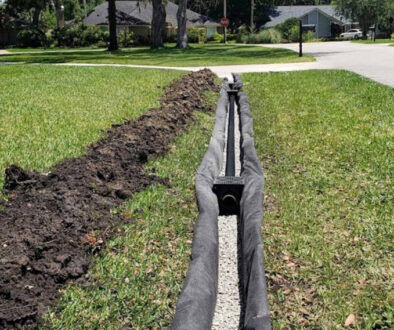
A French drain isn’t a magic sponge. If it can’t discharge, it fills and behaves like storage.
Trench Drains Without Outlet Capacity
A trench drain can intercept surface water, but if the outlet line can’t move volume away, it overflows—often right at the garage threshold.
“Just Add More Pipe”
Pipe doesn’t fix the slope. Longer runs can actually make failure more likely if there’s no fall and more places for sediment to settle.
Practical Priorities That Prevent Repeat Problems
No-outlet fixes get expensive fast when you start with parts instead of diagnosis. Before you buy basins, pipe, or pumps, make sure you’re not feeding the problem with preventable inputs like roof runoff, hardscape pitch, or uphill flow. The most repeatable wins usually start by reducing what’s entering the “bowl” in the first place.
Solve The Source Before You Buy Hardware
If downspouts or hardscape pitch are feeding the issue, fix that first. Hardware should be the last step, not the first.
Make Discharge Verifiable
You should be able to explain and verify where water exits during storms. Hidden, untestable systems become “mystery failures.”
Design For Winter Reality
No outlet systems fail when soil is saturated, and storms stack. Plan for the weather that actually happens.
Plan Overflow Behavior
Every system gets overwhelmed at some point. The difference between “works” and “fails” is where overflow goes.
When It’s A Red Flag
Bring in a pro when:
- water is reaching a crawlspace, slab edge, or interior
- you’re dealing with retaining walls, steep slopes, or structural constraints
- discharge might affect neighbors, sidewalks, or erosion zones
- the only “plan” is infiltration with no overflow route
- you suspect hillside seepage is feeding the wet zone
Final Field Note
“No outlet” problems aren’t about finding the perfect product. They’re about choosing the least-bad way to handle water when gravity doesn’t have a clear win. If you can create a gravity outlet, do it. If you can’t, your options narrow to interception, infiltration (with overflow planning), or pumping—each with tradeoffs you should understand before you dig.
FAQs
-
It means water can’t reliably leave the problem area by gravity. The yard is low, flat, or trapped, so water collects and backs up.
-
Not by itself. A French drain still needs a discharge plan. Without one, it fills and behaves like storage.
-
Sometimes—if soil infiltrates well and the system has overflow planning. In saturated winter soils, dry wells can act like buried holding tanks.
-
When there’s no safe gravity outlet and water can be collected into a basin and pumped to a safe discharge location.
-
Because capacity is exceeded, soil saturates, or the outlet can’t pass water fast enough—classic no outlet behavior.