How Long Do French Drains Last? (and Why They Fail Early)
Key Takeaways
A properly built French drain can last decades, but only if the outlet stays open and the system doesn’t silt in.
Most early failures are design + install issues, not “bad pipe.”
Clay soil and roof runoff mismanagement are two of the fastest ways to shorten lifespan.
If the drain can’t discharge by gravity, it’s more likely to become a wet trench than a drainage system.
You can often spot failure early by watching outlet flow during storms and checking for slow-drying zones.
French drains have a reputation for being “set it and forget it.” In reality, lifespan depends almost entirely on slope, filtration, and discharge — not the pipe itself.
If you want the broader context first, start here: Drainage and Water Control in Southern Oregon.
Here’s what that lifespan usually looks like in real-world installs.
How Long Do French Drains Usually Last?
Most French drains fall into one of three buckets:
- 10–15 years: common when the system is underbuilt, poorly filtered, or the outlet is unreliable
- 15–30 years: typical for solid installs with decent fabric/rock and a stable discharge
- 30+ years: achievable when the drain is properly designed, built with clean materials, and protected from silt and roof runoff overload
Field note: lifespan isn’t really about the pipe. It’s about whether the system stays open and keeps moving water.
What “Failure” Actually Looks Like
Most drains don’t fail all at once. They fade.
Look for:
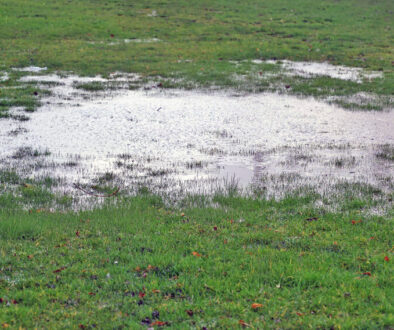
- the wet area returns slowly over seasons
- the yard dries out later and later each year
- the drain works in early storms, then seems to “stop helping”
- the outlet runs weak (or not at all) even during heavy rain
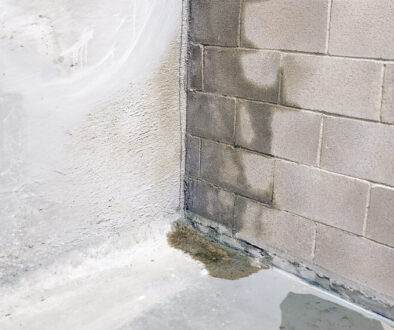
- water starts showing up in the same place it used to (low spots, retaining wall edges, crawlspace perimeter)
If the outlet isn’t flowing during steady rain, the system isn’t doing its job.
Why French Drains Fail Early
Here are the failure patterns that show up the most.
No Real Discharge Plan
This is the big one.
If the drain doesn’t:
- daylight to a stable outlet, or
- discharge to a correctly designed dry well, or
- connect to an approved system (where allowed)
Dry wells can work well in the right soils — but when they’re undersized or placed in heavy clay without a real outlet strategy, lifespan drops quickly.
Related reading: French Drains in Southern Oregon (Pros and Cons)
Wrong Slope (Or “Flat Pipe”)
French drains don’t need steep slope — but they do need consistent slope.
Early failure happens when:
- the trench has bellies/low spots
- the pipe is laid “mostly level”
- the outlet is higher than parts of the run
Field translation: water sits in the line, fines settle, and the system silts in faster.
Wrong Rock, Wrong Fabric, Or No Fabric
In many soils (especially clay), fines migrate.
Early failure happens when:
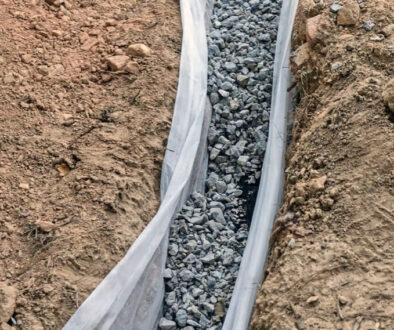
- the drain rock includes lots of small fines/dust
- the fabric is missing, torn, or the wrong type
- the rock bed is too thin, or the pipe is buried directly in native soil
If fines fill the voids in the rock, the drain loses capacity and becomes a clogged trench.
Roof Runoff Overwhelming the System
A French drain isn’t a substitute for basic roof water control.
If downspouts dump near the foundation — or a downspout line backs up — you can overload the soil and make it look like a drainage failure.
Start here if that’s in play: Clogged Downspout Drain Line (Signs + What Actually Fixes It)
Clay Soil + “Infiltration” Assumptions
In poor infiltration soils, the limiting factor is often getting water into the trench and getting it out of the system.
If the design assumes the water will “soak away,” clay can break that assumption.
If you’re working in heavy clay or poor infiltration areas, this becomes even more important: Do French Drains Work in Clay Soil and Poor Infiltration Areas?
Crushed Pipe Or Bad Backfill
This happens more than people think — especially when:
- thin-walled pipe is used in traffic areas
- trench is backfilled with heavy clay lumps
- compaction is done aggressively without proper bedding
How To Make a French Drain Last Longer
You don’t need to “overbuild.” You need to build the parts that matter.
Protect the Outlet Like It’s the Whole System
Because it basically is.
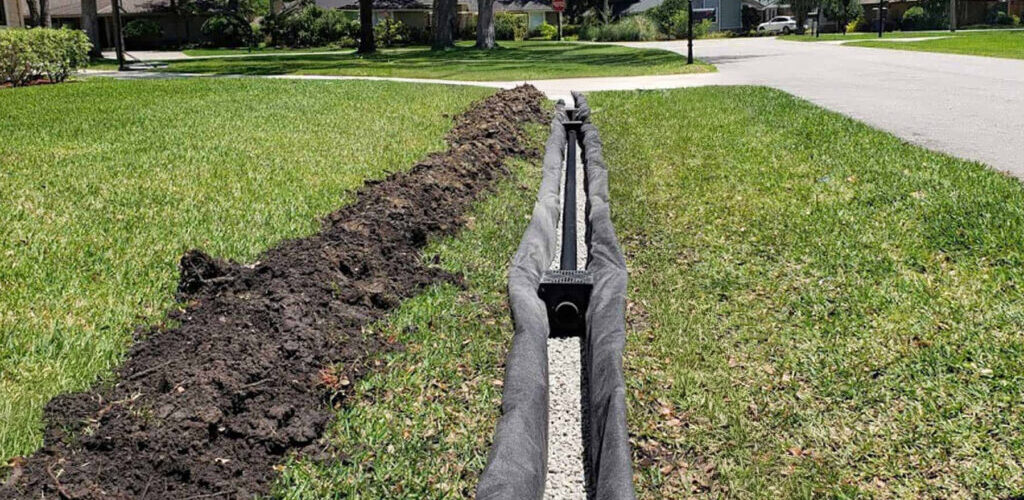
- keep outlets visible and accessible
- use a stable outlet point (no erosion, no burying)
- consider a basic debris screen where appropriate
- make sure discharge won’t freeze, clog, or get blocked by landscaping
If discharge relies on a dry well instead of daylight, proper sizing and placement matter more than the pipe itself.
Use Clean Materials (This Is Not a Place to “Save Money”)
- washed drain rock
- correct fabric choice and wrap
- proper pipe bedding
Keep Surface Water Out of the Trench
A lot of drains fail because they become the lowest point — and collect silt.
If surface runoff is part of the problem, sometimes the better first move is shaping flow: Swales for Surface Drainage
Quick Takeaway
A French drain can last a long time — but only if it stays open and keeps moving water. Early failures usually come down to no discharge plan, poor slope, clogging from fines, or roof runoff overwhelming the soil.
If you’re budgeting or comparing bids, this stays relevant: French Drain Cost in Southern Oregon
When to Call a Pro
Call for help when:
- the wet area is near a foundation/crawlspace
- the lot is flat and the outlet isn’t obvious
- you suspect hillside seepage (placement matters)
- hardscape crossings or deep excavation are involved
- you’re considering a dry well and want it sized/placed correctly
Final Field Note
If you want one question that predicts lifespan better than “what pipe do you use?” ask this:
“Where does the water discharge, and how do you make sure that outlet stays open in 5–10 years?”
FAQs
-
A properly built French drain can last 15–30+ years, and sometimes decades, depending on slope, filtration (fabric/rock), soil fines, and whether the outlet stays open.
-
Most early failures come from no real discharge plan, poor slope, clogging from fines, wrong materials, or roof runoff overloading the area.
-
They can. In many soils, especially clay-heavy sites, fine sediment can migrate into the rock bed if fabric/rock choices are wrong or the system collects surface silt.
-
Sometimes — if the system was built with accessible cleanouts and the outlet is reachable. If the rock bed is silted in, cleaning can be limited and replacement may be more cost-effective.
-
It can, mainly because clay sites often have slow intake when saturated and more fine sediment migration, making correct fabric/rock and a strong discharge plan more important.