Do French Drains Work in Clay Soil and Poor Infiltration Areas?
Key Takeaways
- Yes — but only if the system has somewhere to send water. Clay slows infiltration, so “soak it into the yard” is rarely the best plan.
- A French drain works best in clay when it intercepts water moving sideways (hillside seepage, perched water) and discharges to daylight, a dry well, or an approved system. (Ask Extension)
- In saturated clay, intake is the bottleneck. The pipe can be perfect and still not collect much water if the surrounding soil doesn’t allow it.
- Many “failed French drains” in clay are actually outlet problems (no slope, clogged outlet, or nowhere legal to discharge).
- Sometimes the cheaper fix is surface control (grading or a shallow swale) before you ever trench. (OSU Extension Service)
Clay soil is common in parts of Southern Oregon (including Rogue Valley areas), and it changes how drainage should be designed. Clay isn’t “undrainable,” but it doesn’t behave like sandy soil — it can infiltrate differently depending on moisture, structure, and whether the soil is cracked/dry versus saturated. (Natural Resources Conservation Service)
If you want the big picture first, start here: Drainage and Water Control in Southern Oregon.
What Clay Soil Changes About Drainage
Clay’s small pore spaces slow water movement through the soil, especially when compacted or saturated. Some clays also crack when dry, which can temporarily increase infiltration — but those cracks close once the soil wets up. (Natural Resources Conservation Service)
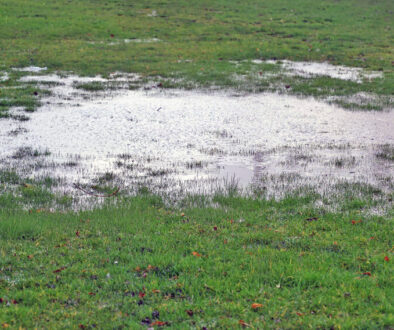
Field translation: a yard can look like it “drains fine” in late summer, then turn into a sponge all winter.
That’s why in clay-heavy neighborhoods, French drains should be treated as water-collection and transport systems, not “soakaway trenches.”
Quick field check: if the yard only pools during heavy rain and drains within a day or two, you may be dealing with surface flow and compaction. If it stays soggy for long stretches or shows up in the same band on a slope, that’s more consistent with seepage — the scenario where French drains tend to shine.
When French Drains Work in Clay
French drains can work extremely well in clay — but only in the situations they’re built for. The key is whether you’re intercepting subsurface movement (water moving through soil) or trying to “soak up” surface ponding.
Before we get into where they struggle, it helps to separate surface runoff from subsurface movement. French drains tend to perform best in clay when they’re intercepting water moving through the soil — not just water sitting on top of it.
Intercepting Hillside Seepage and Lateral Flow
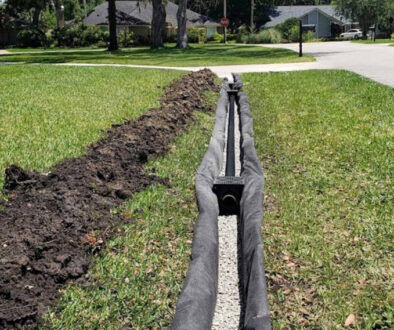
A French drain can perform well in clay when it’s installed like a curtain drain: placed uphill of the wet zone to intercept water moving through the soil and redirect it away. (Ask Extension)
Common wins:
- soggy strip along the uphill side of a yard
- water collecting near a retaining wall
- wet crawlspace edge on the uphill side of the home
Drying Out Faster After Rain
Even when clay doesn’t feed water into the trench quickly, French drains can still help by shortening the “dry-out time” after long rainy periods. (Ask Extension)
This is the difference between “mud until June” and “usable by spring.”
When You Can Discharge by Gravity
A French drain in clay is far more reliable when it can daylight to a downhill outlet with a consistent slope. If the water can’t leave the system, the system becomes a gravel-filled storage trench — and in clay, storage tends to stay wet. (This Old House)
When French Drains Struggle or Fail in Clay
This is the failure point in a lot of installs. Without a consistent slope and a defined discharge path, a French drain in clay turns into a storage trench — not a drainage system.
Flat Lots With No Outlet
On flat ground with rain-driven ponding (not seepage), a French drain can be a poor tool because water doesn’t move through saturated clay into the trench very well. (Ask Extension)
If there’s no slope and no discharge plan, the trench can become the wettest part of the yard.
“Infiltration” Designs in Poor-Draining Soil
If a plan assumes water will infiltrate into the surrounding soil, clay can break that assumption. NRCS guidance notes that clayey soils can have slow infiltration when moist, especially without good structure/aggregation. (Natural Resources Conservation Service)
Wrong Materials or No Fabric
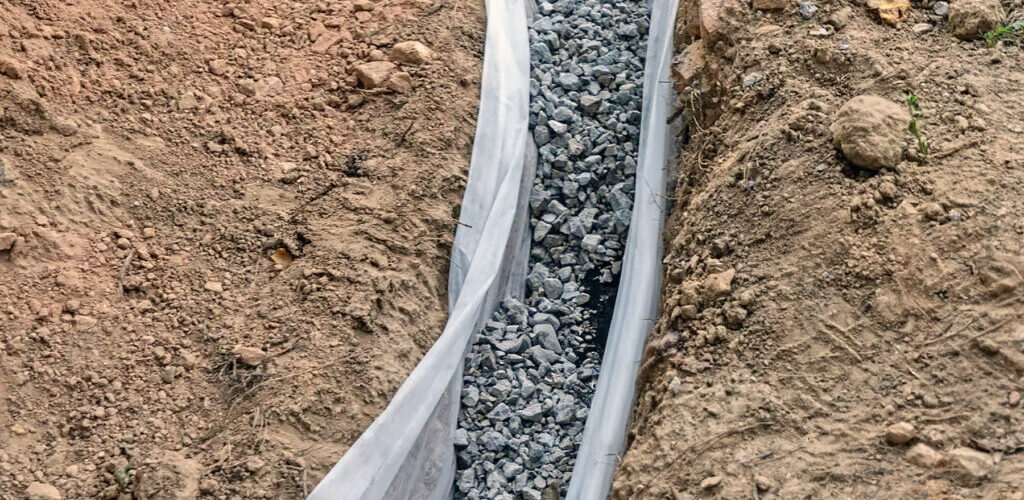
In clay, fines migrate. If the rock/fabric system is wrong, silt fills the voids, and the drain loses capacity over time.
Field note: in clay soil, this kind of clogging often shows up as a drain that “worked for a season” and then slowly stopped improving the wet area.
The Most Important Question in Clay Soil
Where does the water go once it’s in the pipe?
Because clay doesn’t “drink” water quickly, the outlet strategy matters more than the trench itself.
- Is there consistent slope? (gravity systems need it)
- Is the outlet protected? (screened, stable, and not prone to clogging)
- Is the discharge location safe? (won’t erode or create a problem downhill)
Common Discharge Options in Southern Oregon
- Daylight outlet to a safe downhill location (best when available)
- Dry well (works when designed for your site, but adds cost and needs the right conditions)
- Storm tie-in (only when allowed/appropriate—jurisdiction rules apply)
If you’re inside city limits, it’s worth scanning local stormwater guidance before anyone proposes a tie-in. Here’s the City of Medford’s overview: Medford’s Stormwater Program.
What To Do First in Clay Before You Spend on Trenching
Before you price out trenching, confirm the water isn’t starting at the roofline. In clay soil, especially, concentrated roof discharge can overwhelm one side of a yard and make it look like a “soil problem” when it’s really a runoff problem.
1) Fix Roof Runoff and Downspouts
A surprising number of “yard drainage problems” are actually roof discharge problems. If a downspout line is clogged or dumping at the foundation corner, fix that before you trench: Clogged Downspout Drain Line (Signs + What Actually Fixes It).
2) Use Surface Control Where You Can
If the problem is water moving across the surface, grading is often the first lever. A shallow swale can sometimes solve surface flow for less than trenching — especially when the water is moving across the yard, not seeping up from below. See: Swales for Surface Drainage.
3) Improve Infiltration Where It’s Realistic
In clay, improving infiltration is usually about soil structure, not sand-dumping. OSU Extension discusses clay soil challenges and the role of organic matter/aggregation. (OSU Extension Service)
French Drain Design Notes That Matter More in Clay
Once you’ve confirmed a French drain is actually the right tool, the next step is understanding what makes it work in clay. In poor infiltration soils, performance has less to do with “adding more rock” and more to do with intercepting the right water at the right depth and giving it a reliable path out.
Depth and Placement Beat “More Gravel”
In clay, you’re often trying to intercept a specific flow path (seepage line or perched water). Placement is everything.
Clean Rock + Correct Fabric = Longevity
If fines migrate into the system, it clogs. The goal is to keep soil out of your drain rock while letting water through.
Longer Isn’t Always Better
Some guides note that clay-rich soils may require longer drains or additional solutions. (This Old House)
But in the field, “longer” only helps when it improves slope, interception, or discharge — not when it just adds a trench with no outlet plan.
Quick Takeaway
French drains can work in clay soil — but they’re not magic soak trenches. In poor infiltration areas, they succeed when they intercept the right water and have a real discharge plan (daylight, dry well, or approved tie-in).
If you’re still deciding whether a French drain is the right tool, the next clean step is: French Drains in Southern Oregon (Pros and Cons).
And if you’re budgeting the project, see: French Drain Cost in Southern Oregon.
When to Call a Pro
Call for help when any of these are true:
- the lot is flat and you don’t have a clear outlet
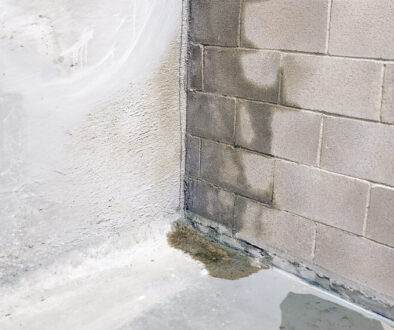
- the wet area is near the foundation or crawlspace
- you suspect hillside seepage (needs correct placement)
- discharge rules are unclear (storm tie-ins aren’t “wing it” territory)
- you’re considering a dry well and want it sized and located correctly
Final Field Note
In clay, the best drainage installs usually start with one on-site diagnosis:
“Is this a surface runoff problem, a seepage problem, or a roof discharge problem?”
Answer that first, and the “right” solution (and price range) tends to become obvious.
FAQs
-
Yes—if they have a real outlet and are placed to intercept water movement. In saturated clay, the limitation is often getting water into the trench and getting it out of the system.
-
Most failures come from no slope/outlet, clogged outlets, or designs that assume the soil will infiltrate quickly. Clay can move water slowly when wet, so discharge planning matters.
-
Sometimes. In heavy clay, dry wells can hold water longer, so performance depends on soil conditions, sizing, and placement. If infiltration is very slow, you may need a different discharge strategy.
-
For surface runoff, often yes. If the water is running across the yard during storms, shaping flow with grading/swales can be simpler than trenching.
-
You can on simple runs with safe access and a clear discharge point. DIY gets risky when slope is hard to maintain, the outlet isn’t obvious, or the work is near foundations/hardscape.