Zinc vs Copper Strips for Moss Prevention: What Works Best?
If you’re dealing with roof moss in Southern Oregon, zinc and copper strips are two of the most common “set it and forget it” prevention upgrades people ask about.
They can help — but only when they’re used the right way (and at the right point in the maintenance cycle). Here’s how each metal works, what it actually changes on a roof, and when the upgrade is worth paying for.
Key Takeaways
- Both zinc and copper strips can reduce regrowth along the roof’s runoff path.
- Copper usually outperforms zinc in heavy canopy / slow-drying conditions.
- Neither option replaces cleaning or debris control.
- Strips work best right after moss removal — before growth turns “mechanical.”
- In Southern Oregon, shade + drying time drive moss more than rainfall totals.
Why Metal Strips Help Prevent Moss
Zinc and copper strips work through a simple mechanism:
When rainwater flows over the metal, it carries trace amounts of metal ions down the roof surface. Those ions create an environment that inhibits moss and algae growth.
Think of strips as a slow, rain-activated deterrent. They don’t “treat” a roof — they slightly change the runoff conditions along the path where water flows.
That’s why they work best after the roof is already cleaned and the surface is back to a baseline.
The key word is gradual.
Strips don’t remove moss. They help slow regrowth over time — especially after a roof has already been cleaned.
Zinc Strips: The Budget-Friendly Option
Zinc is the go-to for homeowners who want a simple, low-cost prevention layer—especially after a roof has been cleaned. Here’s the mechanism behind it, and why results depend on water flow and exposure.
How Zinc Works
Zinc releases ions when exposed to water. As rain moves down the roof slope, those ions disrupt moss growth along the runoff path.
Pros of Zinc
- Lower cost
- Widely available
- Easier to install
- Effective for light-to-moderate exposure
Limitations of Zinc
- Shorter lifespan than copper
- Less potent ion release
- Can lose effectiveness as oxidation builds
- Limited coverage width per strip
In Southern Oregon, zinc can be effective on:
- Sun-exposed slopes
- Homes with a moderate canopy
- Roofs that already follow a maintenance cycle
But in heavy shade with thick debris accumulation, zinc alone rarely solves the problem.
Copper Strips: Higher Performance, Higher Cost
If zinc is entry-level prevention, copper is the long-game strategy. Its ion release is more aggressive and more durable over time. Here’s what that means in practical, roof-level terms.
How Copper Works
Copper releases stronger ions that inhibit biological growth more aggressively than zinc.
It tends to:
- Provide broader runoff effectiveness
- Last longer
- Maintain performance over more years
Pros of Copper
- Longer lifespan
- Stronger moss inhibition
- More consistent performance over time
- Often preferred on higher-end roofing systems
Limitations of Copper
- Higher upfront cost
- More noticeable aesthetic (if exposed)
- Still dependent on rainfall patterns
Copper generally performs better in:
- Heavy canopy neighborhoods (Ashland, Jacksonville)
- North-facing slopes
- Homes with recurring moss issues
But even copper cannot compensate for thick debris accumulation or structural moisture issues.
Do Zinc or Copper Strips Remove Existing Moss?
No.
Strips are preventative — not corrective.
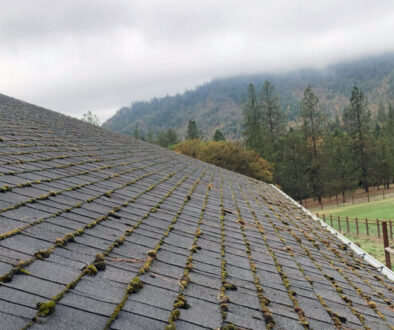
If moss is already thick and rooted, it should be removed first — and the method matters more than most homeowners realize. Strips help slow regrowth after you reset the surface, but they won’t correct an existing problem.
This is where timing matters.
Strips are most effective when installed:
- Immediately after controlled moss removal
- On newer roofs with minimal granule loss
- Before moss becomes mechanical instead of cosmetic
If you’re unsure how moss behaves regionally, it comes down to drying cycles more than rainfall totals. Roofs that stay damp longer grow moss faster — especially shaded slopes.
How Long Do Zinc and Copper Strips Last?
Zinc: often 5–10 years, depending on exposure
Copper: often 15+ years
Actual lifespan depends on:
- Rainfall frequency
- Roof pitch
- Sun exposure
- Debris buildup
- Metal thickness
Strips at the ridge only protect the runoff path below them. Wide roofs may require multiple placements.
What Do Zinc and Copper Strips Cost in Southern Oregon?
Cost depends on roof size, slope access, and how many strips are required.
Material Cost (Approximate)
- Zinc strips: Lower-cost material option
- Copper strips: Higher upfront material investment
Copper can cost significantly more per linear foot than zinc, but it typically lasts longer before replacement.
Installation Cost Factors
Installation pricing varies based on:
- Roof pitch and walkability
- Two-story access
- Number of ridgelines
- Whether the installation is paired with moss removal
Most homeowners choose to install strips at the same time as a roof cleaning, which reduces separate labor setup costs.
If you’re already addressing moss growth, it often makes sense to discuss prevention during that service — rather than staging the roof twice.
When evaluating strip installation, it helps to understand how roof cleaning is typically priced in this region — since slope, access, and moss thickness all influence labor far more than the metal itself. The same variables that affect overall roof cleaning cost in Southern Oregon often determine whether it makes sense to add prevention at the same time.
Long-Term Cost Perspective
Zinc may cost less upfront but require earlier replacement.
Copper costs more initially, but it often spreads that cost across a longer lifespan.
Neither eliminates maintenance.
Prevention should be evaluated in the context of the overall roof lifecycle — not as a one-time fix.
Installation Considerations
From an inspection standpoint, the biggest risk isn’t the strip — it’s the fastening. Poor installation can create leak points or damage brittle shingles.
- Strips are typically installed near the ridge.
- They must be secured without damaging shingles.
- Improper fastening can create leak points.
- Visible strip exposure can affect curb appeal.
On aging or brittle roofs, installation must be careful to avoid cracking tabs.
Where Should Zinc or Copper Strips Be Installed?
Most strips are installed near the ridge so rainfall can carry ions down the longest possible runoff path.
A few practical notes:
- Coverage is directional: a strip protects the roof area below it (along the water flow path).
- Complex roofs may need more than one strip line: dormers, upper roofs, and multiple ridges can create “shadow zones” where runoff doesn’t reach.
- Valleys aren’t ideal strip locations: valleys collect debris and concentrate water flow—great for moss growth, but not always practical for strip placement.
On roofs with multiple sections, prevention is most effective when strips are placed to protect the north-facing and shaded slopes first.
The Southern Oregon Variable
This is where context matters.
In Southern Oregon:
- North-facing slopes dry more slowly
- Mature canopy traps debris
- Winter moisture cycles are long
- Summer UV is intense
That means:
- Moss regrowth speed varies slope to slope
- Debris management matters more than metal type
- Prevention must align with the exposure pattern
A zinc strip in a heavily shaded valley will not outperform basic debris control.
Prevention works best when paired with:
- Predictable cleaning cycles
- Valley debris management
- Proper seasonal timing
- Ventilation and moisture control
Metal strips are a tool — not a cure.
Homes in Ashland, Jacksonville, and older, tree-dense neighborhoods often see different moss patterns than those in newer, more exposed developments. Two houses on the same street can have completely different regrowth cycles based solely on canopy and slope orientation. That’s why the prevention strategy should match exposure — not just material choice.
If you want the quick answer: zinc is usually “good enough” for sunnier, lower-debris roofs on a consistent maintenance cycle. Copper is usually worth it when moss comes back fast due to shade, canopy, or north-facing slopes.
Zinc vs Copper: Side-by-Side Comparison
| Feature | Zinc | Copper |
|---|---|---|
| Upfront Cost | Lower | Higher |
| Longevity | Moderate | Long |
| Moss Inhibition Strength | Moderate | Stronger |
| Best For | Light-to-moderate exposure | Heavy canopy / recurring growth |
| Aesthetic | Subtle | Can patina over time |
| Maintenance Replacement | Sooner | Later |
Neither metal type changes the underlying moisture dynamics of a roof. They influence biological growth — not structural drying. Ventilation, debris control, and sun exposure still determine long-term performance.
When Strips Make Sense
Strips are most effective when:
- The roof is structurally healthy
- Moss is caught early
- The homeowner wants passive prevention
- Cleaning frequency is being reduced — not eliminated
They are less effective when:
- Shingles are near end-of-life
- Debris constantly accumulates
- Moss is thick and rooted
- Structural moisture issues exist
Field Guide Perspective
Zinc and copper strips both work.
Copper usually works better.
Neither replaces maintenance.
In Southern Oregon, exposure pattern often determines moss behavior more than metal choice.
If moss is light and the roof is healthy, strips can slow regrowth meaningfully.
Moss in this region behaves differently than in drier climates. It tends to root, thicken, and lift edges once moisture cycles stack up over time — which is why understanding why moss grows so aggressively in Southern Oregon changes how you approach prevention.
Prevention works best when paired with:
- Controlled cleaning
- Debris management
- Seasonal timing
- Realistic expectations
Strips are a supporting strategy.
Not the strategy.
Strips make the most sense when they’re part of a broader maintenance plan — one that accounts for debris control, ventilation, cleaning intervals, and seasonal timing. In Southern Oregon, long-term roof performance depends on how all of those factors interact across the life of the roof.
FAQs
-
No. They help slow regrowth but do not eliminate moss entirely.
-
Not usually. They mainly protect the area below the strip along the water flow path. Complex rooflines, dormers, and separate upper/lower sections often need multiple placements to avoid “shadow zones.”
-
Often yes for heavy canopy or recurring moss issues. On lightly exposed roofs, zinc may be sufficient.
-
When installed properly near the ridge without puncturing exposed areas, they should not cause damage.
-
No. They rely on rainfall to carry metal ions down the roof surface.
-
Yes, but caution is required. On brittle or aging shingles, improper fastening can cause cracking or tab damage. If a roof is near the end of its lifespan, prevention may not be cost-effective compared to planning for replacement.
-
In some cases, copper runoff can leave minor staining over time, especially on light-colored surfaces. Proper placement and controlled exposure reduce this risk. Zinc is typically less noticeable.