Why Gutters Fail Faster in the Rogue Valley
Key Takeaways
- Rogue Valley dry summers “bake” debris into gutters, making clogs harder and heavier.
- Fall storms can overwhelm partially blocked gutters and expose weak seams fast.
- Pine needles + oak leaves behave differently—and require different prevention tactics.
- Overflow doesn’t just damage gutters; it can create fascia, siding, and foundation problems.
- A simple seasonal inspection rhythm prevents most early failures.
If you’ve owned a home in the Rogue Valley for any length of time, you’ve probably noticed something: gutters here don’t “age gracefully.” They clog fast, overflow suddenly, and small issues (like a tiny drip at a seam) can turn into bigger problems by the time the first real storms roll in.
That’s not your imagination — it’s a regional pattern. The Rogue Valley’s mix of dry summers, tree-heavy neighborhoods, wind events, and sudden seasonal rain creates a perfect environment for gutters to fail sooner than homeowners expect.
This guide breaks down why it happens and what Southern Oregon homeowners can do differently to keep their gutter system working the way it should.
Rogue Valley Conditions That Accelerate Gutter Problems
In the Rogue Valley, a solid gutter maintenance plan matters more than most homeowners realize — because our long dry spells and sudden seasonal storms put extra stress on the entire system. Here’s what local conditions are doing behind the scenes, starting with the way dry summers turn everyday debris into stubborn clogs.
Dry Summers Turn Small Debris Into Hard Clogs
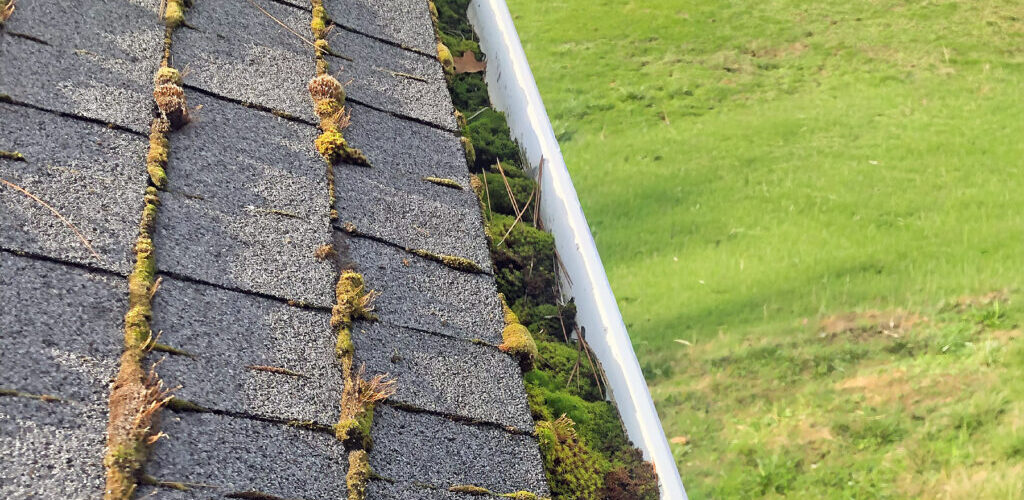
In wetter climates, debris stays softer and breaks down more gradually. In the Rogue Valley, long dry stretches do the opposite: they bake debris into a dense mat. Dust, pollen, roof granules, leaf fragments, and needles compress into something that acts like a filter pad.
So when rain finally returns, water doesn’t flow through and out — it backs up, finds the nearest weak point (seams, end caps, or low spots), and spills where you don’t want it.
Fall Rain Arrives Fast and Exposes Weak Points Immediately
A common local failure pattern looks like this:
- Summer ends, and debris accumulates quietly.
- The first meaningful storm hits.
- Gutters overflow “out of nowhere,” even if they seemed fine in August.
What’s happening is simple: your gutters didn’t suddenly break — they were already loaded, and the first storm is when the system gets stress-tested.
Wind Events Move Debris Into the Wrong Places
Even if you don’t have a ton of trees directly over your roof, Rogue Valley wind can still deliver:
- needles and small leaf fragments
- seed pods and blossoms
- fine dust that packs into corners and outlets
Wind doesn’t just add debris — it pushes it into the worst locations: valleys, corners, behind gutter guards, and downspout outlets.
Shade and Microclimates Create Uneven Moisture
Many Rogue Valley neighborhoods have a mix of sun and shade rooflines. That matters because shaded sections stay damp longer during the wet season, which can contribute to:
- stubborn debris staying lodged
- organic buildup in the gutter line
- more frequent outlet blockages on one side of the home
This is why homeowners often see “the problem corner” — the same downspout, the same roof edge, every year.
The Biggest Local Culprits (Needles, Leaves, and Roof Debris)
Not all gutter debris behaves the same. In Southern Oregon, a few types cause most of the trouble.
Pine Needles: The Slow Stack That Becomes a Dam
Pine needles are sneaky. They:
- slide easily into gutters
- align into tight bundles
- form a mat that still looks porous — until it isn’t
Needles also love downspout outlets. A handful of needles can catch granules and dust, which quickly becomes a plug.
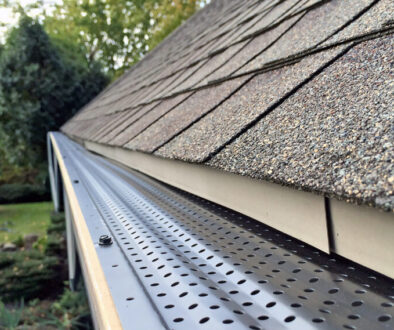
In some cases, gutter guards can reduce how much debris makes it into the trough — but in Southern Oregon, needles and fine grit can still slip through and collect right where it matters most: the outlets. That’s why oak leaves can be especially problematic, because they tend to clump and block openings fast.
Oak Leaves: The Outlet Blocker
Oak leaves tend to clump and fold, which makes them excellent at blocking:
- corners
- elbows
- downspout openings
- narrow sections behind guards
They’re also the type of debris that can “look cleared” on top while still clogging the outlet underneath.
Roof Granules, Dust, and Pollen: The Compaction Layer
Even in homes with fewer trees, you can get a heavy gutter load from:
- roofing granules (common as roofs age)
- valley dust
- spring pollen
- shingle grit + tiny organic fragments
This is what turns normal leaf/needle debris into that dense summer-baked mat.
That compaction effect is also why how often you should clean your gutters depends so heavily on your roofline, tree cover, and the time of year here in Southern Oregon. And once that buildup starts restricting flow, the system usually gives a few early clues before it turns into full-on overflow.
Early Warning Signs Your Gutters Are Being Stressed
This section is intentionally brief so it doesn’t compete with your broader diagnostic hub. Think of these as “stress signals” that Rogue Valley conditions are catching up to your system:
- Overflow during moderate rain, not just heavy downpours
- Dripping at seams or end caps during a storm
- Water running behind the gutter (between the gutter and fascia)
- One downspout that always clogs first
- Splash marks or erosion beneath a single section
If you’re trying to pinpoint whether you’re dealing with a simple clog or a bigger failure pattern, our guide on signs your gutters are failing walks through the most common symptoms and the smartest next steps. From there, here’s what Rogue Valley homeowners should do differently to stay ahead of these issues in the first place.
What Rogue Valley Homeowners Should Do Differently
Most gutter problems in the Rogue Valley aren’t caused by one big storm; they build quietly over months, then show up all at once when conditions change. The simplest way to stay ahead of that cycle is to treat gutter care as a seasonal routine, not a once-a-year task.
Use a Seasonal Rhythm, Not a “Once-a-Year” Approach
For many Southern Oregon homes, the most effective gutter plan isn’t a single cleaning — it’s a simple check-and-clear rhythm:
- Late summer (Aug–Sep): clear dry-compacted buildup before fall storms
- Mid-fall (Oct–Nov): remove leaf load after the drop begins
- After major storms: quick inspection for outlet clogs and overflow points
This doesn’t mean you must do full cleanings three times. It means you inspect at the right times, so problems don’t build invisibly.
Treat Downspouts Like the “Heart” of the System
A gutter can be 90% clear and still fail if the downspout outlet is blocked. Rogue Valley debris loves outlets.
Quick homeowner check (safe from the ground):
- during rainfall, confirm each downspout is discharging water
- after storms, look for overflow marks near elbows/outlets
- watch for one corner that “dumps late” or barely runs
When a downspout is slow, delayed, or inconsistent, the issue isn’t always the gutter run itself — it’s often what’s happening at the outlet or where the water is trying to exit. Our guide to downspouts and drainage breaks down what “normal” discharge should look like and where that water should actually go. From there, the next step is figuring out which roofline or corner keeps collecting debris first — your home’s “problem edge.”
Identify Your “Problem Edge”
Most homes have one roofline that collects the most debris — typically:
- the side under overhanging trees
- the shaded north-facing edge
- the area below a valley roof line
- the corner where wind deposits needles
Once you identify it, you can focus attention where it matters instead of treating the whole house equally.
Be Realistic About Gutter Guards in This Region
Gutter guards can help in specific situations — but in the Rogue Valley, they can also create hidden issues, especially with fine debris and needles.
A simple rule of thumb:
- If debris is mostly large leaves, some guard styles can reduce volume.
- If debris is mostly needles + dust + pollen, guards can trap material in ways you can’t see.
That hidden buildup is exactly why many homeowners end up asking whether gutter guards actually work here — because a system can look protected from the ground while the outlets slowly choke off over time. And once performance starts slipping, the next question becomes whether you’re dealing with something a simple cleanout fixes, or a situation that calls for repair or even replacement.
Cleaning vs. Repair vs. Replacement: A Quick Decision Guide
When gutters “fail,” homeowners often assume it’s just clogging. In reality, there are three different buckets:
Cleaning Problem: Flow Issue
Common signs:
- overflow improves after clearing debris
- water runs correctly once the downspouts are open
- no visible sagging, separation, or recurring drips
Repair Problem: Structure and Alignment Issue
Common signs:
- gutters hold standing water after rain
- persistent drips at seams even when clear
- gutters pulling away from the fascia
- overflow repeats in the same spot
When overflow keeps showing up in the same location, even after debris has been cleared, that’s usually a sign the issue is structural, pitch, hangers, seams, or the outlet itself, not just buildup. This is where the repair vs cleaning distinction matters, because the fix changes depending on what’s actually failing.
Replacement Problem: Systemic Failure
Common signs:
- widespread corrosion or cracking
- multiple low spots + recurring leaks
- chronic overflow despite proper cleaning
- fascia damage behind the gutter line
Even when the underlying issue is structural, it helps to understand the baseline gutter cleaning cost in Southern Oregon, and how quickly expenses can climb when overflow leads to repairs or water damage. With that in mind, here’s a practical prevention checklist Rogue Valley homeowners can use to reduce the odds of problems returning.
Practical Prevention Checklist for Rogue Valley homes
If you want the shortest “do this, not that” list:
- Clear dry-compacted debris before fall storms (late summer / early fall)
- Confirm every downspout discharges during the first heavy rain
- Watch for one problem corner and treat it as your early-warning system
- Don’t assume guards equal “no maintenance” — inspect anyway
- After big wind events, do a quick overflow check along roof edges
If you want an easy way to remember when to do these checks (and what to look for each month), we put everything into a simple fall gutter maintenance checklist tailored to Southern Oregon’s storm timing and leaf drop.
Here’s what I’d add to “Why Gutters Fail Faster in the Rogue Valley” (plug-and-play), plus the key upgrades I’d make.
When It’s a Red Flag
Most Rogue Valley gutter issues are routine (debris + outlets). But a few patterns mean you’re past “maintenance” and into damage risk or system failure:
- Overflow during moderate rain (not just big downpours) after you’ve already cleared debris
- Water running behind the gutter (between the gutter and fascia) — this is how fascia/soffit rot starts
- One section stays wet / holds standing water long after rain stops (pitch/low-spot issue)
- Gutters are sagging, pulling away, or “wavy” (hanger spacing, fascia condition, or structural stress)
- Downspouts “burp,” surge, or back up at the base (often an elbow/tightline restriction or no-outlet situation)
- Soil erosion / trenching at one corner that keeps returning (recurring discharge failure)
- Interior clues after storms (musty crawlspace spikes, damp corners, staining)
If any of these are showing up, don’t just repeat cleanouts—switch to diagnosis mode before the next storm turns it into repairs.
If you want a quick “sanity check” before you start swapping parts or chasing the wrong fix, InterNACHI has a solid primer on how moisture behaves around foundations and why controlling water at the perimeter matters: Foundation Water Intrusion (InterNACHI). It’s a helpful reminder that gutter overflow isn’t just a “gutter problem” — it’s often the first step in a bigger moisture chain.
Field Guide Note
In the Rogue Valley, gutters usually fail at the same three choke points:
- Valleys and shaded roof edges (where debris stays damp and keeps feeding the gutter line)
- Corners/low spots (where water slows and sediment settles)
- Outlets + elbows (where needles and grit “lock in” and restrict flow)
A gutter can look “mostly clean” and still overflow if the slowest outlet can’t keep up. The fastest field check is simple: during a decent rain, pick one downspout on your “problem edge” and watch it. A steady exit is a healthy system. Surging, pausing, or backing up is a restriction—somewhere downstream.
When to Call a Pro
Bring in help when the risk/uncertainty is higher than the DIY payoff:
- You can’t safely access the roof or upper runs (steep pitch, multi-level, brittle surfaces)
- Overflow repeats in the same location after a proper cleanout
- You suspect pitch / hanger / seam problems (standing water, sagging, seam drips)
- Downspouts back up, and you suspect a tightline/underground restriction
- You need a real discharge plan because water has no reliable outlet away from the home
- You want documentation (photos/notes) for insurance, resale, or ongoing tracking
Final Field Note
Rogue Valley gutter failures aren’t random—they’re predictable. The system loads all summer slowly, then gets stress-tested by the first storms. The winning strategy isn’t perfection—it’s timing: clear outlets before storms, verify discharge during rain, and treat the problem edge like your early-warning system.
FAQs
-
Because long dry summers compress needles, dust, pollen, and roof granules into dense mats. When rain returns, gutters that looked “fine” can block quickly and overflow during the first storms.
-
They’re bad in different ways. Pine needles form tight mats and clog outlets slowly over time. Oak leaves clump and block corners/outlets more suddenly, especially during the peak leaf drop.
-
Sometimes — but it depends on debris type. Large leaves can be reduced with certain guard styles, but needles and fine debris often still get in and can become harder to remove once trapped.
-
Late summer (before fall storms), mid-fall (after debris starts dropping), and after major storms. The goal is to prevent the first storm from being the moment you discover a problem.
-
If overflow improves immediately after cleaning, it’s often a clog. If it keeps happening in the same spot, or you see standing water, sagging, or persistent seam drips, it’s more likely a pitch/attachment/repair issue.