Swales for Surface Drainage: When They Work (and When They Don’t)
Key Takeaways
Swales are best for surface water you can see moving during rain.
A swale is not a ditch—it’s a shallow, shaped channel that guides runoff gently.
The #1 reason swales fail is simple: they don’t lead to a safe outlet.
If the yard stays spongy for days, you may be dealing with subsurface seepage, not a surface-flow problem.
Fix order still matters: roof runoff → discharge → grading/swales → then drains.
Most yard drainage problems aren’t “mysteries.” They’re runoff doing what runoff always does: following the easiest path—usually toward the lowest point.
From an inspector’s point of view, a swale is one of the simplest, most reliable ways to fix surface water when it’s flowing across the yard, pooling at hardscape edges, or washing toward the foundation. When it’s shaped correctly, a swale doesn’t need moving parts or complicated systems. It just guides water where you want it to go.
If you want the bigger picture on diagnosing water around a home, start with this drainage & water control guide for Southern Oregon.
What a Swale Actually Does
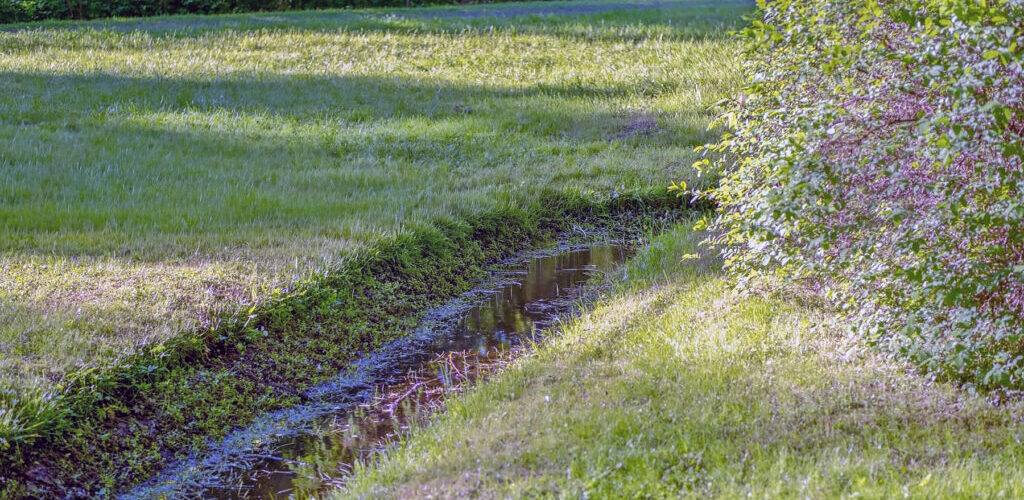
A swale is a shallow, wide channel that redirects runoff. The goal isn’t to “trap” water—it’s to move surface water away from the home before it can:
- soak perimeter soil
- erode beds and walkways
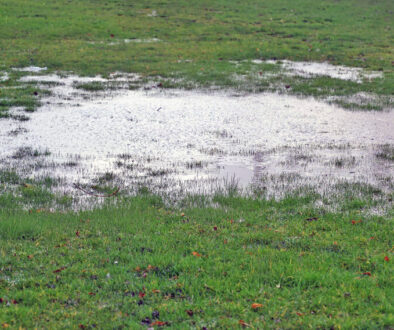
- pond in low spots
- push toward the foundation
A good swale does two things at once:
- collects surface runoff, and
- conveys it to a safer area at a controlled pace.
Think of it like a gentle “traffic lane” for water.
When Swales Work Best Around Homes
Swales are the right tool when the problem is visible flow (not hidden seepage).
Common “swale wins”
- Side yards that act like troughs and funnel water toward the foundation
- Yard-to-walkway edges that wash out or leave silt lines
- Runoff coming off a driveway or patio and cutting across the lawn
- Water that reliably collects in the same low corridor during storms
If you’re stuck deciding whether this is mainly slope or roof runoff, this quick check helps: grading problem or gutter problem.
When a Swale Is Not the Right Fix
A swale won’t solve everything—especially if the issue isn’t surface runoff.
Swales usually won’t fix:
- Downspouts dumping at the foundation (that’s a discharge problem first)
- Yards that stay soggy 24–72 hours after rain (often subsurface moisture)
- No-outlet lots where water has nowhere to go without engineered routing
- Groundwater seepage on hillsides (different category)
When the yard stays wet long after the storm, it helps to compare surface drainage vs underground drainage before you dig.
What to Check Before You Cut a Swale
Before you move soil, do two quick checks that prevent 80% of bad swales.
1) Confirm you’re seeing surface flow
During (or right after) rain, look for:
- water “sheeting” across the grass
- silt lines and wash marks
- debris patterns that point the direction of flow
If you can’t see flow but the yard stays wet for days, you may be chasing the wrong fix.
2) Find the natural outlet
A swale has to lead somewhere safe:
- lower ground that drains away from the house
- a stable area that won’t erode
- a discharge point that won’t create a neighbor problem
If there’s no clear outlet, the project becomes less “shaping” and more “engineering.”
How to Shape a Swale (Simple, Homeowner-Friendly)
From an inspector’s perspective, the swale that works long-term usually has:
- a broad, shallow bottom (not a steep trench)
- gentle side slopes that won’t cave in or become a hazard
- continuous fall toward the outlet (no bellies or “bowls”)
- a protected outlet (rock, splash control, or stabilized drainage area)
If you want a simple mental picture:
a swale is a wide spoon, not a narrow knife cut.
Fixes in the Right Order (Lowest Cost to Highest)
- Confirm gutters are functioning (no overflow, consistent flow)
- Fix downspout discharge (direction + distance + stable outlet)
- Correct grading issues that direct water toward the home
- Add a swale to guide surface runoff to a safe outlet
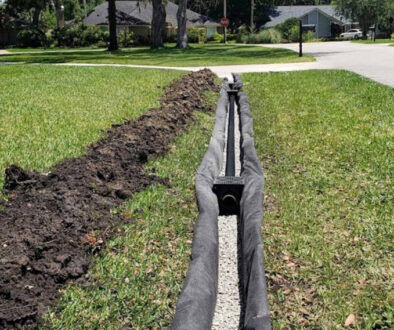
- Use surface collection only where water must be intercepted at a low point
- Consider underground drainage only if subsurface saturation is confirmed
If your issue is truly “water ponds right here every storm,” that’s usually a catch basin / area drain situation—not a swale.
When It’s a Red Flag
Bring in help when:
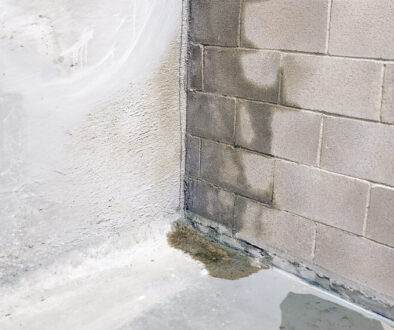
- water repeatedly reaches crawlspace, basement, or garage
- you can’t identify a safe outlet without risk of erosion or neighbor impact
- grading changes affect retaining walls, slabs, or foundation exposure
- the only workable route requires trenching through hardscape or tight access
- you’re considering a pump system to make up for “no outlet”
When to Call a Pro
From an inspection standpoint, it’s usually worth hiring help when:
- you need a swale + regrade planned together (not just “cut a line in the lawn”)
- you’re dealing with clay-heavy soil and repeated winter saturation
- runoff is undermining slabs/walkways or affecting structural edges
- you need a clean, stable outlet that won’t erode over time
- you want the work documented for recurring moisture concerns
Final Field Note
Swales work because they’re honest: they don’t pretend to “solve water,” they just tell it where to go. If you can see runoff moving across your yard during rain, a properly shaped swale is often the simplest fix that keeps water off the foundation year after year. But if the soil stays wet for days or there’s no real outlet, the right answer usually isn’t “cut a deeper swale”—it’s stepping back and choosing a fix that matches the water type.
FAQs
-
A swale handles surface runoff you can see. A French drain intercepts subsurface water moving through soil.
-
Sometimes. If water is flowing across the yard, a swale can guide it away. If water ponds in a true low point, a catch basin may be more effective.
-
There’s no universal depth. The best swales are usually shallow and wide, with continuous fall to an outlet. Over-deep swales can become hazards and erode.
-
Most failures come down to no real outlet, poor slope (flat sections that pond), erosion at the outlet, or trying to use a swale to solve a subsurface seepage problem.
-
They can, but clay drains slowly. Swales still help by moving surface water away, but you may need stabilization and careful outlet protection to prevent erosion and pooling.