Surface Drainage vs Underground Drainage (A Quick Way to Diagnose Your Yard)
Key Takeaways
-
Surface drainage fixes problems where water is visibly flowing or pooling on top of the ground.
-
Underground drainage is for water that moves through soil and keeps areas soggy long after rain stops.
-
The most common mistake is installing drains before fixing roof runoff and discharge.
-
If there’s no reliable outlet, both surface and underground systems can fail (just in different ways).
-
The right fix is usually a sequence: roof runoff → discharge → grading → then drains.
Why This Confusion Happens
Most homeowners don’t call it “surface water” or “subsurface water.” They just see a wet yard, muddy walkway, or damp perimeter soil and assume the answer is “add a drain.”
From an inspector’s perspective, the best first step is always the same: identify what kind of water you’re dealing with. Once you classify the water, the correct fix becomes obvious — and the wrong fix gets easy to avoid.
If you want the full “start-to-finish” way to troubleshoot it, start with Drainage & Water Control in Southern Oregon — it lays out the order that prevents the most expensive mistakes (roof runoff first, then discharge, then grading, then drains).
Identify the Water Type (Quick Field Test)
If you can, do this check during a steady rain or within an hour or two after it stops—that’s when the evidence is easiest to read.
Walk the yard the way water does: start at the roof edges and downspouts, then follow any wet paths across hardscape and soil until you reach the low spots.
You’re looking for two clues: (1) is water moving on the surface right now, or (2) is the ground staying wet long after the rain ends? That simple difference usually tells you whether you’re dealing with a surface drainage problem or an underground drainage problem.
Surface Drainage Issues
- You can see water moving across the yard, driveway, or hardscape
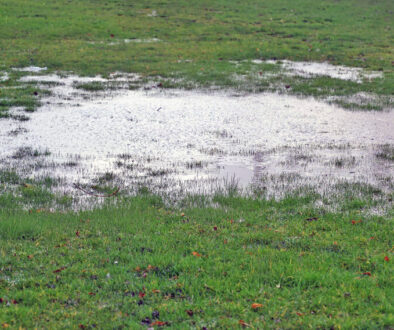
- Water collects in a low spot like a shallow “bowl”
- The same areas puddle immediately during storms
- You see silt lines, wash marks, or floating debris patterns
Underground Drainage Issues
- The ground stays spongy or soggy for 24–72 hours
- Dampness shows up along a shaded side yard or hillside base
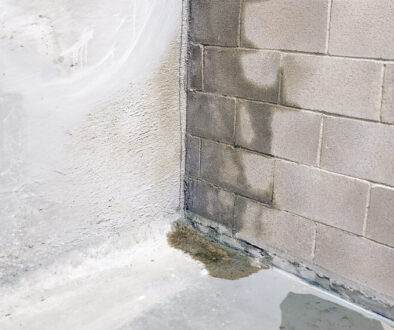
- You see seepage lines, persistent moss strips, or “wet bands”
- The problem is worse in winter, even without heavy downpours
What Surface Drainage Is Best At
Surface drainage is the right tool when the problem is water moving on top of the ground — and you can influence that path.
Best-Fit Surface Fixes
- Regrading (changing slope so water moves away from the home)
- Hardscape pitch corrections (patios/sidewalks that tilt inward)
- Swales (shallow channels that guide runoff)
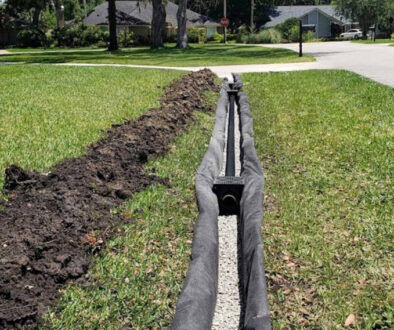
- Surface collection (catch basins / trench drains in true low points)
If your issue is a repeat low spot, patio edge, or a “water collects right here every storm” pattern, catch basins and area drains tend to perform best when they’re placed at the true low point and have a real outlet.
When Surface Drainage Is Usually the Better “First Fix”
Surface drainage is often the smarter move when:
- The yard slopes toward the home
- A patio/driveway sends water into a corner or threshold
- Water pools in a depression that can’t be corrected by slope alone
- You’re getting splash marks and muddy perimeter soil during storms
If you’re stuck deciding whether you’re dealing with slope/pitch versus roof runoff, this quick comparison usually makes it obvious: grading problem or gutter problem?
What Underground Drainage Is Best At
Underground drainage works best when water is moving through soil, not just running across the surface.
In other words, if the yard feels like a sponge long after rain, underground systems can intercept and move that water before it lingers.
Best-Fit Underground Fixes
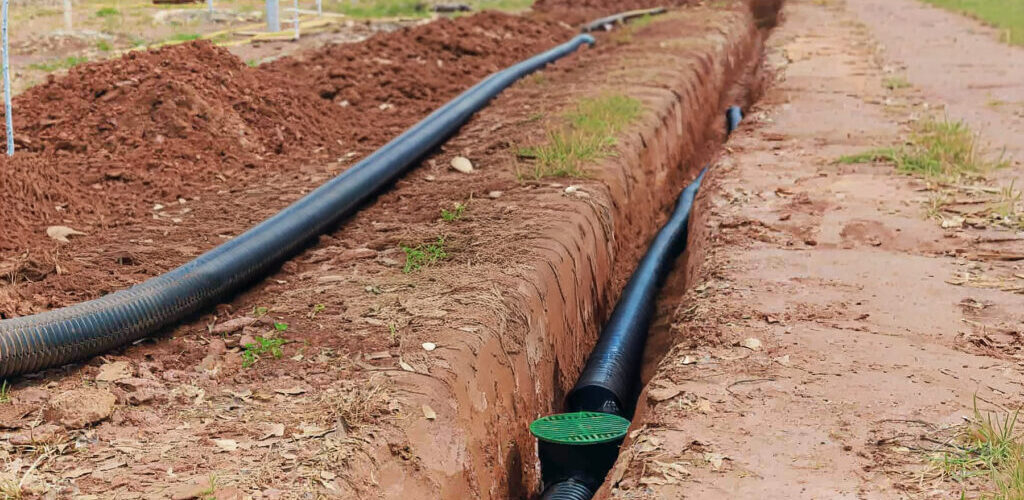
- French drains (subsurface interception + pipe + rock + slope)
- Tightline drains (solid pipe for clean conveyance)
- Downspout drain lines (when roof water needs to be routed far away — correctly)
If the ground stays spongy for days or you’re seeing seepage patterns (especially on shaded sides or hillsides), it’s worth reading the pros/cons of French drains in Southern Oregon before you plan a trench.
The Most Common Misdiagnosis: “I Need a French Drain”
A lot of “French drain needs” are actually this:
- roof runoff dumping at the footing
- downspouts ending too close to the home
- overflow at the roof edge, saturating the perimeter
If you don’t fix the roof water + discharge first, you can install a perfectly good underground system and still keep feeding the wet zone.
As a baseline, make sure roof water is being discharged correctly first — this guide on downspout drainage in Southern Oregon shows what “good” looks like before you commit to underground work.
Rule of thumb: if the wet zone gets worse during rain, start with surface/roof runoff. If it stays worse after rain, you may need subsurface interception.
The Decision Shortcut: Which Fix Fits Your Yard?
If you’re torn between options, don’t overthink it. Decide based on when the water shows up and how long it sticks around. Surface problems usually announce themselves during rain (you can see flow or pooling), while underground problems show up after rain (the yard stays spongy and slow to dry).
Use the checklist below to match your yard’s pattern to the right type of fix.
Choose Surface Drainage if
- you can see the water moving on top of the ground
- you can correct the slope or intercept flow at a low point
- the problem starts fast during storms and drains away when the rain stops
Choose Underground Drainage if:
- the yard stays wet long after storms
- the wet zone is consistent and has “bands” along soil lines
- you have hillside seepage or persistent saturation
Choose Both When:
- the yard slopes poorly, and the soil stays saturated
- you need to redirect surface water first, then intercept subsurface seepage
- you’re dealing with a complex site (retaining walls, slabs, tight access)
Outlet check: if you can’t point to where the water will safely exit (daylight, approved storm drainage, or a properly designed discharge area), pause. Most “failed drains” are really “no-outlet” installs.
Fixes in the Right Order (Lowest Cost to Highest)
- Confirm roof runoff isn’t creating the problem (no overflow; downspouts discharge away from the foundation)
- Correct downspout discharge (direction + distance + stable outlet)
- Address obvious grading / inward pitch issues
- Add surface collection where pooling is unavoidable (catch basin / trench drain)
- Install underground drainage only when subsurface saturation is confirmed
- If there’s no natural outlet: plan for a more engineered solution (and often excavation)
When It’s a Red Flag
Bring in a pro when:
- water repeatedly reaches the crawlspace/garage/interior
- you can’t identify a safe discharge point
- grading changes affect retaining walls, slabs, or foundations
- you’re considering a pump system (adds failure points)
- the only real solution requires trenching through hardscape or tight access
At that point, it helps to step back and think like an inspector: the right fix isn’t the “biggest drain,” it’s the one that creates a reliable path to daylight without putting water back against the foundation. If you want a quick, plain-English primer on how water behaves around homes (and why drainage mistakes turn into moisture problems), InterNACHI has a solid overview of managing water around the building.
When to Call a Pro
Some drainage problems are easy to diagnose from the ground. Others look simple until you start chasing the outlet, the slope, and what the water is doing under the surface. From a field perspective, it’s time to bring in help when the fix affects the structure, requires engineered drainage, or becomes guesswork.
- Water is reaching the crawlspace, garage, or interior (even intermittently).
- You can’t identify a reliable outlet (no daylight discharge, no safe routing, no clear tie-in option).
- The site is uphill, terraced, or retained (retaining walls, steep slopes, or stepped yards change the stakes).
- Any grading change would impact foundations or slabs (especially near footings, patios, driveways, or walkways).
- You’re considering a pump (it can work, but it adds power, maintenance, and failure-point planning).
- The fix requires trenching through hardscape (concrete/asphalt/pavers) or tight-access excavation.
- Multiple “fixes” have already failed (repeat pooling, repeat soggy zones, repeat backups).
Quick rule: if the solution changes slope near the home, depends on an outlet you can’t verify, or requires excavation through finished surfaces, it’s usually cheaper to get a proper plan first than to redo it later.
Final Field Note
Most drainage “failures” aren’t bad products — they’re misapplied fixes. If you treat subsurface seepage like a surface-grading issue (or vice versa), you’ll spend money and still end up with wet soil.
When the right correction requires changing slope, trenching long runs, or creating a stable outlet, that’s where proper excavation and site prep matter. The goal isn’t “add more drains.” The goal is to move water away from the home, predictably, every time it rains.
And when that means regrading, trenching long runs, or cutting through hardscape to build a proper outlet, it’s usually an excavation job — not a “quick drain install.”
FAQs
-
Often, yes — especially if minor regrading or hardscape pitch correction solves the path. Underground systems add materials, trenching, and outlet requirements.
-
Sometimes, but pooling is often a surface grading/low-point issue. If water is visibly collecting on top, start with surface diagnosis first.
-
That’s the #1 failure point. Without a reliable outlet, systems back up or behave like underground holding tanks.
-
They can, but clay drains slowly and holds water. Design, slope, and maintenance access matter more — and some sites need combined grading + drainage.
-
If water is flowing across the surface toward the house, grading is usually primary. If the yard stays soggy long after rain, you may need subsurface interception.