Sump Pumps for Yard Drainage in Southern Oregon (Last Resort or Smart Fix?)
A yard drainage sump pump is what you use when gravity can’t do the job. It can be a smart fix on low lots with no safe outlet, but it also adds failure points, maintenance, and “what happens if the power goes out?” planning. This guide breaks down when pumps make sense in Southern Oregon and when they’re just an expensive way to avoid fixing the cause.
Key Takeaways
A sump pump is usually a symptom tool: it moves water you couldn’t otherwise move by gravity.
Pumps can be a smart fix when you have no reliable slope and water must be lifted to a safe outlet.
Most pump failures are predictable: power outages, float problems, sediment clogging, freezing discharge, and neglected maintenance.
If you can solve the issue with grading, routing, or daylight discharge, do that first—it’s simpler and more reliable.
If water is reaching a crawlspace, garage, or interior, treat the situation as high-stakes drainage, not a casual DIY project.
What A Sump Pump System Actually Does
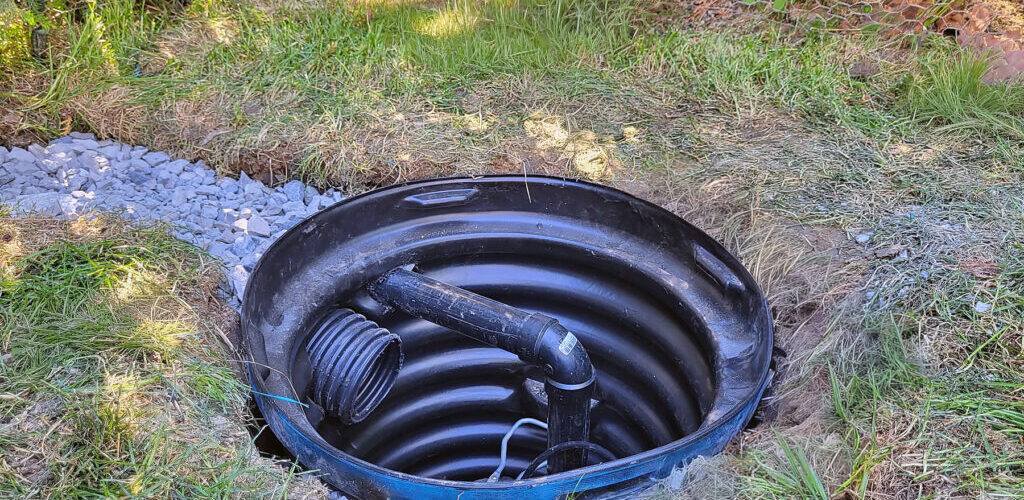
For yard drainage, a sump pump setup usually means you’re collecting water in a basin (sump pit) and using a pump to push it through a discharge line to a location where it can exit safely.
In other words: when gravity can’t do the job, a pump becomes the way to “create” drainage.
This can work well, but it changes the project from “earth + slope” to “mechanical system,” which means you’re trading simplicity for capability.
If you want the bigger “whole-path” framework (source → flow → collection → discharge), start with Drainage And Water Control In Southern Oregon before deciding whether a pump is even necessary.
When A Sump Pump Is A Smart Fix
Before you think about pump brands or basin sizes, confirm the core limitation: can gravity do this job at all? If the site can’t drain to daylight or to a lower outlet point, a pump isn’t overkill—it’s often the only way to move water where it needs to go.
No Gravity Outlet Exists
If your yard is low relative to the street, the ditch, or any safe discharge point, gravity systems can’t move water far enough. A pump becomes the tool that makes drainage possible.
Quick check: if your low area is below the street/ditch/outlet you’d want to drain to, gravity can’t move water there without help.
The Problem Is Predictable And Collectable
Pumps work best when water can be intercepted and directed into a basin consistently (for example, water pooling in one low area).
You Have A Safe, Legal Discharge Location
A pump without a safe discharge route is just relocating the problem. You need an exit point that won’t create erosion, nuisance flow, or a neighbor issue.
You Can Build For Reliability
If you’re willing to plan for backup power, access, and maintenance, pumps can be surprisingly effective.
When A Sump Pump Is Usually A Last Resort
Before you commit to a pump, it’s worth asking a blunt question: are you adding equipment because gravity truly can’t work—or because the site is sending water to the wrong place? Pumps can move water, but they also add failure points and maintenance. If the cause is grading, hardscape pitch, or roof runoff routing, fixing that upstream is usually the cleaner, more reliable win.
The Real Fix Is Surface Water Control Or Regrading
If water is reaching the problem area because of hardscape pitch, poor grading, or downspouts dumping in the wrong spot, a pump is often an expensive way to avoid fixing the cause.
The Site Has Heavy Sediment Or Organics
Pumps do not like grit, silt, needles, and organic debris. Without good pre-filtering, basins fill with sludge and floats fail.
You’re Solving A Large-Area Saturation Problem
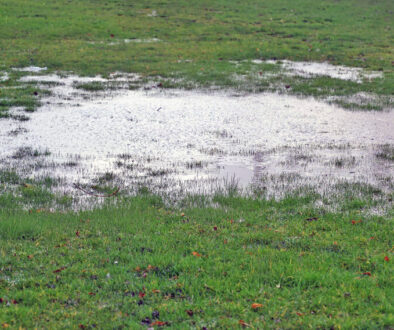
If the whole yard stays spongy and wet for days, pumping one basin may not address the scale of the issue (and can run constantly).
You Don’t Have Power Reliability
In heavy storms, power outages are common—exactly when the pump is needed most.
The Quick Decision Test (Field-Friendly)
- If you can daylight discharge safely, do that before adding a pump.
- If grading/routing can redirect water away, do that first.
- If the yard is a low “bowl” with no outlet, a sump pump may be appropriate.
- If you can’t explain where the discharge goes in a hard storm, stop and plan before installing anything.
Common Failure Points (What I Actually See)
Power Outages During Storms
This is the #1 reason pumps fail when people “need them most.” If the risk is high, consider backup power planning.
Float Switch Problems
Floats get stuck, tangled, or clogged by sludge. A pump that doesn’t turn on (or doesn’t turn off) is a predictable nightmare.
Sediment Sludge And Clogs
Basins collect silt and debris. Over time, this can clog intakes and shorten pump life.
Frozen Or Blocked Discharge Lines
If the discharge line holds water or discharges into a cold, exposed section, winter freezes can block flow.
No Maintenance Access
A pump in a buried or inaccessible basin will be ignored—then it will fail.
What To Do Before You Choose A Pump
A pump can move water, but it can’t change why the area is wet. Before you treat symptoms with hardware, take a moment to identify whether you’re dealing with surface runoff you can redirect, or subsurface saturation/seepage that needs interception and discharge planning. Getting that diagnosis right is what prevents expensive “it still floods” outcomes.
Confirm You’re Solving The Right Problem
If the issue is surface runoff vs subsurface saturation, the fixes differ. A pump can move water, but it can’t change soil conditions uphill.
If you’re not sure whether you’re dealing with surface runoff or subsurface saturation, this breakdown helps you separate surface drainage from underground drainage before you commit to a mechanical solution.
Fix Roof Runoff First
Many “yard flooding” issues are actually downspouts dumping too close to the foundation or into problem zones.
If downspouts are dumping into the problem zone, start by fixing downspout discharge distance and routing. A pump shouldn’t be your downspout plan.
Try The Simpler Tools First
- grading and swales
- downspout rerouting
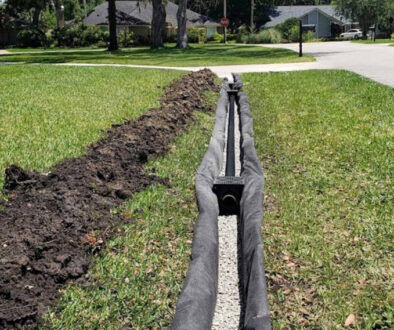
- trench drains (if the issue is surface crossing)
- daylight discharge (if slope allows)
If you’re choosing between surface outlets, this comparison of pop-up emitters vs daylight discharge helps you pick a termination method you can actually verify during storms.
A pump is what you choose when those options can’t work.
What Makes A Pump System More Reliable (High Level)
- Plan the discharge route like it matters (because it does).
- Keep sediment out of the basin as much as possible.
- Make the basin accessible for cleaning and inspection.
- Consider backup power if failure is high-stakes.
- Avoid designs that leave water standing in discharge lines (freeze risk).
When It’s A Red Flag
If a pump failure could mean water in a crawlspace, garage, or interior, treat it as a high-stakes system—not a casual drainage upgrade.
Bring in a professional when:
- water is reaching a crawlspace, garage, or interior
- you’re considering tying multiple sources into one pump basin
- discharge may affect neighbors, sidewalks, or erosion zones
- the site has retaining walls, slopes, or foundation-adjacent constraints
- you suspect subsurface seepage is the primary driver
When To Call A Pro
Pumps can be “smart,” but they’re rarely simple. It’s time when you need someone to evaluate:
source → collection strategy → basin placement → pump sizing → discharge → overflow behavior → failure contingencies
Final Field Note
A sump pump can be either a last resort or a smart fix, depending on why you’re using it. If you’re installing a pump because gravity drainage is impossible and you have a safe discharge route, it can solve a real problem. If you’re using a pump to avoid fixing grading, routing, or roof runoff, it often becomes a maintenance-heavy band-aid.
FAQs
-
Sometimes—especially when the yard has no gravity outlet. They can work well when water can be collected into a basin and discharged safely.
-
Varies by quality, run time, and sediment exposure. Systems with lots of grit and frequent cycling fail sooner.
-
If the pump is protecting a structure or preventing interior flooding, backup planning is often worth it because outages happen during storms.
-
Usually because the basin is receiving continuous inflow (high groundwater/saturation), the float is stuck, or the discharge line is blocked.
-
To a safe, legal location where water won’t create erosion, nuisance flow, or return toward the structure—especially in heavy storms.
-
If water is reaching the interior, discharge routing is unclear, or the system needs to tie multiple drainage sources together.