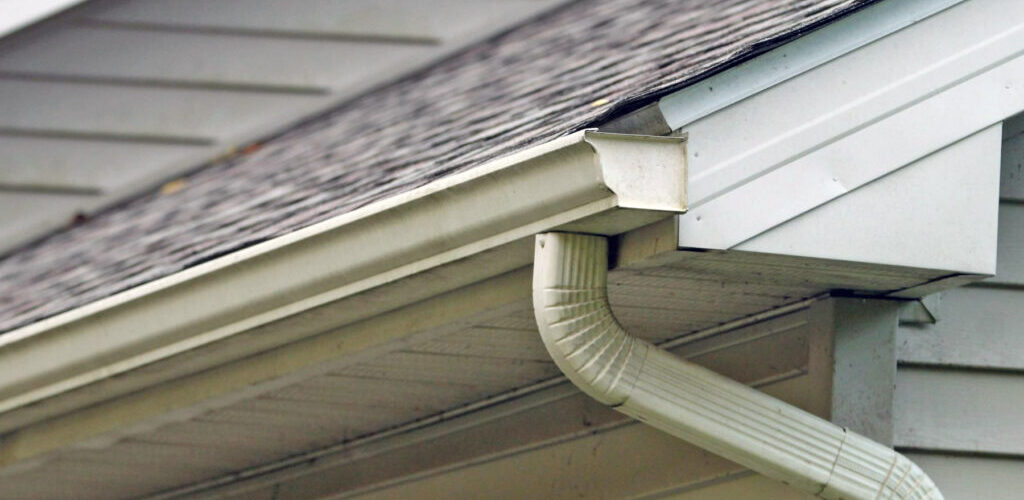
Soffit Stains & Drips in Southern Oregon (Roof Leak or Gutter Overflow)
Key Takeaways
Most soffit stains show up because water is escaping the gutter system (overflow or behind-the-gutter flow), not because the roof is leaking.
Pattern matters: corner stains and drip lines near downspouts usually point to gutter issues; random interior ceiling spots often point to a roof leak.
The fastest way to diagnose is a 10-minute rain walkaround during moderate rain.
If you have soft fascia, sagging gutters, or repeat overflow at the same corner, it’s time to call a pro—cleaning alone won’t fix it.
Fixing soffit stains is really about restoring the water path: roof → gutters → outlets → downspouts → safe discharge.
The Short Answer
If you’re seeing stains or drips on your soffits, the big question is simple:
Is water escaping from the roof system, or escaping from the gutter system?
In Southern Oregon, many soffit stains come from fall/winter storm behavior: dry-season debris compacts, needles and leaves stack in corners, and the first real storms push water toward the easiest exit. When an outlet can’t keep up, water backs up and flows behind the gutter, onto the fascia, and onto the soffit edge.
If you’ve already noticed dark fascia streaks or soft wood, soffit stains are often the “early warning,” and fascia rot is the “late-stage consequence.”
Why Soffits Stain in the First Place
A soffit stain is usually one of three things:
- Dirty water repeatedly running over the same edge
- Water misting/splashing back during overflow
- Water traveling behind the gutter and reappearing underneath
All three can happen with a roof leak, but they’re extremely common with gutter issues, especially when:
- corners and outlets clog
- pitch is slightly off, and water holds in a low spot
- gutters are pulling away from the fascia
- water dumps “late” and runs backward during heavier rain
Soffit stains usually aren’t random—they tend to repeat in the same locations because the system fails in the same places. If you’re seeing the same drip line every storm, it’s worth comparing what you’re noticing to the most common failure signs homeowners see around fascia and roof edges.
Roof Leak vs. Gutter Overflow (60-Second Decision Test)
Use this quick filter before you do anything else:
Signs it’s More Likely Gutter Overflow
- Stains are near corners, especially outside corners
- Drips appear during moderate rain, then stop after the rain ends
- You see overflow streaks on the fascia or siding below the gutter line
- One downspout looks weaker than the others during storms
- The stain worsens storm-to-storm in the same spot
If you’re trying to separate “roof leak” symptoms from drainage problems, zoom out and follow the water path from the roof edge to the discharge. This full guide on water damage from gutters and roof runoff breaks down what different stains and wet zones usually mean.
Signs it’s More Likely a Roof Leak
- You also see interior ceiling stains (especially away from exterior walls)
- Staining persists even when gutters are clean and behaving normally
- You notice issues after snow/ice events (less common, but possible) or prolonged wet periods
- The stain location doesn’t match any gutter corner, outlet, or roofline transition
Even clean gutters can still cause soffit drips if water can’t exit the outlet fast enough. A quick review of downspout flow and drainage basics makes it easy to spot restrictions and bad discharge zones.
What Gutter-Caused Soffit Stains Usually Look Like
These are the patterns that most commonly point to gutters:
1) Corner DripLines
A thin drip line that appears at the soffit edge near a corner usually means:
- corner is overflowing, or
- water is running behind the gutter and “reappearing” underneath
2) Staining That Starts at the Fascia Edge
If the stain looks like it’s “originating” where fascia meets soffit, it often means the fascia edge is getting soaked repeatedly.
3) Stains Aligned With Downspout Locations
If stains cluster around a downspout corner, the likely culprit is:
- restricted outlet
- clogged elbow
- weak discharge creating backup during heavier rain
Once you’ve identified the problem corner or weak downspout, the goal is to keep that choke point from rebuilding. The seasonal gutter maintenance plan lays out a repeatable schedule, so you’re not reacting to stains after every storm.
What Roof-Leak Soffit Symptoms Usually Look Like
Roof leaks can stain soffits too, but the pattern is often different:
- Staining may be more diffuse, not tied to a corner
- Drips might show up after rain, as trapped water slowly releases
- You may see other clues: interior stains, damp insulation, or attic moisture near roof penetrations/valleys
Soffit stains usually aren’t random—they tend to repeat in the same locations because the system fails in the same places. If you’re seeing the same drip line every storm, it’s worth comparing what you’re noticing to the most common failure signs homeowners see around fascia and roof edges.
If you’re not seeing any gutter misbehavior during rain, and the stain location doesn’t match a corner/outlet, then yes—roof inspection may be next. But most homeowners never do the simplest step first…
The 10-Minute Rain Walkaround (Best Diagnostic)
If you only do one thing, do this during moderate rain (not a drizzle, not a downpour).
Step 1: Watch Corners and Transitions (2 minutes)
Stand back and look at:
- outside corners
- roof-to-wall transitions
- any section where you’ve seen staining
You’re Looking For:
- corner dumping
- overflow over the front lip
- “mystery water” appearing behind the gutter line
Step 2: Compare Downspout Discharge (3 minutes)
Walk each downspout and compare:
- Is the flow steady and strong?
- Is one downspout “late” to start?
- Is one noticeably weaker than the others?
If one downspout is weak, odds are you have an outlet/elbow restriction.
Step 3: Check Discharge Aones (3 minutes)
Where water lands matters as much as whether it exits.
Look for:
- pooling near the foundation
- trenching/erosion in beds
- splash marks on siding or concrete
If you clear debris and the same section still drips or stains in the next storm, you’re likely dealing with pitch, hangers, or a seam issue—not “more leaves.” Use this quick cleaning vs. repair checklist to decide what kind of fix you actually need.
Step 4: Take Photos (2 minutes)
Photos do two things:
- confirm if the same corner repeats
- give you proof of behavior (helpful if you bring in a pro)
The “Behind-the-Gutter” Problem (Why It Happens)
This is one of the most common causes of soffit staining—and one of the most misunderstood.
When water runs behind the gutter, it doesn’t just stain—over time, it can start softening the wood it touches. If you want to understand how that progresses (and what counts as “urgent”), see how gutter overflow leads to fascia rot.
Water can run behind a gutter when:
- debris mats dam the flow, and water backs up
- gutters pull away slightly fromthe fascia
- pitch is off, and water holds instead of moving
- high flow hits a restricted outlet and rebounds
- sections sag, creating a low spot that overfills first
What to Do This Week (Simple Action Plan)
You don’t need a huge project. You need a short sequence that restores the water path.
1) Clear Choke Points First
Prioritize:
- corners
- low spots
- the first 2–3 feet around outlets
Most soffit staining shows up when fall compaction meets the first real storms—exactly when outlets start restricting. If you want a simple routine that prevents most of these issues before they start, follow the Southern Oregon fall gutter checklist.
2) Confirm Downspout Flow
Run a hose briefly upstream of each downspout:
- If water exits fast and clean → good
- If it backs up → outlet/elbow/downspout restriction
3) Clean up Where Water Lands
Reconnect extensions, reposition splash blocks, and make sure discharge isn’t dumping into a spot that splashes back onto the house.
This is a common “why are my soffits still staining?” culprit—water exits, but it exits into a bad zone.
4) Do One Rain Walkaround
If you confirm behavior during rain, you’ll know whether you fixed it—or whether you’ve got a structural/pitch issue that needs adjustment.
When to Call a Pro
If you see any of the following, it’s usually beyond a simple cleanout:
- Soft fascia (press test: it gives or crumbles)
- Gutters pulling away, visible gaps, or sagging sections
- Standing water that remains after rain
- Repeat overflow in the same spot after cleaning
- Drips that appear to be coming from behind the gutter consistently
If you’re seeing fascia softness or swelling, don’t wait; treat it like a priority. Once fascia rot starts, “maintenance” turns into carpentry.
FAQs
-
Yes. Overflow, behind-the-gutter flow, and repeated corner dumping can wet fascia and soffit edges, leading to staining and drips.
-
Check patterns and behavior during rain. Corner stains, overflow marks, and weak downspout discharge usually point to gutters. Interior ceiling stains often point to a roof leak.
-
Water can be trapped in debris mats, low spots, or behind the gutter edge and then release slowly after rainfall stops—especially near corners and outlets.
-
Cleaning can stop the cause if the issue is a clog. If staining continues after cleaning, the problem is often pitch, sagging, gaps behind the gutter, or restricted outlets.
-
A 10-minute walkaround during moderate rain: watch corners, compare downspout discharge, check discharge zones, and take photos to confirm repeat failure points.