Soffit Problems in Southern Oregon (Signs, Causes, and What to Check)
Key Takeaways
Soffit stains and dripping usually mean water is landing where it shouldn’t—often from gutters, corners, or roof-edge routing.
The most common post-storm causes are overflow, behind-the-gutter flow, and bad downspout discharge—not “mystery roof leaks.”
If the same corner keeps getting wet, treat it like a high-volume exit point, not a cosmetic issue.
A 10-minute walkaround (no ladder) can tell you whether you’re dealing with gutters, roof-edge behavior, or grading.
Fix the cause first—replacing soffit panels without fixing water routing usually means the stains come right back.
When a storm rolls through Southern Oregon, soffit problems tend to show up after the rain—not during it. You step outside and notice a new stain under an eave, a drip line along the soffit, or a corner that looks like it “leaked.”
The tricky part is that soffits are often where water shows itself, not where the problem starts.
When soffits stain or drip, the question usually isn’t “Is something leaking?” — it’s where the water is actually traveling. In many cases, the fastest way to narrow it down is comparing the telltale patterns of a roof-edge leak vs. gutter overflow, which is exactly what we break down in this roof leak vs gutter overflow comparison.
What a Soffit is (and Why it’s the First Place You Notice Water Problems)
A soffit is the finished underside of your roof overhang. It helps protect the eaves, often includes ventilation, and “hides” the structural underside of the roofline.
Because it’s flat, visible, and sits right beneath the gutter edge and roof runoff zones, it becomes the collection point for evidence:
- stains from repeated wetting
- drip trails from overflow or misrouted water
- warping or softness when materials stay damp
In other words, soffits don’t usually create the problem—they report it.
The Fastest Signs of Soffit Problems After Storms
After a moderate-to-heavy storm, look for these telltales:
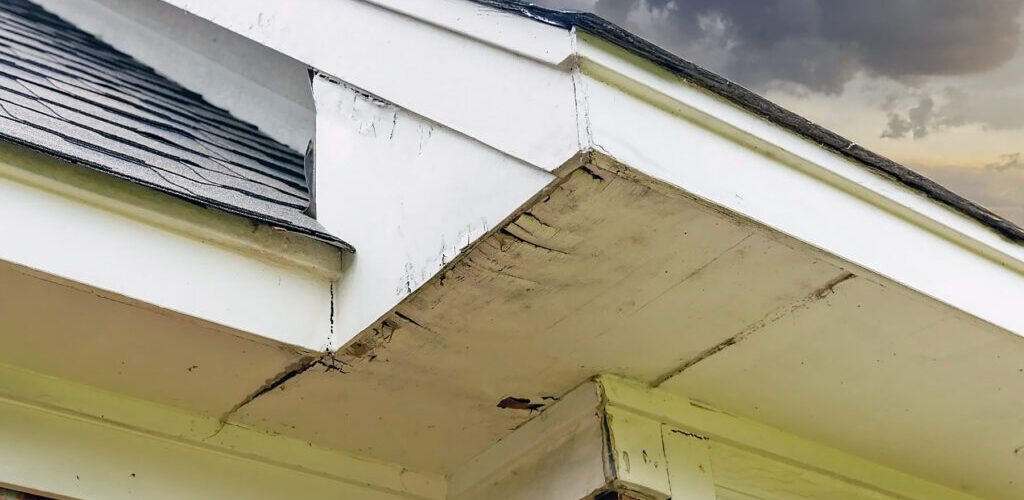
- Brown/yellow staining on soffit panels (often in lines or patches)
- Drips at corners or at the same spot every storm
- Dark streaks under the gutter edge
- Peeling paint on the fascia/trim along the gutter line
- Swelling/warping (especially on older wood soffits)
- Soft spots (serious—this means repeated wetting)
- Mildew smell near entries or under overhangs
When you see stains plus peeling paint or wet fascia, it’s usually part of a bigger runoff pattern — the kind that shows up as fascia damage, siding streaks, and foundation splash over time in this Southern Oregon gutter water damage breakdown.
The 6 Most Common Causes (in Order of Likelihood)
The easiest way to troubleshoot soffit issues is to treat them like symptoms and trace the water path backward. In most cases, the cause is simple and repeatable—so we’ll start with the most likely one first: overflow, even when the gutters look “fine” at a glance.
1) Gutter Overflow During Storms (Even if it “Seems Fine” Most of the Year)
Overflow doesn’t always mean “the whole gutter is packed.” It often means:
- debris is concentrated near an outlet
- a corner is receiving too much volume
- water is backing up briefly during peak flow
Overflow tends to leave:
- splash marks on soffit/fascia
- streaks under the gutter line
- wet corners and trenching below
If overflow has been repeating for a while, it helps to understand what it typically turns into over time — from staining and fascia paint failure to wet perimeter soil — which we cover in what happens when gutters go uncleaned in Southern Oregon. And if you’re trying to figure out whether this is just debris buildup or the start of a bigger issue, the difference between gutters that need cleaning vs. gutters that need repair is usually pretty clear once you know what to look for.
2) Water Running Behind the Gutter (Roof-Edge Routing Problem)
This is one of the most misunderstood causes of soffit stains.
Sometimes your gutters are “working” (not clogged), but water is taking the behind-the-gutter route—wetting fascia and dripping down onto the soffit line. This can happen when:
- drip edge is missing, short, or installed poorly
- there’s a gap that lets water hug underneath and run back
- roof edge details don’t bridge cleanly into the gutter
Behind-the-gutter flow is often a roof-edge detail problem, especially when the drip edge or gutter apron isn’t directing water cleanly into the trough, and this guide to drip edge and gutter aprons shows exactly what that looks like (and why it matters).
3) The “One Corner” Problem (Corner Concentration)
In Southern Oregon storm cycles, one corner is often the repeat offender because multiple roof planes can feed it. That corner becomes a high-volume exit point during real rain.
Even a small imperfection—minor pitch issue, partially restricted outlet, or a slightly undersized downspout—becomes obvious there first.
If one corner keeps overflowing even after cleanouts, it’s usually a sign the system is changing (pitch, outlets, seams, or volume) — the same pattern we outline in these common signs gutters are failing in Southern Oregon.
4) Downspouts Dumping Water Into a Bad Landing Zone
Downspouts don’t just move water down—they’re supposed to move it away.
If discharge is hitting:
- flat soil near the foundation
- mulch beds that trench
- a corner with poor drainage
- a spot that slopes back toward the house
…you can get splashback and persistent dampness that shows up as soffit staining and wet perimeter zones.
A lot of “soffit issues” are really discharge issues — meaning the downspout is doing its job until the water hits the ground, where it splatters or pools in the wrong spot. If you’re unsure what a “good” setup looks like, where downspout water should actually go is the simplest framework, and how far to discharge water away from the house helps you avoid the most common splashback zones.
5) Grading / Slope Makes the Area Stay Wet (Even if Gutters Are “Fine”)
Sometimes the gutters do their job, but the ground below doesn’t.
If one corner stays saturated for days after storms, that moisture can linger, splash, and create a persistent damp “zone” along the lower wall and underside areas. This is especially common with compacted soil or a negative slope near the foundation.
If the gutter looks fine but the same corner stays wet for days, the problem may be what happens after discharge — not the gutter itself, and how to tell a grading problem from a gutter problem makes that distinction easy.
6) A True Roof Leak or Flashing Issue (Less Common, Higher Stakes)
Yes—sometimes it really is a roof leak. But with soffit staining, it’s often less common than people assume.
Roof leaks tend to show patterns like:
- stains that keep spreading even in lighter rain
- staining that appears away from gutters/corners
- moisture that shows up on interior ceilings/walls too
The 10-Minute After-Storm Inspection (No Ladder Needed)
Pick a moderate rain day—or go right after the storm—then do this quick walkaround.
Step 1: Find the “Wettest Corner”
Don’t start at the stain. Start at the corner where water seems to concentrate (often where the stain is worst).
Step 2: Look for behind-the-Gutter Evidence
Stand back and scan the fascia line:
- any dark band behind the gutter?
- streaks that appear behind the gutter line?
- peeling paint directly behind the gutter?
If yes, you’re likely dealing with roof-edge routing and drip edge/apron behavior.
Step 3: Check for Overflow Marks and Splash Zones
Look beneath the corner:
- trenching in mulch or soil
- a “cleaned out” spot where water repeatedly hits
- splash marks on siding or trim
Step 4: Watch Downspout Output
If it’s raining, this is the best clue:
- does the downspout discharge strongly?
- is one delayed or weak?
- is water spilling at the outlet area?
Step 5: Check the Landing Zone
This is where a lot of “soffit problems” are actually born:
- pooling within a few feet of the foundation
- water turning back toward the home
- saturated soil that stays wet for days
Step 6: Pay Attention to Crawlspace/Musty Smells
When wet corners are chronic, the moisture often shows up in the crawlspace too — especially during long rainy stretches — which is why crawlspace moisture tied to gutters and downspouts is a helpful “connect-the-dots” read.
What’s Normal After a Big Storm vs What’s a Red Flag
From an inspector’s perspective, the goal isn’t to panic over every drip — it’s to spot repeatable patterns that suggest ongoing water intrusion. A one-time damp spot right after a wind-driven storm can be normal; the concern starts when the same area stays wet, keeps staining, or shows up on every rainy cycle.
Usually Normal
- brief dripping right as the storm ends (water finishing a run)
- minor splash marks after wind-driven rain
- small, isolated, damp spots that dry quickly
Red Flags
- stains that keep expanding with each storm
- the same corner dripping every time
- peeling/bubbling paint behind the gutter line
- soft fascia/trim or visible swelling
- recurring wet band along the foundation perimeter
If the fascia feels soft, paint is bubbling, or the wood edge looks swollen, you may be moving beyond staining and into damage, and what fascia rot from gutter overflow looks like will help you judge how urgent it is.
Fixes That Actually Work (in the Right Order)
Work from the outside in: stop water from overflowing, running behind the gutter, or dumping too close to the house before you worry about cosmetic cleanup.
If you want a general framework for how exterior drainage should move water away from a home, FEMA’s guidance on reducing flood and moisture damage is a solid baseline.
Tier 1: Quick Corrections (Low Cost, High Payoff)
- clean gutters and confirm outlets are clear
- add/adjust downspout extensions
- stabilize the landing zone (rock bed / splash block / basin)
- verify corner behavior during real rain
Tier 2: Adjustments (Medium)
- correct pitch or address sagging low spots
- add a downspout where volume is high
- address recurring outlet restrictions and corner concentration
Tier 3: Construction-Level Fixes (Higher Stakes)
- install/replace drip edge or gutter apron where needed
- repair fascia/soffit rot (after the cause is fixed)
- correct grading/drainage when water keeps returning to the foundation zone
When to Call a Pro
Bring in help if you notice:
- soft wood on fascia or soffit
- stains that return quickly after cleaning
- water running behind the gutter during moderate rain
- gutters pulling away / sagging / obvious gaps
- pooling near the foundation that doesn’t improve with discharge changes
The goal isn’t just to make the soffit “look better.” It’s to stop the repeating wetting pattern that creates rot, staining, and long-term exterior damage.
FAQs
-
Most often, it’s runoff behavior—overflow at corners, behind-the-gutter flow, or splashback from a bad downspout landing zone.
-
Look for patterns: corner-based staining and fascia streaks usually point to gutters/runoff, while interior ceiling stains and spreading discoloration often point to a roof leak. The quickest way to compare the signs is this roof leak vs. gutter overflow breakdown.
-
Yes. Overflow and repeated wetting can stain soffits and start paint failure on fascia/trim.
-
Common reasons are roof-edge routing (drip edge/apron issues) or discharge/landing-zone problems.
-
Fix the cause first. Replacing panels without correcting water routing usually leads to the same stains returning after the next storm.