Signs Your Gutters Are Failing (And What Southern Oregon Homeowners Should Do Next)
Key Takeaways
- October exposes weak gutters because the first heavy storms hit after months of dry-season compaction.
- Overflow during light rain usually points to restricted flow (debris or a clogged outlet/downspout).
- Overflow in the same spot every storm often points to a low section, pitch issue, or hanger failure.
- Seam drips and “water behind the gutter” are repair signals—cleaning won’t solve alignment or sealing problems.
- Downspout backups often mean the problem is below the gutter line (elbows, tightlines, or no real outlet).
Why Most Gutter Failures Show Up in October
Most gutter problems in Southern Oregon don’t show up in July.
They show up during the first real fall storm.
All summer, everything looks fine. The gutters appear straight from the driveway. No obvious sagging. No dramatic leaks. No urgency.
Then October hits.
Rain comes fast after months of dry weather. Roof runoff surges. Downspouts carry more volume than they have in months. And suddenly:
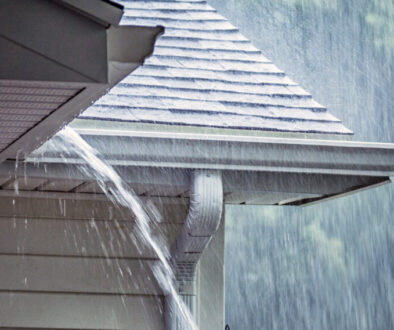
Water spills over the edge.
Soil washes out below the downspout.
A seam starts dripping steadily down the siding.
By the time you see the overflow, the warning signs are already there.
Southern Oregon’s long dry season hides small problems — loose hangers, minor pitch issues, compacted debris — until heavy rain exposes them all at once.
This guide walks through the early signs of gutter failure, so you can fix small issues before they turn into mid-storm surprises.
If you want the full system view (cleaning frequency, repairs, and what to check seasonally), use this gutter maintenance guide for Southern Oregon.
What to Look For Before the Rain Hits
If gutter systems usually fail during the first big storm, the smart move is simple:
Check them before that storm arrives.
Late summer or early fall is the ideal window in Southern Oregon. Everything is dry. You can see the alignment clearly. And small problems are easier to spot before water pressure exaggerates them.
Here’s what to look for.
Water Spilling Over the Edge
Overflow is the most obvious sign — but context matters.
If gutters spill during light rain, you’re likely dealing with a clog.
If they spill only during heavy rain, but they’re clean, that points to capacity, pitch, or downspout restriction.
In the Rogue Valley, common causes include:
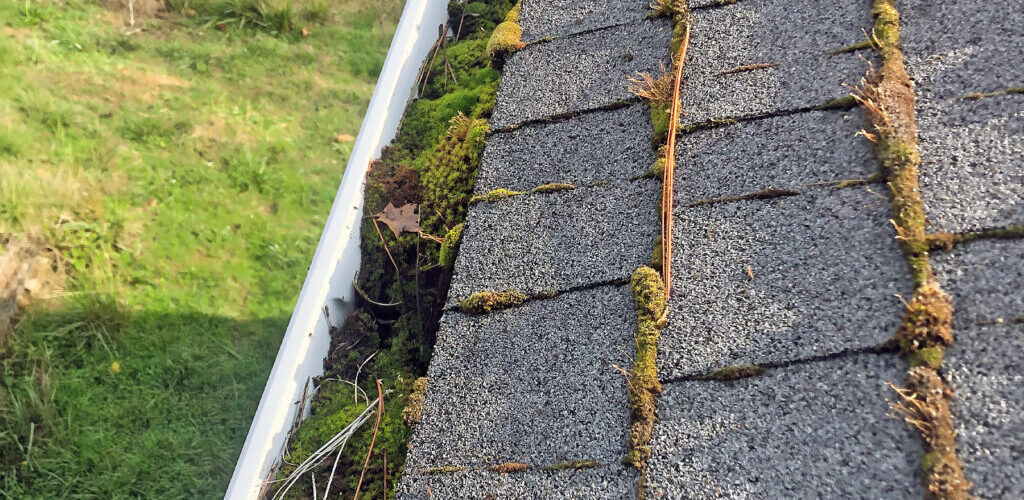
- Compacted oak leaves
- Pine needle mats
- Downspout blockages
- Improper slope
If you’re not sure what’s “normal” for your tree coverage, use a simple rule: if you can see debris packed in corners, valleys, or around outlets, the system is already losing capacity—and the first heavy storm will expose it.
Overflow once is a warning. Overflow repeatedly is a pattern.
If overflow is happening early in the season, it’s usually a sign that your cleaning cadence doesn’t match your tree cover and roof debris.
If you’re trying to read what overflow is doing to the house, the damage pattern usually tells you where the water is going.
Sagging or Pulling Away From the Roofline
Gutters should look straight.
Not perfectly engineered — just straight.
If you notice:
- Visible dips between hangers
- Sections pulling slightly away from the fascia
- Water is pooling in one spot after rain
…that’s structural stress.
In Southern Oregon, sagging usually happens after:
- Heavy, wet leaf buildup
- Pine needles compacted over multiple seasons
- Improper hanger spacing
- Repeated freeze-thaw cycles in winter
When gutters hold standing water, they get heavier.
When they get heavier, they pull.
When they pull, pitch changes — and drainage suffers.
This is where small neglect compounds.
Cleaning may remove the weight.
But if the hangers are loose or the slope is wrong, reinforcement or re-pitching may be needed.
If your gutters are clean but still holding water in sections, the issue isn’t debris — it’s alignment.
Water Dripping From Seams
A steady seam drip doesn’t look dramatic.
In summer, it barely looks like anything.
Seams are natural weak points. They expand and contract with temperature swings. Over time, the sealant dries out. Metal shifts. Small gaps form.
During Southern Oregon’s first heavy rain, those small gaps turn into steady streams.
If you notice:
- Dripping at joints during moderate rain
- Staining on the siding below a seam
- Rust beginning at connection points
…that seam is already telling you something — and it’s usually a repair signal, not a cleaning signal.
Left alone, small seam leaks don’t stay small. Repeated water exposure accelerates corrosion and can direct water straight down the wall instead of into the downspout.
And if that water lands too close to the foundation, you’ve now created a second problem.
Repeated water saturation near a foundation increases hydrostatic pressure — a well-documented cause of moisture intrusion according to the International Association of Certified Home Inspectors (InterNACHI).
If the drip is sending water down the wall and it’s landing near the foundation line, the next step isn’t “more sealant”—it’s making sure the discharge path is actually moving water away from the home. (That’s where downspout routing and extensions matter most.)
Downspouts “Burping” at the Bottom
If you see water backing up and spilling at the elbow or base of the downspout, pay attention.
That’s rarely random.
When a downspout overflows at the bottom, it usually means one of three things:
- The downspout itself is clogged
- The underground drain line is blocked
- Water has nowhere to go once it reaches the ground
In Southern Oregon, pine needles and fine ash are the usual suspects. They compact inside elbows and underground tightlines, especially after long dry stretches followed by heavy rain.
Here’s the key detail:
If your gutters are clean but water still backs up at the bottom, the problem isn’t in the trough.
It’s below it.
Think of it like this: the gutter did its job — the bottleneck is the exit path.
In many cases, the issue isn’t visible from the roofline — it’s buried. When tightlines or underground runs clog, water backs up and shows up as “burping,” slow discharge, or overflow right at the base of the downspout.
That’s why downspout flow should always be checked during cleaning. Removing debris from the top without verifying discharge at the bottom leaves half the system unchecked.
If you’re comparing service options, make sure flushing and flow checks are included, not just leaf removal.
Rust Spots, Pinholes, or Soft Sections
Metal gutters don’t usually fail all at once.
They thin out.
First, you’ll see faint orange streaking.
Then small rust blooms along the bottom seam.
Eventually, tiny pinholes form.
In Southern Oregon, corrosion often starts where debris sits all summer. Dry leaves hold moisture against metal once rain returns, and repeated wet-dry cycles accelerate deterioration.
Press lightly along suspect areas.
If the metal flexes easily or feels soft, that section may be nearing failure.
Small rust areas can sometimes be sealed.
Large soft spots usually mean replacement of that section.
The earlier you catch corrosion, the cheaper it is to address.
When Cleaning Fixes the Problem (And When It Doesn’t)
Not every gutter issue requires repair.
Sometimes the fix really is simple.
If the problem is caused by:
- Compacted leaves
- Pine needle buildup
- A clogged downspout
- Overflow during light rain
…then cleaning usually solves it.
But if the problem shows up even when the gutters are clear — sagging sections, standing water, seam separation — then cleaning alone won’t correct it.
That’s where pitch, hanger spacing, and structural wear come into play.
A thorough service doesn’t just remove debris. It checks flow, alignment, and discharge.
If you’re comparing services, pay attention to what’s actually included: a true “system check” means clear troughs, confirmed downspout flow, and a quick scan for pitch, loose hangers, seam drips, and water running behind the gutter—not just debris removal.
Cleaning restores function.
Inspection protects the structure.
They’re not the same thing.
The Southern Oregon Pattern
Here’s the pattern we see locally every year:
Summer:
Everything looks fine.
Early October:
First storm exposes overflow.
Late October:
Emergency calls spike.
Most of those “sudden” problems weren’t sudden at all.
They were small signs that showed up weeks earlier:
A dip.
A drip.
A slow downspout.
Southern Oregon’s dry season hides weaknesses. The first heavy rain reveals them.
Routine checks in late summer cost far less than reactive repairs during storm season.
Simple Pre-Rain Season Check
Before fall rain ramps up, walk the perimeter of your home once.
Look for:
- Sagging sections
- Rust streaking
- Downspouts dumping too close to the foundation
- Soil erosion below discharge points
- Any seam dripping during light rain
If something looks slightly off now, it won’t look better under heavy runoff.
When to Call a Pro
From an inspection standpoint, it’s time to bring in help when the risk is higher than the DIY payoff—or when you need a clear diagnosis fast.
- Overflow persists after a full cleanout (same corner, same run, same storm pattern).
- Gutters are sagging or pulling away (attachment and fascia condition need to be evaluated).
- You see water running behind the gutter (alignment/drip edge/roofline details matter here).
- Downspouts “burp” or back up at the base (often a clog below the visible system).
- Water is saturating the foundation zone (you need a discharge/drainage plan, not guesswork).
- The roof is steep / access is unsafe or the roofing is brittle.
If you want one place to sanity-check the “where should this water go?” side of the system, start here: Downspouts & Drainage in Southern Oregon.
Final Field Note
Most gutter systems don’t fail suddenly—they fail predictably. A small dip becomes standing water. Standing water becomes weight. Weight becomes pull. Pull changes pitch, and the first real storm turns a minor issue into a visible overflow.
If you only do one thing: watch one downspout during a decent rain. If water exits cleanly and discharges away from the foundation without pooling, your system is doing its job. If it backs up, spills, or dumps at the base of the house, you’ve found the weak link—fix that first.
If you’re building a seasonal plan, start simple — then tighten it up over time with a Southern Oregon gutter maintenance checklist.
FAQs
-
Early signs include overflow during light rain, sagging sections, seam drips, rust streaking, and downspouts backing up at the base. Most failures start small before becoming obvious during heavy storms.
-
Not always. Overflow during light rain usually indicates debris buildup. But overflow during heavy rain — when gutters are clean — may point to improper slope, insufficient capacity, or restricted downspouts.
-
If gutters continue to sag, hold standing water, leak at seams, or separate from the fascia after cleaning, the issue is structural — not just debris-related. Those situations typically require adjustment, reinforcement, or partial replacement.
-
Yes. When water repeatedly discharges too close to the foundation, it can contribute to soil erosion, crawlspace moisture, and increased hydrostatic pressure against foundation walls over time.
-
Southern Oregon’s long dry season allows minor issues to go unnoticed. When the first heavy fall rains arrive, increased runoff exposes weak hangers, pitch problems, clogs, and seam separation all at once.
-
Absolutely. Cleaning the trough alone isn’t enough. Downspouts and underground drainage lines should be checked for proper flow to ensure water is moving away from the home.