Roof Cleaning Method Comparison (Soft Wash vs Pressure Washing vs Manual Removal)
Key Takeaways
-
Not all roof cleaning methods are equal — some shorten roof lifespan.
-
High-pressure washing is rarely appropriate for asphalt shingles.
-
Soft washing removes organic growth without stripping protective granules when done correctly.
-
Manual removal is sometimes necessary for thick moss — but technique matters.
-
The safest method depends on roof type, condition, and exposure.
In Southern Oregon, moss growth is predictable.
So is damage from the wrong cleaning method.
Most roofs here don’t fail because moss exists.
They fail because someone chased a quick “before/after” and took the roof’s protection with it.
Think of an asphalt roof as a layered system:
- Granules shield the asphalt from UV.
- Asphalt seals and flexes with temperature swings.
- Underlayment is the backup layer.
- Decking carries the load.
Moss is a problem over time.
Bad cleaning can be a problem immediately.
That’s why method matters.
Method 1: High-Pressure Washing
Let’s address this directly.
High-pressure washing is the fastest way to make a mossy roof look clean.
It’s also one of the fastest ways to shorten an asphalt roof’s remaining lifespan.
Why It’s Risky for Asphalt
High pressure can:
-
Dislodge protective granules
-
Lift shingle edges and loosen seal strips
-
Drive water under tabs and into laps
-
Leave micro-damage that doesn’t show up until the next wet season
Field check: if you see sand-like granules collecting at the downspout after “cleaning,” that wasn’t just moss coming off.
Once granules are removed, they don’t grow back.
And in Southern Oregon — where UV exposure in summer is intense — that lost protection matters.
When Is Pressure Ever Appropriate?
There are limited scenarios where pressure may be used:
- Certain tile roofs
- Specific metal systems
- Commercial flat membranes (with proper controls)
But for typical asphalt composition roofs across Medford, Ashland, and Grants Pass?
High pressure is usually the wrong starting point.
Fast cosmetic results are not the same as structural preservation.
Method 2: Soft Wash Treatment
Soft washing is a low-pressure application paired with the right solution and dwell time.
The goal isn’t to blast growth off the roof.
It’s to treat it, let it release, and rinse without mechanical damage.
Why It’s Commonly Preferred for Asphalt
When done properly, soft washing:
- Kills moss and algae at the root
- Preserves granule structure
- Avoids shingle lift
- Reduces mechanical stress
- Slows regrowth cycles
The key phrase is “when done properly.”
Translation: the safest method can still turn risky if someone “finishes” the job with a hard rinse.
Improper chemical ratios, insufficient dwell time, or aggressive rinsing can still cause damage.
Soft wash is safer — but it still requires skill.
Method 3: Manual Moss Removal + Treatment
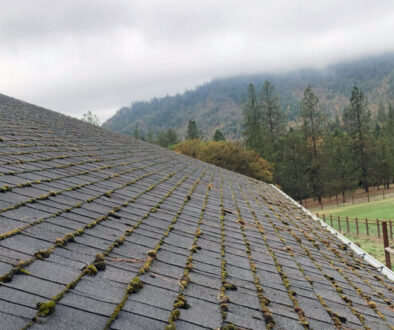
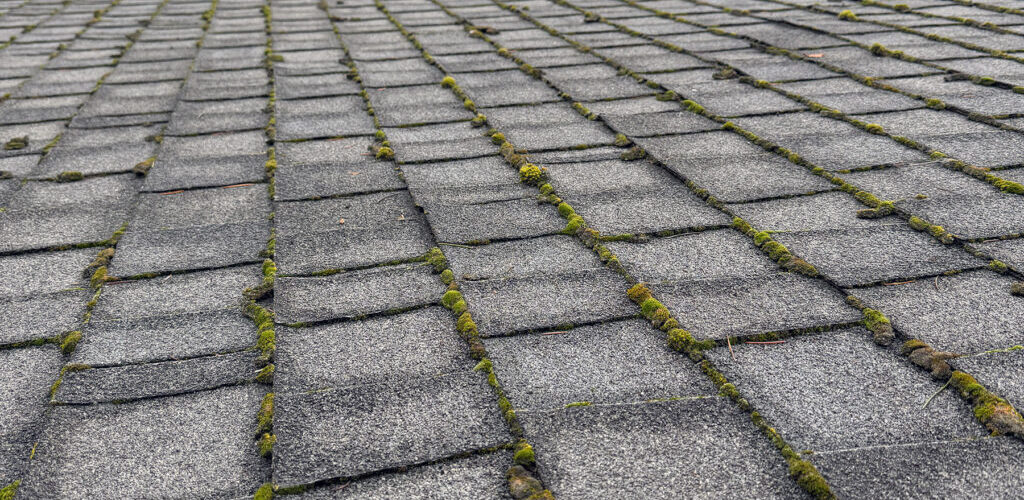
In Southern Oregon, thick moss mats are common on:
- North-facing slopes
- Heavy canopy homes
- Valley transitions
- Roofs that haven’t been cleaned in years
In these cases, physical removal may be necessary before treatment.
The Risk With Manual Removal
Aggressive scraping can:
- Strip granules
- Crack brittle shingles
- Lift edges
- Shorten the remaining lifespan
Controlled manual removal followed by treatment is often the safest approach for heavily rooted moss.
But technique determines outcome.
Good manual removal lifts moss like a mat.
Bad manual removal turns into scraping shingles like a driveway.
There’s a difference between lifting moss and tearing shingles.
The Southern Oregon Factor
Here’s what makes this region different.
We have:
- Long damp winters
- Mature canopy neighborhoods
- North-facing slope exposure
- Intense UV summers
- Increasing insurance visibility
That combination means:
- Moss growth is common.
- Granule preservation is critical.
- Cleaning mistakes compound quickly.
In climates with constant humidity, damage patterns look different.
In Southern Oregon, UV exposure punishes compromised shingles fast.
Remove granules in April, and August will finish the job.
The Hidden Cost of “Looks Clean”
Many homeowners judge roof cleaning success by immediate appearance.
But surface brightness isn’t performance.
A roof can look:
- Uniform
- Clean
- Free of green
…and still be structurally compromised.
The real evaluation questions are:
- Were granules preserved?
- Were tabs loosened?
- Was water forced beneath shingles?
- Was the underlying moisture addressed?
Appearance is temporary.
Granule loss is permanent.
So Which Method Is Best?
Use this quick picker:
| Roof Situation | Usually Best Starting Point |
|---|---|
| Light moss / green film | Soft wash treatment |
| Thick mats, rooted moss | Controlled manual removal + soft wash |
| Sun-exposed roof, mostly debris | Debris removal + targeted treatment |
| Brittle shingles / heavy granule loss | Inspection first (cleaning may be wrong call) |
| Tile/metal/specialty system | Method depends on manufacturer + condition |
For most asphalt composition roofs in Southern Oregon:
- Soft wash + controlled manual removal (when needed) is typically the safest balance.
Pressure washing is rarely the correct first choice.
Tile, metal, and specialty roofs may require different strategies — but those should be evaluated individually.
There is no universal “best” method.
There is only the best method for your roof type, age, exposure, and condition.
When Cleaning Isn’t the Right Call
Sometimes the real answer isn’t cleaning.
If shingles are:
- Brittle
- Curling
- Severely granule-depleted
- Already leaking
Cleaning may do more harm than good.
In those cases, evaluation for replacement is more appropriate.
Condition determines method — not the presence of moss alone.
The Insurance Angle
With increased aerial imagery review, visible roof condition now matters more than ever.
But insurers don’t evaluate the method.
They evaluate appearance and condition.
Choosing the wrong cleaning method to “pass inspection” can create bigger problems down the road.
The goal isn’t just to remove visible moss.
It’s to preserve structural integrity while doing it.
Field Guide Rule of Thumb
If a method relies on force more than control, it’s probably not ideal for asphalt shingles.
If it removes visible granules, it’s shortening lifespan.
If it looks dramatic on video, be cautious.
Roof maintenance in Southern Oregon should feel controlled, not aggressive.
The Big Picture
Roof cleaning method decisions don’t stand alone.
They depend on exposure, age, ventilation behavior, debris patterns, and moisture duration — all of which influence how aggressively a roof should be handled.
In Southern Oregon, those variables compound. A north-facing slope under a mature canopy behaves very differently from a sun-exposed southern plane.
That’s also why method selection works best when it’s tied to the bigger picture — exposure, ventilation, debris traps, and how long your roof stays damp after rain. (That full checklist lives in our Southern Oregon roof maintenance guide.)
Because here, the wrong method doesn’t just clean the roof.
It accelerates the aging.
FAQs
-
Answer: depends on manufacturer + method; avoid high pressure; follow care guidance; document work.
-
Generally no. It can remove protective granules and shorten roof lifespan.
-
When done correctly with proper ratios and low pressure, it is considered safer than high-pressure washing.
-
Light brushing may be safe in early stages, but aggressive scraping can damage shingles — especially older ones.
-
Cleaning removes growth. It does not restore brittle or granule-depleted materials.
-
Controlled manual removal followed by soft treatment is typically safest for heavily rooted growth.