How Much Rain Does the Rogue Valley Actually Get?
Key Takeaways
The Rogue Valley is wet in winter, dry in summer—most rain falls Nov–Mar, not evenly all year.
On the valley floor (Medford area), “normal” annual precipitation is about 18.43 inches. (National Weather Service)
Rain totals can change a lot by neighborhood because elevation + exposure matter (foothills often get more).
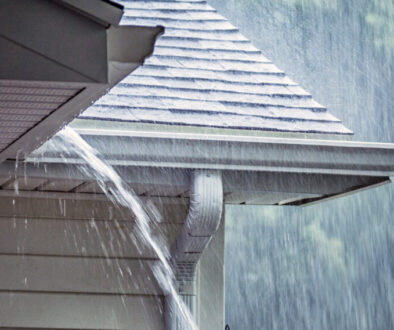
The real homeowner issue isn’t just “how much rain”—it’s how fast roof runoff concentrates, then hits gutters, downspouts, and corners.
If you’re seeing overflow stains, trenching, puddling near the foundation, or musty crawlspace for weeks, your system may be “working” but still dumping water in the wrong place.
The short answer
If you live on the valley floor, the Rogue Valley is not a “rainforest”—it’s more like steady winter rain + long dry stretches. For example, the National Weather Service climate summary for Medford International Airport lists a 1991–2020 normal annual precipitation of 18.43 inches. (National Weather Service)
But that number can be misleading if you take it too literally, because the Rogue Valley has microclimates. Move toward foothills, benches, or higher elevations, and totals generally climb—topography is one reason PRISM’s normals model rainfall using elevation and terrain patterns. (PRISM Group at Oregon State University)
When water problems show up in rainy weeks, the fastest way to narrow it down is to track where runoff exits and where it lands. Start with downspout discharge and drainage so you can spot pooling, splashback, and corner saturation in real rain.
Why the Rogue Valley feels “wetter” than the numbers suggest
Even with an ~18-inch “normal” on the valley floor, it can feel like a lot more rain because:
- The rain tends to arrive in clusters (storm cycles), not evenly spaced drizzles.
- A single roof can dump a surprising amount of concentrated runoff in a short time.
- Most damage comes from where water lands (corners, beds, foundation edges), not the annual total.
If you’re trying to connect rainfall to what you’re seeing around your home (overflow streaks, erosion, damp corners), your “why” is usually somewhere in the chain: roof → gutters → downspouts → discharge → ground.
When Does the Rogue Valley Actually Get Its Rain?
Most Rogue Valley precipitation is seasonal, with the bulk arriving in late fall through early spring.
That’s why homeowners often go months with “no problems,” then suddenly see issues show up fast once storms return:
- Dry-season debris compacts
- First storms mobilize needles + leaves into corners
- Outlets and elbows become bottlenecks
- Water starts taking the easiest alternate route (often behind gutters or over corners)
The “real” rainfall number that matters for homeowners
Instead of obsessing over the yearly total, focus on the two numbers that create problems:
1) Rain intensity (what happens during a real storm)
A system can handle light rain and still fail under moderate rain if:
- the outlet is partially restricted
- the downspout elbow is a needle trap
- the gutter pitch creates a low spot
- discharge is aimed at a flat corner
2) Wet-day frequency (how often the ground gets a chance to dry)
When storms stack, the soil near the foundation never resets—and that’s when:
- corners stay wet
- beds trench faster
- crawlspaces smell musty
- fascia stays damp long enough to soften
Want a quick “stress test”? During moderate rain, check the corners, compare downspout output, and watch whether water flows away or turns back toward the foundation.
If your discharge is extended but the same side of the home stays wet anyway, that’s when the ground itself becomes the suspect. Here’s how to tell whether you’re dealing with grading and soil issues vs. a gutter problem so you don’t fix the wrong thing first.
Why Rainfall Changes so Much Across the Rogue Valley
Even short-distance changes in location can shift rainfall patterns because of:
- Elevation: higher = cooler + more condensation potential
- Exposure: hills that face incoming storms can be wetter
- Tree cover: shaded rooflines stay damp longer, even if the annual total is the same
PRISM normals are popular specifically because they account for terrain and elevation when describing “normal” conditions across an area (not just a single airport station). (PRISM Group at Oregon State University)
Homeowner takeaway: Your neighborhood might not match the “Medford number,” but your house will still behave like a runoff machine once the storms hit.
What “Normal Rain” Does to Gutters and Downspouts (Common Failure Points)
Here are the most common ways typical Rogue Valley rain turns into water problems:
Outlet Bottlenecks (Most Common)
Your gutter can look “mostly clear” and still overflow if the outlet opening or top elbow is restricted. Backed-up water is what creates:
- corner dumping
- behind-the-gutter flow
- overflow stains on fascia
Corner Concentration
Corners are where volume stacks—especially if multiple roof planes feed a single downspout. When rainfall comes in waves, corners become the repeat offender.
Discharge That’s Technically “Working,” But Landing Wrong
A downspout can discharge strongly and still create:
- trenching in beds
- splash marks on the foundation
- puddling near the perimeter
That’s not a “gutter clog” problem—it’s a routing problem.
In those cases, the fix is usually less about “cleaning” and more about where the water is being sent. Our breakdown of downspout extensions and discharge distance explains how to spot a bad landing zone and what “far enough” looks like in real rain.
One reason rainfall “feels worse” than the yearly total is that the damage isn’t random—it follows repeat patterns: overflow marks, soggy corners, trenching beds, and foundation splash zones.
If you want the bigger picture of what those patterns can lead to over time, see our guide to water damage from gutters and roof runoff in Southern Oregon.
The Quick Diagnostic (How to Connect Rain to What You’re Seeing)
Next time you get moderate rain, check these three things:
- Corner behavior
- Any corner dumping?
- Any seam dripping steadily?
- Any water disappearing behind the gutter?
- Downspout comparison
- Are all downspouts equally strong?
- Is one delayed/weak?
- Landing zone
- Does water flow away or turn back?
- Any pooling within a few feet of the foundation?
- Any trenching starting immediately?
What to do With This Info (Simple, Practical)
If you live in the Rogue Valley, your “rain plan” is really a runoff plan:
- Before storms: clear choke points (outlets, corners, elbows)
- During storms: do a 5–10 minute walkaround
- After storms: fix where water lands (extensions, splash blocks, routing)
Most homes don’t need a complicated system, just a repeatable routine that prevents wet debris and bottlenecks from building up before storm season. Here’s a simple gutter maintenance plan for Southern Oregon you can follow without guessing.
FAQs
-
The National Weather Service climate summary for Medford (1991–2020 normals) lists 18.43 inches of annual precipitation.
-
Because most rain comes in seasonal bursts, roofs concentrate runoff, and problems show up when water repeatedly lands at corners, beds, and foundation edges.
-
Yes—terrain and elevation can shift “normal” conditions even within short distances. PRISM normals model these differences using topography and elevation patterns.
-
Concentrated roof runoff overwhelming bottlenecks (outlets/elbows) and dumping water too close to the foundation—especially at corners.
-
Do a quick walkaround during moderate rain: watch corners, compare downspout discharge strength, and check whether water flows away or pools near the foundation.