Can You Remove Roof Moss Yourself? Pros, Cons, and What Can Go Wrong
Key Takeaways
- DIY roof moss removal is possible, but falls and roof damage are the two biggest risks.
- The most common DIY mistake is using pressure or aggressive scraping on asphalt shingles.
- In Southern Oregon, moss comes back fastest on north-facing slopes and under tree canopy.
- Light moss is easier to manage; thick mats usually require controlled removal + treatment.
- If insurance is watching roof condition, documentation matters as much as cleaning.
Can You Remove Roof Moss Yourself?
Yes — sometimes.
If the moss is light, you’re comfortable working safely, and your roof is in good shape, DIY can be reasonable.
But here’s the field truth: many DIY attempts go sideways for one of two reasons:
- Safety gets underestimated (wet shingles can be slick even when you’re careful)
- The roof gets treated like concrete (scraping / blasting instead of controlled removal)
If you’re in Southern Oregon, the context matters. Moss here isn’t random — it follows shade, debris, and long damp cycles. That pattern comes down to how long your roof stays damp after rain, not just how much rain we get.
When DIY Makes Sense
DIY is most realistic when:
- Moss is thin (film or small patches, not thick mats)
- You can address it from the ground (long-handled tools) or from a ladder safely
- Your roof is single-story with simple access
- Shingles are not brittle (no heavy curling, cracking, or major granule loss)
- You’re willing to be patient (moss control is rarely instant)
A lot of homeowners win simply by managing debris first — especially roof valleys and shaded transitions. If debris keeps rebuilding in the same spots, moss is basically next in line.
When DIY Is a Bad Idea
DIY usually isn’t worth it when:
- The roof is steep, two-story, or hard to access
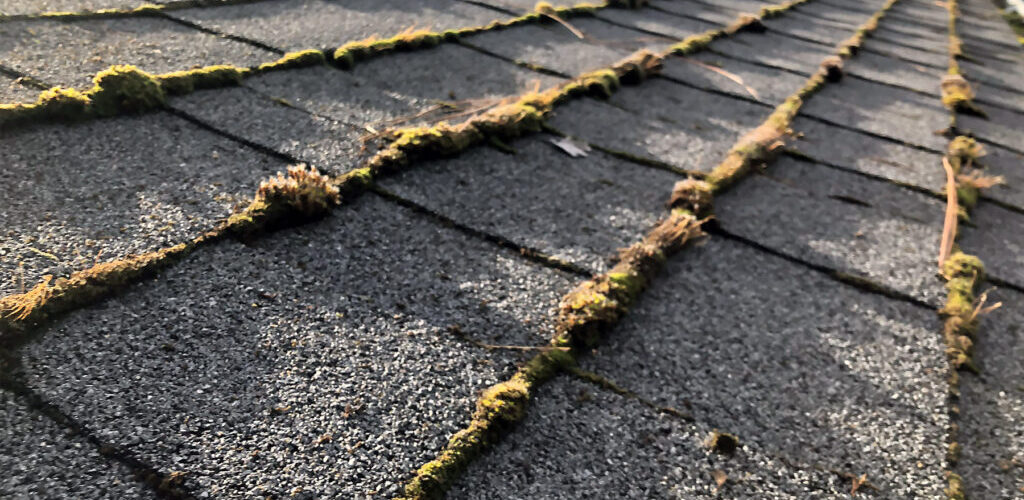
- Moss is thick and rooted
- You already see edge lifting or signs of shingle wear
- You’re near power lines or slick surfaces (metal valleys, wet leaf litter)
- You’re working in winter/spring when roofs stay damp longer
And if your insurer has requested roof photos or hinted at renewal issues, the risk of “half-cleaned and damaged” is higher than most people expect. In a lot of cases, choosing the right season affects both the results and the safety of the work.
DIY Pros and Cons (Honest Version)
Pros
- Lower cost (if nothing goes wrong)
- You can knock down early-stage growth quickly
- Good for ongoing maintenance on low-risk roofs
Cons
- Fall risk is real — and the roof doesn’t have to be “that steep”
- Easy to damage shingles without realizing it
- Many DIY methods remove moss and remove roof life
- Results can look great for a month… then regrowth returns fast if roots/debris remain
The Three DIY Methods People Try (and What Can Go Wrong)
1) Scraping / Brushing
What people do: scrape thick moss off with a rigid brush or scraper.
What can go wrong:
- Granules strip off with the moss
- Shingle edges crack (especially older roofs)
- You create bare asphalt exposure that summer UV will punish
Field guide rule:
If moss is coming off like carpet but granules are coming off like sand, stop.
2) Pressure Washing
What people do: blast it clean for instant results.
What can go wrong (especially on asphalt):
- Granules get blasted off permanently
- Water gets forced under tabs
- Damage shows up later as premature aging, leaks, or brittle shingles
Instant results are exactly why pressure washing is tempting — but on asphalt shingles, the tradeoff is usually roof life. If you’re deciding between pressure, soft wash, and controlled removal, the method differences matter more than the before-and-after photos.
3) DIY Chemicals (Bleach, “Roof Moss Killer,” etc.)
What people do: spray a solution and hope it solves the problem.
What can go wrong:
- Wrong dilution can damage roofing materials or landscaping
- Insufficient dwell time = weak results
- Over-rinsing turns into mechanical damage anyway
- Runoff can stain, kill plants, or create slippery hazards
Good to know: treatment works best when the roof is already reasonably clear of debris — otherwise you’re treating moss while the roof is still holding the moisture that helped it grow.
The Southern Oregon Variable: Moss Comes Back Where the Roof Stays Damp
Here’s the pattern you can bank on:
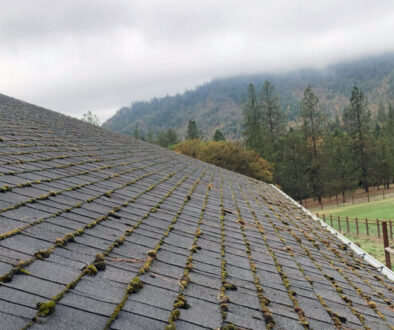
- Moss starts on north-facing slopes
- It thickens in valleys and shaded transitions
- It accelerates under tree canopy where debris builds up
If you handle the moss but ignore the debris, it returns.
If you time it wrong, it returns faster.
That’s why seasonal timing matters more here than in many regions — late spring and early fall are the two best “windows” for most homes.
What DIY Usually Misses (The Hidden Work)
Most DIY attempts focus on “green removal.” Pros focus on:
- Where moisture is being held
- Why debris keeps collecting
- How to treat without stripping granules
- How to slow regrowth
Moss control is as much about roof behavior as it is about roof appearance.
If you want the bigger framework — inspection checkpoints, timing, and when cleaning stops making sense — the Southern Oregon roof maintenance guide lays it out in plain terms.
A Safe, Realistic DIY Plan (If You’re Going to Do It)
If you want the lowest-risk DIY approach:
- Pick a dry window. If the roof still feels cool and damp, wait — traction and results both get worse.
- Start with a ground inspection. Note where moss starts and where debris collects.
- Clear debris first (especially valleys and shaded corners).
- Avoid pressure on asphalt. No “driveway mindset.”
- Use gentle, controlled removal for light growth only.
- Treat and let time work. Moss often releases gradually.
- Monitor after the next wet cycle. That’s when you’ll see if you actually fixed the cause.
If you want your DIY schedule to match your roof’s risk level (shade, slope orientation, canopy), use the same approach we outline in a practical roof cleaning schedule for Southern Oregon homes.
When to Call a Pro (Simple Triggers)
Call a professional if:
- The moss is thick and rooted
- The roof is steep / high / complex
- You’re seeing shingle wear, lifting, or brittle tabs
- You need before/after documentation for insurance
- You want regrowth slowed without trading roof lifespan for speed
The goal isn’t a dramatic transformation. It’s controlled cleaning that preserves the system.
Understanding the difference between pressure, soft wash, and controlled manual removal is one thing.
Deciding whether you should handle it yourself is another.
Final Field Note
Moss removal isn’t about making a roof look new.
It’s about preventing moisture from becoming mechanical.
If your roof is lightly affected and safely accessible, a careful DIY approach may be enough.
If it’s thick, rooted, steep, or already showing wear, restraint is often the smarter move.
In Southern Oregon, roofs don’t fail suddenly — they age predictably. The goal is to interrupt that aging without accelerating it.
If you’re unsure whether your roof needs treatment, debris control, or simply monitoring, a controlled evaluation is always safer than an aggressive guess.
FAQs
-
It can be for light growth on simple, single-story roofs — but falls and shingle damage are the main risks. Wet conditions make even “not steep” roofs dangerous.
-
It can. Aggressive scraping often removes granules and can crack brittle shingles. Light, controlled removal is safer than force.
-
On asphalt shingles, it’s generally a bad idea. Pressure can strip granules and push water under tabs, shortening roof life.
-
Debris control + timing. Clear valleys and shaded buildup, then treat early-stage growth before it becomes thick and rooted.
-
If the roof is steep, high, heavily mossed, or already showing shingle wear — or if insurance needs documentation. Those are the situations where mistakes get expensive.