How Often Should You Clean Your Roof in Southern Oregon?
Key Takeaways
- Most Southern Oregon homes should inspect yearly and clean every 1–2 years in shaded or tree-dense areas.
- Cleaning frequency should be based on drying time (shade + north-facing slopes), not roof age.
- Debris in valleys often matters as much as visible moss.
- The earlier you act, the safer (and cheaper) the cleaning tends to be.
- If insurance has requested roof photos or sent a notice, timing and documentation matter.
Southern Oregon isn’t coastal, wet year-round, but roofs here still grow moss faster than many homeowners expect.
The main reason is moisture duration.
From late fall through early spring, roofs can stay damp for long stretches due to:
- Cooler temperatures
- Low winter sun angles
- Overnight condensation
- Shade from mature tree canopy
If a roof stays damp for days at a time, moss becomes a predictable problem.
That’s why the right question isn’t “How old is the roof?”
It’s “How quickly does this roof dry?”
Method decisions only make sense when viewed inside a broader Southern Oregon roof maintenance framework, where timing, inspection intervals, ventilation, and material condition are evaluated together.
The Simple Rule of Thumb
For most homes in Southern Oregon:
Inspect annually.
Clean every 1–2 years if you’re in shade, on a north-facing slope, or dealing with recurring debris.
Homes with strong sun exposure and minimal canopy may be able to go longer — but they still benefit from a yearly inspection cycle.
In practice, roof cleaning works like maintenance on any exposed system: light, early interventions are gentle; late interventions are more invasive.
- Early maintenance stays simple
- Delayed maintenance becomes more aggressive (and costly)
A Practical Roof Cleaning Schedule by Risk Tier
Here’s a schedule that fits how roofs actually behave in Medford, Ashland, Jacksonville, Grants Pass, and surrounding areas.
Tier 1: High-Risk Roofs (Clean every 12–18 months)
You likely fall into this tier if you have:
- A north-facing primary slope
- Dense tree canopy over the roof
- Frequent debris buildup in valleys
- A home near greenbelts, creeks, or foothill shade corridors
- Noticeable moss returning within 1–2 winters
Why: These roofs don’t dry fast enough in winter. Moss anchors deeper and spreads faster when ignored.
Tier 2: Medium-Risk Roofs (Clean every 18–30 months)
You may fall here if:
- Shade is partial (morning or afternoon)
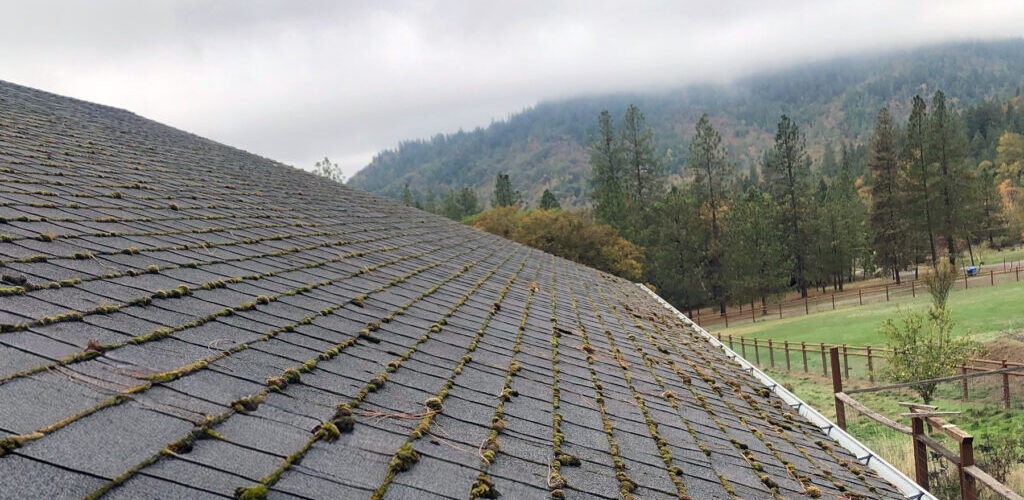
- Moss appears in patches, not full mats
- Debris collects occasionally but isn’t chronic
- Your roof gets a decent amount of sun in winter
Why: These roofs still experience damp cycles, but not enough to require annual cleaning in most cases.
Tier 3: Lower-Risk Roofs (Clean every 3–5 years, inspect yearly)
You may fall here if:
- Your roof is largely sun-exposed
- You have minimal tree canopy
- Valleys stay clean and dry
- Moss is rare or slow to return
Why: Drying cycles are faster, and moss struggles to establish. But inspections still matter because debris and flashing issues can show up even without moss.
What “Inspection” Should Actually Mean
Inspection doesn’t need to be complicated.
At a minimum, do a ground inspection 2–4 times per year, especially after:
- Big storms
- Heavy leaf drop
- Winter freeze/thaw events (at elevation)
Look for:
- Moss “islands” starting on north-facing slopes
- Dark streaking or green film in shaded zones
- Debris lines in valleys (pine needles and leaves)
- Lifted edges or curling tabs
- Overflow patterns at gutters/downspouts
If debris is consistently rebuilding in the same places, that’s a sign your roof is in a higher-risk tier — even if moss isn’t dramatic yet.
When You Should Clean Sooner (Even If It Hasn’t Been “That Long”)
Time-based schedules are helpful, but condition matters more.
Clean earlier if you notice:
- Moss spreading beyond small patches
- Valleys holding debris through the rainy season
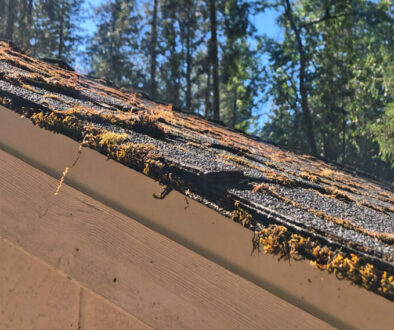
- Thick mats forming along shingle edges
- Shingle edges lifting where moss has rooted
- Visible growth around chimneys, skylights, and transitions
In Southern Oregon, moss often looks “sudden” because it develops quietly before it becomes obvious. If you can see it clearly from the ground, it’s usually been there awhile.
How Roof Type Changes the Schedule
Asphalt shingles (most common)
Most asphalt shingle roofs in shaded areas benefit from cleaning every 1–2 years, with consistent valley debris control.
Method matters here — aggressive cleaning can remove granules and shorten lifespan, which is why we compare the roof cleaning methods that actually work in Southern Oregon (and the ones that quietly cost you years).
Metal roofing
Metal often sees less moss, but debris can still trap moisture near seams, fasteners, or shaded edges.
Metal roofs still need inspection — especially around:
- Fasteners
- Sealant points
- Valleys and debris traps
Cedar shake
Cedar is more moisture sensitive and often needs a tighter maintenance approach — especially in foothill zones and heavy canopy neighborhoods.
What About Solar Panels?
Solar panels can change maintenance frequency.
Panels:
- Create shade zones
- Trap debris at panel edges
- Reduce drying beneath the array
If you have panels, pay close attention to:
- The lower edges of the array
- Valleys beneath or adjacent to panels
- Moss growth patterns along panel shade lines
Many “mystery moss problems” show up right where the panel runoff and shade interact.
The Cost Factor: Why Early Cleaning Is Cheaper
Southern Oregon roof cleaning usually becomes more expensive when:
- Moss is thick and rooted
- Valleys require heavy manual clearing
- Multiple slopes are fully involved
- Access is steep or complex
Early-stage moss is typically easier (and safer) to address.
Pricing usually comes down to slope, access, and how rooted the growth is — the roof cleaning cost breakdown for Southern Oregon explains why “light moss” and “thick mats” are two very different jobs.
Insurance Timing: The One Time You Don’t Want to Wait
If your insurer has:
- requested roof photos,
- issued a roof condition notice,
- or hinted at renewal concerns,
don’t wait until the last minute.
Aerial review (including drones and high-resolution imagery) makes roof appearance more important than it used to be — even if the roof is not actively leaking.
If you’re in that situation:
- document the roof now (before photos)
- address visible moss/debris promptly
- keep receipts and after photos
If you’ve been asked for roof photos or received a warning, it helps to understand how drone and aerial reviews flag “visible neglect,” and what to do when an insurer sends a roof condition notice.
Best Time of Year to Clean (Quick Answer)
In Southern Oregon, the best windows are typically:
- Late spring (after winter moisture)
- Early fall (before extended rain)
Summer can still work, but some roofs don’t show their true moss severity until the wet season returns.
Winter cleaning is possible, but weather-dependent, and scheduling can be harder.
Those timing windows are explained in more detail in the best time of year for roof cleaning in Southern Oregon breakdown, since the “right month” depends on when your roof actually dries out.
A Realistic Maintenance Plan (That Homeowners Actually Stick To)
If you want the simplest sustainable approach:
- Inspect every spring
- Inspect every fall
- Keep valleys clear (especially under trees)
- Treat early-stage moss before it becomes a thick mat
- Clean on a schedule based on shade and drying time (Tier 1–3)
This turns roof maintenance into something predictable — instead of reactive.
FAQs
-
Most tree-dense roofs in Southern Oregon fall into the 12–18 month range, especially if the primary slope faces north or valleys collect debris.
-
If valleys are holding debris or you see early moss patches, cleaning sooner is usually cheaper and safer than waiting for thick growth.
-
Not for high-risk roofs under dense canopy or near foothill shade corridors. For sun-exposed roofs with minimal debris, yearly inspection is still smart, but cleaning may be less frequent.
-
If shingles are still flexible and structurally intact, removing moss and debris can help preserve remaining lifespan. It won’t restore brittle shingles.
-
Debris removal is a big part of moss control in Southern Oregon. Valleys and shaded transitions that hold debris tend to regrow moss faster, even after treatment.
-
Thick moss mats, visible edge lifting, and heavy valley buildup. At that stage, cleaning becomes more labor-intensive and the roof may already be losing granules.