Gutter Cleaning vs. Roof Cleaning: Which Should Be Done First?
Key Takeaways
-
Roof cleaning usually comes first because it drops debris into gutters and changes what needs to be cleared.
-
If your gutters are actively overflowing, clear the outlets first to prevent water from backing up during roof work.
-
If you’re applying a roof treatment (moss/algae), plan on gutter cleaning afterward to remove runoff residue.
-
Downspouts are often the real bottleneck—confirm discharge during rain to avoid surprises.
-
A simple seasonal rhythm (late summer + mid-fall + post-storm) prevents most “cascade” problems.
If you’re trying to keep water off your fascia, siding, and foundation, roof cleaning and gutter cleaning aren’t separate chores—they’re two parts of the same system.
So which should you do first?
If you’re building a longer-term plan beyond one cleaning, our roof maintenance guide explains what to prioritize by season.
In most Southern Oregon situations, the best order is:
Roof cleaning first, then gutter cleaning.
But there are a few important exceptions (like active overflow, heavy debris load, or a roof treatment that will wash into the gutters). This guide breaks down the logic, the safest sequence, and the “when to break the rule” scenarios—so you don’t end up doing the same work twice.
The Simple Rule: Start With The Roof, Finish With The Gutters
Best order (most homes): Clean the roof first, then clean the gutters, then confirm downspouts are draining properly.
Think of it like sweeping a porch.
You don’t wash the floor and then sweep dirt onto it—you sweep first, then clean what’s left.
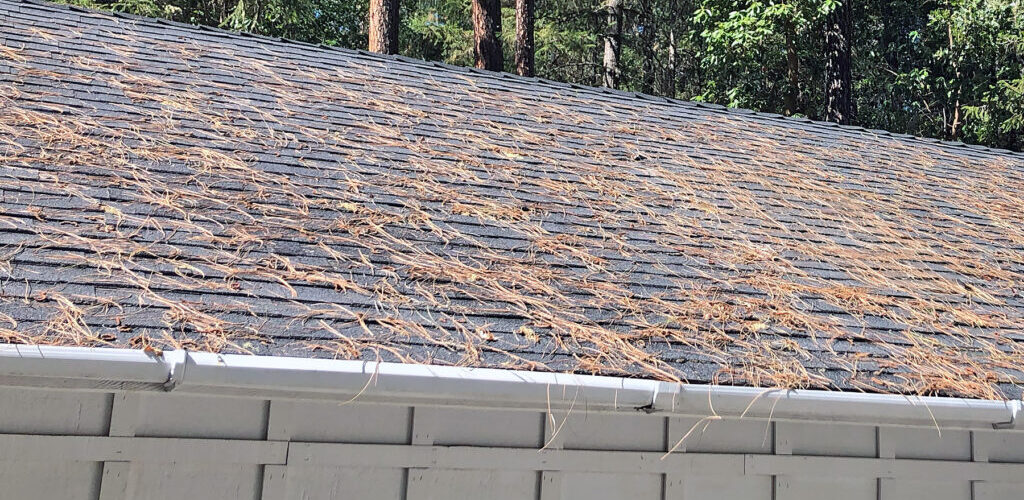
Roof debris (needles, leaf fragments, granules, moss/algae residue) almost always ends up in the gutters. So if you clean gutters first, a roof cleaning often refills them immediately.
Recommended order (most homes):
-
Roof cleaning (remove debris at the source)
-
Gutter cleaning (clear what the roof work drops)
-
Downspout check (confirm proper discharge)
If you want a simple way to time both tasks throughout the year, our gutter maintenance plan lays out what to do before storms, during leaf drop, and after wind events.
Why Roof Cleaning Usually Should Be Done First
Roof Debris Becomes Gutter Debris
A roof cleaning—especially on valley lines, roof edges, and shaded sections—will dislodge material that’s been sitting up top for months. That material has to go somewhere, and gravity usually sends it into the gutters.
Common “post-roof-clean” gutter loads include:
-
roof granules and grit
-
pine needles and leaf fragments
-
seed pods and blossoms
-
moss/algae residue (depending on method)
If you want the regional explanation for why this happens so fast here, tie in:
This “roof-to-gutter” cascade is one reason clogs show up fast here—especially with needles, dust, and summer compaction. If you want the local breakdown, see why gutters fail faster in the Rogue Valley.
Roof Edge Cleanup Protects Fascia First
Roof-edge debris contributes to water “sheeting” and overflow patterns during storms. Clearing the roof edge first often reduces the stress points that create recurring overflow.
If you’re seeing persistent symptoms, reference:
If one corner keeps overflowing or you’re seeing the same drip line every storm, you may be dealing with more than debris. Our guide to the signs your gutters are failing helps you diagnose what’s actually happening.
When Gutter Cleaning Should Come First
The “roof first” rule is solid—but there are a few cases where you should do a quick gutter step first to avoid damage.
If Gutters Are Actively Overflowing Right Now
If your gutters are overflowing during moderate rain, you don’t want to do roof work that adds debris to an already-restricted system.
Do this first:
-
clear the downspout outlets
-
confirm each downspout is discharging
Then proceed with roof cleaning, followed by a full gutter cleanout.
If you’re not sure what “normal” discharge should look like (or where that water should go), our guide to downspouts and drainage makes it easy to check the system without guessing.
If There Is Standing Water In The Gutters
Standing water usually points to:
-
outlet restriction
-
pitch/sagging
-
a low spot holding water
In this case, a roof cleaning won’t fix the underlying flow problem. You may need cleaning and a structural adjustment.
Standing water is one of the clearest signs the issue may be structural—pitch, hangers, or a low spot—not just debris.
If You Have a Heavy, Wet Debris Load
If gutters are packed with wet leaves or sludge, that added weight can stress hangers and seams. It’s often safer to remove that load first—then do roof work.
This matters most in fall, during leaf drop and early storm cycles:
If you want a simple “do this now” routine for leaf drop and the first storms, use our fall gutter maintenance checklist to stay ahead of the heavy, wet buildup.
How Roof Treatments Change The Order
If you’re doing more than “debris removal”—like moss or algae treatment—the sequence matters even more.
If A Roof Treatment Will Run Off Into Gutters
Many roof treatments (and even heavy rinsing) will carry residue into gutters and downspouts. That residue can:
-
create a gritty slurry
-
lodge at elbows/outlets
-
stain splash zones at discharge points
In these cases, you can do a light pre-check of outlets (so everything drains), then plan on a full gutter cleanout afterward.
A good general approach:
-
Clear downspout outlets (quick check)
-
Roof cleaning/treatment
-
Full gutter and downspout cleaning
The Downspout Reality: Most “Gutter Problems” Are Outlet Problems
Homeowners often focus on the long gutter run. But many failures happen at:
-
the outlet
-
the elbow
-
the downspout line
-
the discharge area
A gutter can look mostly clear and still overflow if the outlet is restricted.
A Practical Southern Oregon Sequence You Can Repeat Every Year
Southern Oregon has a predictable pattern: dry-season debris compacts → first storms arrive → weak points reveal themselves quickly.
Here’s the repeatable routine that prevents most issues:
Late Summer Or Early Fall (Before Storms)
-
Roof edge + valley debris removal
-
Gutter cleanout
-
Confirm downspouts discharge away from the foundation
Mid-Fall (After Leaf Drop Begins)
-
Target the “problem edge” (the roofline that collects debris first)
-
Quick gutter/outlet re-check
-
Inspect for sagging or seam drips
After Big Wind Events
-
Walk the perimeter
-
Look for overflow marks and splash patterns
-
Confirm downspouts are still running normally
Cleaning Both? Here’s The Most Efficient Way To Combine Them
If you’re planning to do both tasks in the same window, this order usually saves time:
-
Roof Cleaning (Debris Removal First)
-
Gutter Cleaning (Catch What Drops)
-
Downspout Flush/Check (Confirm Drainage)
-
Spot-Inspect Problem Areas (Seams, Pitch, Hangers)
If you keep seeing the same failure point even after doing the “right order,” stop repeating the cycle and use this guide to decide whether you need cleaning or repair.
Cost Note: Doing The Sequence Wrong Can Double The Work
When gutters are cleaned first, and the roof is cleaned right after, homeowners often end up paying (or spending) twice:
-
once to clear gutters
-
again to clear what the roof work drops
If you want a local baseline for budgeting and planning:
If you’re budgeting the season and trying to avoid duplicate work, here’s a local baseline for gutter cleaning cost in Southern Oregon.
When To Call It “More Than Maintenance”
If you’re doing the right sequence and still seeing:
-
the same corner overflowing
-
standing water that doesn’t drain
-
gutters pulling away from the fascia
-
consistent seam drips
…it’s likely not a cleaning issue anymore.
FAQs
-
Usually no. Roof cleaning tends to send debris into the gutters, so cleaning the roof first prevents gutters from refilling immediately. The main exception is active overflow—clear outlets first.
-
Do a quick outlet/downspout clear first so water can drain, then do roof cleaning, then follow with a full gutter cleanout.
-
It can. Treatments and rinsing can carry residue into gutters and outlets. Plan to clean gutters after treatment, and confirm downspout discharge.
-
Most issues come from debris load and water weight, not the cleaning itself. Packed wet gutters are heavier and stress hangers—another reason to avoid letting them stay clogged.
-
It depends on tree cover, shade, and roofline shape. A common rhythm is late summer/early fall plus a mid-fall re-check, then spot checks after big wind events.