French Drains in Southern Oregon (Positives and Negatives)
Key Takeaways
- French drains work best for subsurface water moving through soil—not roof runoff that should be handled by gutters/downspouts first.
- If water is dumping at a downspout or overflowing at the roof edge, a French drain is often the wrong first fix.
- Most “failed” French drains come down to no real outlet, weak slope, or clogging from poor filtration and debris.
- In Southern Oregon, seasonal saturation + soil conditions + debris make cleanouts and detailing more important than most homeowners expect.
- Best results come from fixing water in order: roof runoff → discharge → grading → then French drains.
Why French Drains Get Recommended So Often
French drains have a good reputation because when they’re used for the right problem, they’re a quiet workhorse. The common mistake is treating them like a universal fix for “wet yard” or “foundation moisture.”
From an inspector’s point of view, the smarter first step is always the same: confirm the water source and the water path. If you’re still figuring out whether the problem is roof runoff, yard slope, or true groundwater, start with this drainage and water control guide for Southern Oregon: Drainage & Water Control in Southern Oregon.
What a French Drain Actually Does
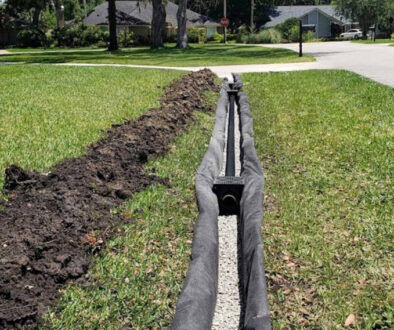
A traditional French drain is a trench that collects water moving through soil and routes it somewhere else using:
- Perforated pipe (or gravel-only trench)
- Filter fabric
- Drain rock
- Continuous slope to an outlet
It’s designed to intercept subsurface water—not replace gutters, downspouts, or grading.
French Drains – Quick Positives and Negatives
French drains solve one specific problem really well—but they’re also one of the easiest drainage fixes to misapply.
Positives (when it’s the right water problem):
- Intercepts subsurface seepage before it reaches the structure
- Reduces soggy side yards and chronic saturation in the same areas
- Helps protect hardscapes from undermining and settling
Negatives (why they “fail” or disappoint):
- They don’t fix roof runoff or bad discharge (those are separate problems)
- Without slope + a real outlet, they can behave like an underground holding tank that fills, slows down, and backs up
- Poor filtration, no cleanouts, and debris lead to clogging over time
When French Drains Help in Southern Oregon
In the field, the “best case” for a French drain is water that’s moving through soil and lingering—not water you can see pouring off a roof edge.
If you’re still unsure whether you’re dealing with roof runoff, surface flow, or true subsurface seepage, pause and identify the source first—then match what you’re seeing to the patterns below.
Wet Side Yards That Stay Soggy for Days
If one side of the home stays damp long after storms (often shaded sides), there’s usually subsurface water moving slowly through the soil.
Good signs it’s a French drain type of problem:
- The ground feels spongy even a day or two after rain
- Water “seeps” instead of flowing on top
- Thicker moss/grass growth in one strip
- The same puddling returns in the same low area
Hillside Seepage From the Upslope Side
On sloped properties, water can move laterally through soil and show up as seepage at the base of a hill.
French drains help when you can intercept that flow before it reaches the structure, and there’s a legitimate outlet.
Water Undermining Walkways, Patios, or Edges
Sometimes the win isn’t “foundation protection”—it’s preventing saturation that causes settling and erosion along hardscapes.
French drains can work well here if the installation has a proper slope and doesn’t just “hold” water underground.
When French Drains Don’t Help (or Aren’t the Right First Fix)
Most “French drain recommendations” fall apart when you identify the real source: roof water that’s being discharged in the wrong place. Before you trench anything, check whether downspouts are dumping at the footing or creating soggy perimeter soil—because in that scenario, the fix is usually redirecting discharge, not adding more underground piping.
Downspouts Dumping Near the Foundation
If roof runoff is being discharged at the footing, a French drain is often an expensive band-aid. Start by fixing discharge first—this guide on downspout drainage in Southern Oregon shows what “good” looks like (and what fails fast).
If you’re unsure what “good” looks like, this makes the decision simple: How Far Should Downspout Extensions Discharge?
Gutter Overflow Creating Foundation Splash
If water is falling off the roof edge (instead of staying in the gutter), digging first is usually treating the symptom. This breakdown of gutter overflow damage helps you tell fascia rot from siding stains and foundation splash, so you’re fixing the real exit point.
Standing Surface Water From Bad Grading
If water is pooling because the yard slopes toward the home (or hardscape pitches inward), grading is often the primary fix. If you’re stuck between the two, this quick diagnostic—grading problem or gutter problem?—usually makes the call pretty clear.
No Real Outlet Exists
A French drain needs a place for water to drain. Without an outlet, you can end up building an underground bucket.
From an inspection standpoint, the biggest red flag is a drain that collects water without a reliable exit—those fail quietly until you notice settling, erosion, or moisture intrusion.
Common outlet paths:
- Daylight discharge to a lower area
- Approved storm connection (jurisdiction-dependent)
- Dry well (site-dependent)
- Pump system (adds complexity + failure points)
It’s Actually a Crawlspace Moisture Pattern
If the “wet issue” is tied to under-home humidity and musty air, you might need to fix perimeter saturation first, not trench deeper. This article ties it together well: Crawlspace Moisture: Gutters & Downspouts in Southern Oregon.
What to Check Before You Dig
Before you think about trench depth or pipe type, do one simple thing: classify the water.
The fastest way is to walk the property during (or right after) a decent rain and ask, “Is this coming off the roof, running across the surface, or seeping up through the soil?” Once you know which water you’re dealing with, the right fix usually becomes obvious—and the wrong fix gets a lot easier to avoid.
Step 1: Identify the Water Type
- Roof water: splash marks, overflow staining, downspout discharge patterns
- Surface water: visible flow paths during rain, pooling in low spots
- Subsurface water: soggy ground that lingers, seepage patterns, persistent dampness
If you haven’t done a roof-to-ground walkthrough yet, this fall gutter maintenance checklist for Southern Oregon is a fast way to catch overflow, clogs, and bad discharge before you plan any digging.
Step 2: Confirm There’s a Valid Outlet
Before anything gets trenched, confirm:
- There’s a lower discharge area that won’t erode
- Discharge won’t create neighbor or property-line issues
- Any storm tie-ins are actually allowed where you are
Step 3: Walk the “Wet Line”
Find the boundary where normal ground transitions to soggy. That’s often where interception should happen.
Step 4: Check Slope (Basic, But Critical)
Even a perfect install can fail if it bellies or back-slopes. The system has to move water continuously.
Common Reasons French Drains Fail
Most French drains don’t “fail” all at once—they just stop moving water effectively. From an inspection standpoint, the biggest difference between a drain that lasts and one that turns into a soggy trench is whether it has continuous fall to a real outlet, plus details that keep sediment from building up over time. With that in mind, here are the most common failure points I see.
No Slope (or Not Enough Slope)
If the pipe holds water, it holds sediment too—and performance drops.
Poor Filtration or Wrong Fabric
Skipping fabric or using the wrong type can let fines migrate into the rock.
No Cleanouts
Cleanouts aren’t exciting, but they’re often the difference between “serviceable” and “dig it up again.”
Roof Water Tied In Without Debris Control
Downspout tie-ins can introduce grit and roof debris. If you’re tying in roof runoff, make sure your gutter system is actually functioning first: Gutter Maintenance in Southern Oregon.
Fixes in the Right Order (Lowest Cost to Highest)
If you’re choosing between options, don’t skip the easy wins. Roof water volume is concentrated, predictable, and usually the cheapest to control.
- Restore gutter flow (clean + pitch + confirm no overflow)
- Correct downspout discharge (extensions, redirects, proper outlet)
- Fix obvious grading/hardscape pitch issues
- Install a French drain for persistent subsurface saturation
- Only then consider pumps or more invasive excavation
If you’re trying to confirm whether your gutters are a “cleaning” issue or a “repair” issue before going further, this is a helpful checkpoint: Do Your Gutters Need Cleaning or Repair?
When It’s a Red Flag
- Water is entering the crawlspace/basement repeatedly
- Standing water sits against the foundation long after storms
- Erosion undermines walkways or hardscape edges
- Musty crawlspace air persists after discharge + grading corrections
- You’re unsure where the discharge will exit (risking damage elsewhere)
When to Call a Pro
From an inspection standpoint, bring in help when:
- You need grading + drainage planned together
- There’s no obvious outlet, and you’re considering a pump system
- You’re near foundations, retaining walls, or hardscapes that could be undermined
- The moisture pattern is recurring, and you want documentation for future conversations (insurance/resale)
Final Field Note
French drains work best when you can clearly say, “This is subsurface water—and here’s where it will exit.” If roof runoff is still dumping at the foundation, fix that first, then reassess. In a lot of homes, that first correction reduces the problem enough that you don’t need to dig at all.
FAQs
-
They can, but clay drains slowly and holds water. Proper design (rock volume, fabric, slope, outlet) matters more, and results vary by site.
-
Sometimes—but it’s not always ideal. Roof runoff can bring debris and grit. If you do it, plan for filtration and cleanouts.
-
Deep enough to intercept the water you’re dealing with—there’s no universal depth. Too shallow won’t intercept; too deep may be unnecessary cost.
-
Well-built drains can last a long time, but they’re not “set and forget.” Clogging and root intrusion are the usual long-term issues.
-
Not always. If the main problem is surface slope, regrading is often the simplest, most permanent correction.