Fascia Rot From Gutter Overflow (Signs, Severity Levels, When to Call a Pro
Key Takeaways
Fascia rot usually starts when water repeatedly overflows or runs behind the gutter at the same spot.
Soft wood is the #1 “call a pro” trigger—rot spreads fast once fascia stays damp.
Most recurring fascia damage comes from outlet restrictions, bad pitch, sagging, or gutters pulling away (not just “leaves”).
A 5–10 minute rain walkaround can pinpoint the exact corner or seam causing the problem.
Fixing fascia without fixing the water path often leads to the same damage coming back.
Fascia Rot From Gutter Overflow: Signs, Severity Levels, When to Call a Pro
Fascia rot is one of the most common “quiet” water damage problems on Southern Oregon homes. It usually doesn’t start as a dramatic failure—it starts as a repeat overflow pattern: one corner dumps late, one seam drips every storm, or water slips behind the gutter during heavier rain.
Once fascia stays damp long enough, paint fails, wood swells, fasteners loosen, and the gutter starts pulling away—which creates even more behind-the-gutter flow. It’s a feedback loop.
This guide will help you:
-
spot fascia rot early,
-
understand severity levels (so you don’t overreact or ignore it),
-
and know exactly when DIY stops making sense.
What Fascia Is (and Why It Rots So Often)
Fascia is the board running along your roof edge that the gutters attach to. It’s basically the “mounting surface” and a key barrier that keeps water from getting into the roof edge assembly.
Fascia rots when it’s exposed to repeated wetting—and gutters are the #1 way that happens, because they concentrate water at corners and outlets.
Common ways gutters cause fascia rot:
-
Overflow at corners and end caps
-
Water running behind the gutter (often from sagging, separation, or a bad drip edge relationship)
-
Clogged outlets backing water up
-
Standing water in a low spot (pitch issue)
If you’re troubleshooting, the fastest win is usually finding the exact place the system bottlenecks—because most water damage starts when water can’t exit cleanly. That’s why it helps to understand downspouts and drainage before you chase symptoms.
The Most Common “Gutter Overflow” Patterns That Rot Fascia
If you’re trying to diagnose quickly, most fascia rot traces back to one of these patterns:
1) Recurring overflow at the same corner
This is the classic one. You’ll see staining, algae growth, or paint failure in one exact area—storm after storm.
Usually caused by:
-
outlet/downspout restriction
-
debris mat at a corner
-
sagging that creates a low spot before the outlet
Before you decide whether this is a quick cleanup or a real repair, it helps to zoom out and look at the full drainage chain—roof runoff, gutters, downspouts, and where water lands. If you want the bigger picture, start with the gutter maintenance plan for Southern Oregon.
2) Drip line behind the gutter
The gutter might look “okay” from the front, but water is slipping behind it and soaking the fascia edge.
Usually caused by:
-
gutter pulling away (gap behind gutter)
-
hangers loosening
-
fascia board already swelling/softening
-
heavy rain + imperfect alignment at the roof edge
3) “Late dumping” during rain
One corner doesn’t overflow immediately—it starts dumping once the system is overwhelmed, which points to a restriction or slow-draining outlet.
Usually caused by:
-
partially blocked outlet or elbow
-
compaction layer (needles + grit) restricting flow
-
downspout discharge backing up
Fascia Rot Warning Signs
Once you know the pattern, the next step is identifying whether you’re looking at early exposure or actual wood breakdown. Many of the same symptoms that show up here also indicate that your gutters are failing, especially when overflow recurs in the same spot.
These are the most common signals that fascia is getting soaked—or already degrading.
Early warning signs (often DIY fixable)
-
Dark streaks on fascia below a corner or seam
-
Peeling paint localized to one section
-
Small algae/mildew growth along one roof edge
-
“Dirty waterfall marks” that show up after storms
Clear damage signs (likely needs pro attention)
-
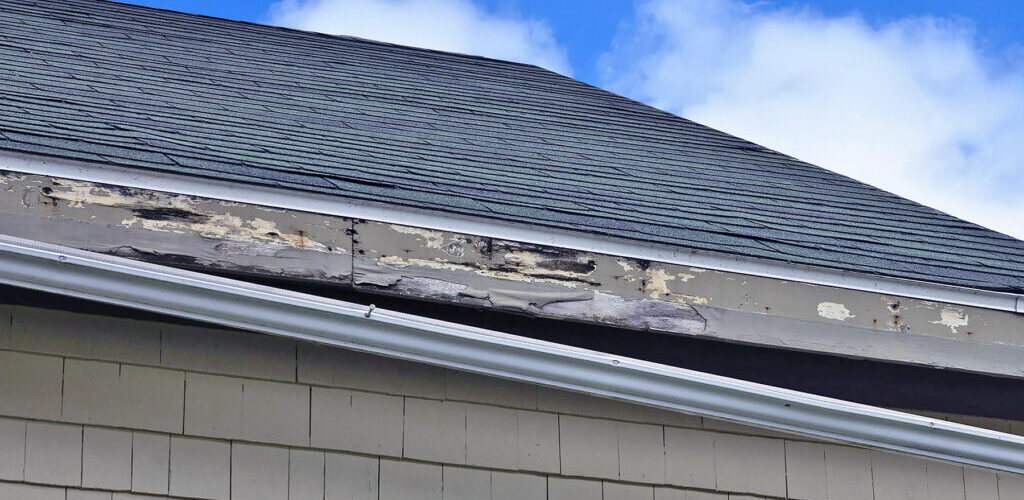
Fascia looks swollen, wavy, or “mushroomed” at the bottom edge
-
Rusty nails/screws or fasteners backing out
-
Gutters beginning to pull away in the same area
-
Visible gap behind gutter where water can run back
Urgent signs (call a pro)
-
Soft wood (it dents with a screwdriver tip or your thumb)
-
Sections that crumble, flake, or break when touched
-
Gutter hardware no longer holds tight
-
Water is actively running behind the gutter during rain
If you’re seeing peeling paint plus dark streaks that keep returning, that’s usually a system behavior—not a one-time mess. The next section breaks severity down so you can decide how urgent this is.
Severity Levels: How Bad Is It?
Use these levels to decide whether you’re in “monitor + maintain” mode or “stop the damage now” mode.
Level 1: Cosmetic / early exposure
What it looks like:
Paint failure, staining, light surface discoloration, no softness.
What it usually means:
Water is hitting that fascia area too often, but the board may still be solid.
Best move:
Fix the overflow pattern now before it becomes structural.
Level 2: Early wood breakdown
What it looks like:
Swelling edges, fasteners rusting, small soft spots near corners/end caps.
What it usually means:
The wood has been wet long enough that it’s starting to degrade.
Best move:
Treat this as “repair soon.” Even if the board still holds, it’s becoming a weak mounting surface.
Level 3: Structural rot / gutter attachment risk
What it looks like:
Soft wood, crumbling sections, gutter pulling away, visible gaps, persistent behind-the-gutter flow.
What it usually means:
The fascia may no longer be structurally sound—and the gutter system can fail further during storms.
Best move:
Call a pro. You’re past “cleaning solves it.”
“Call a Pro” Triggers (Use This Checklist)
If any of these are true, DIY is usually the wrong next step:
-
Soft wood anywhere on the fascia
-
Peeling paint + dark streaks that worsen each storm
-
Recurring overflow at the same corner even after cleaning
-
Gutter is pulling away or sagging at that section
-
You can see gaps behind the gutter (water path behind)
-
Water visibly runs behind the gutter during rain
If the fascia is compromised, gutters can’t stay properly aligned—so water problems often accelerate quickly.
If you’re still unsure whether you’re dealing with a clog, a pitch issue, or a behind-the-gutter gap, the quickest clarity comes from watching the system work. The same rain-walk method is also the fastest way to diagnose general runoff issues covered in water damage from gutters and roof runoff.
The 10-Minute Diagnostic (Best Done During Rain)
If you want the fastest clarity, do this during moderate rain (not just a drizzle).
Step 1: Watch the problem corner (2 minutes)
-
Does it dump over the front edge?
-
Does it dump late?
-
Is water sneaking behind the gutter?
Step 2: Compare downspout discharge (3 minutes)
-
Is one downspout weaker than the others?
-
Does one seem delayed?
Step 3: Look for behind-the-gutter flow (3 minutes)
This is the sneaky one. Watch the fascia/soffit edges—water can run behind and reappear lower as staining.
Step 4: Take 2–3 photos (2 minutes)
Photos help you track whether the fix actually worked—and they’re useful if you bring in a pro.
If your photos show one weak downspout, late dumping, or water backing up near an outlet, you’re probably looking at a bottleneck—not a gutter that’s “generally dirty.” That’s why gutter cleaning vs. roof cleaning matters: the wrong sequence can refill outlets and bring the same problem back immediately.
Why “Cleaning the Gutters” Doesn’t Always Stop Fascia Rot
A lot of homeowners clean the long gutter run and still get fascia damage because the failure is usually at:
-
the outlet (restriction starts here),
-
the elbow (needle/grit trap),
-
a low spot (pitch/hangers),
-
or a gap behind the gutter (pull-away).
If the same section keeps failing after a cleanout, assume it’s a system issue, not “more leaves.”
When the same corner keeps failing after a cleanout, you’re usually past routine maintenance and into correction mode. If the issue also affects cost planning (because repeat cleanouts add up), here’s the local baseline for gutter cleaning cost so you can decide what makes sense.
What a Pro Should Check (So You Know You’re Getting Real Service)
If you call someone, you want more than a scoop-and-go.
A real fascia/overflow evaluation should include:
-
outlet and elbow inspection
-
downspout flow confirmation
-
gutter pitch + low spots
-
hanger spacing + pull-away points
-
seam/end-cap condition
-
roof-edge alignment (where water enters the gutter)
-
fascia integrity around fasteners
-
discharge location (where water lands)
Whether you DIY or hire it out, the goal stays the same: restore a clean water path from the roof edge to safe discharge. If you want the “maintenance cadence” that keeps you out of this situation most years, how often to clean gutters in Southern Oregon is a good reality check.
What You Can Do This Week
If you’re not at the “soft wood” stage yet, here’s the best move:
-
Clear choke points first (corners + around outlets)
-
Confirm discharge (hose test or watch during rain)
-
Fix where water lands (avoid trenching/pooling at the perimeter)
-
Do one rain walkaround to verify the problem corner is actually fixed
If fascia is already soft, focus on stopping water immediately and scheduling repair—because wet wood + time is what turns a small fix into a bigger one.
FAQs
-
Yes. When gutters overflow or water runs behind the gutter repeatedly, fascia stays damp and can rot over time.
-
Localized peeling paint and dark streaking below a corner or seam—especially if it shows up after storms.
-
If the fascia is soft, swollen, crumbling, or the gutter is pulling away, it’s no longer just cosmetic.
-
Usually a restricted outlet/elbow, a low spot from pitch/hanger issues, or a pull-away gap behind the gutter.
-
You can, but the damage often returns. The overflow pattern has to be corrected or the new fascia will get soaked again.