Why Insurance Companies Are Flagging Mossy Roofs (And How Drone Inspections Play a Role)
Key Takeaways
Insurance companies increasingly use drones and aerial imagery to evaluate roof condition.
Moss, debris buildup, and visible shingle wear can trigger insurance notices.
In Southern Oregon, north-facing slopes and heavy canopy neighborhoods are flagged most often.
Early cleaning and documentation can often resolve issues before renewal problems arise.
Once shingles are structurally deteriorated, cleaning alone may not satisfy underwriting requirements.
The Shift: Roof Inspections No Longer Require a Ladder
Insurance inspections have changed.
In the past, an inspector might walk on your roof.
Today, many carriers use:
- High-resolution satellite imagery
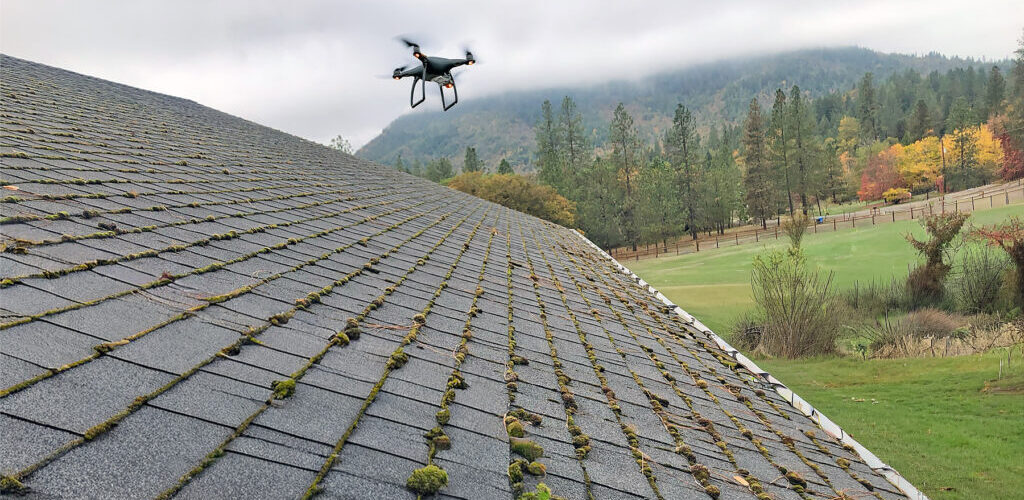
- Drone photography
- Third-party aerial inspection vendors
- Automated risk-scoring software
That means your roof can be evaluated without anyone stepping on your property.
The technology isn’t inherently aggressive — it’s efficient.
But efficiency increases visibility.
And visibility changes how moss and debris are interpreted.
Are Drone Roof Inspections Legal?
In most cases, yes.
Insurance companies typically rely on third-party vendors who operate within FAA commercial drone regulations. They do not need to step onto your property to capture aerial imagery from navigable airspace.
In general, aerial imagery can be captured without someone stepping on your property, though specific privacy rules can vary by state and situation.
Homeowners are often surprised by this, but aerial inspection is considered a standard underwriting tool today.
The important distinction: the drone is assessing visible roof condition, not interior spaces.
This shift is about risk evaluation, not surveillance.
Most commercial drone operators performing these inspections follow FAA rules for small unmanned aircraft (Part 107), which covers things like pilot certification and operating limits.
FAA guidance for commercial drone operators (Part 107)
What Insurance Companies Are Actually Looking For
Insurers are not looking for “perfect.”
They’re looking for risk indicators.
Common red flags include:
- Heavy moss coverage
- Debris-filled valleys
- Shingle curling
- Granule loss
- Dark staining patterns
- Uneven roof aging
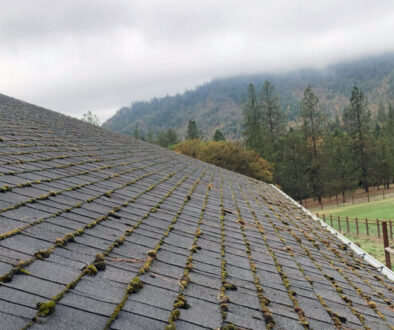
From aerial imagery, moss stands out clearly — especially on contrast-heavy asphalt roofs.
In Southern Oregon, that visual contrast is amplified by:
- North-facing slopes
- Mature tree canopy
- Long, damp winter cycles
Moss isn’t automatically a cancellation trigger.
But widespread growth often signals deferred maintenance — and that’s what underwriting departments pay attention to.
How Accurate Are Drone Roof Inspections?
Modern aerial imagery is high resolution.
One limitation: imagery can be taken at different times of year (or from angles that exaggerate shadows), so it’s worth responding with your own recent photos if you think the flag is outdated or misleading.
Moss coverage, debris accumulation, and shingle distortion are clearly visible from above.
However, drones cannot confirm structural integrity, decking condition, or internal moisture intrusion.
That’s why most insurance notices request correction or documentation — not automatic cancellation.
The image identifies a risk indicator. The homeowner’s response determines the outcome.
Why Moss Triggers Insurance Attention
Moss retains moisture.
Moisture accelerates deterioration.
From an underwriting perspective, moss can correlate with:
- Shortened roof lifespan
- Increased leak probability
- Higher claim likelihood
The concern isn’t appearance.
It’s accelerated aging.
This is why timing matters. If moss is addressed early — before shingle edges lift or granules are compromised — most issues can be resolved with maintenance rather than structural correction.
In Southern Oregon, moss growth comes down to drying time more than rainfall totals. Roofs that stay damp longer — especially shaded, north-facing slopes — accumulate moss faster than sun-exposed surfaces. Understanding those drying cycles helps explain why some homes get flagged and others don’t.
What a “Roof Notice” Actually Means
If your insurance company flags your roof, you may receive:
- A request for inspection
- A repair or cleaning requirement
- A timeline for correction
- A notice of possible non-renewal
Most notices are conditional — not immediate cancellations.
Typically, insurers want documentation showing:
- The issue has been addressed
- The roof is structurally sound
- Ongoing deterioration risk is reduced
That documentation can include:
- Before/after photos
- Written confirmation of correction
- Repair invoices
Calm response matters here.
Panic rarely helps.
What to do first:
- Read the deadline and what proof they require (photos vs invoice vs contractor statement).
- Document now: take clear, well-lit photos before any work starts.
- Respond in writing with the requested proof once corrected.
What insurers typically want to see:
- Clear photos showing the roof is clean and intact
- No visible curling, missing tabs, or exposed underlayment
- Valleys free of debris buildup
- Proof of correction (invoice or contractor note, if required)
What If You Disagree With an Insurance Roof Notice?
If you believe the imagery does not reflect current roof condition, you can typically:
- Request clarification or updated imagery
- Provide recent photos
- Submit documentation from a licensed contractor
Insurance decisions are often based on visual indicators. Clear documentation can sometimes resolve misunderstandings quickly.
Ignoring the notice rarely improves the outcome. Calm, documented response usually does.
The Southern Oregon Variable
Regional exposure patterns affect inspection outcomes.
Homes in:
- Ashland
- Jacksonville
- Older Grants Pass neighborhoods
- Shaded Medford areas
often have heavier canopy and slower drying cycles.
North-facing slopes stay damp longer.
Valleys trap debris.
Moisture lingers.
From above, these patterns are obvious.
In contrast, east-facing and more exposed homes may show less moss — but intense summer UV can accelerate wear if granules have already been compromised.
Both growth and deterioration are visible from the air.
Can Roof Cleaning Fix an Insurance Issue?
Often — yes.
If you’re trying to budget the next step, here’s what typically drives price locally: the cost of getting a roof cleaned in Southern Oregon.
If the roof is structurally sound and moss is the primary concern, controlled cleaning and debris removal can resolve underwriting flags.
But method matters.
Aggressive pressure washing can:
- Strip granules
- Accelerate aging
- Create future inspection concerns
Preservation-focused cleaning methods are usually safer for long-term compliance.
If you’re comparing approaches, understanding the difference between pressure washing and controlled soft treatment becomes critical — not just for appearance, but for lifespan.
When addressed early, cleaning is usually a maintenance issue.
When addressed late, it becomes a structural one.
When Cleaning Isn’t Enough
Cleaning may not satisfy insurance requirements if shingles are:
- Severely granule-depleted
- Brittle or cracking
- Curling at the edges
- Near the end of their expected lifespan
- Already leaking
At that point, underwriting decisions shift from “maintenance issue” to “material condition.”
Cleaning cannot reverse structural deterioration.
This is where homeowners sometimes face the harder decision: maintain or replace.
How to Stay Ahead of Drone Flags
Insurance visibility isn’t decreasing.
The practical approach:
- Monitor north-facing slopes.
- Keep valleys clear of debris.
- Address light moss before it thickens.
- Clean during appropriate seasonal windows.
- Keep documentation if correction is required.
If you want the bigger picture (roof + gutters + seasonal checks), the Roof Maintenance Guide for Southern Oregon breaks down a practical timeline homeowners can follow.
Timing matters. Cleaning during optimal seasonal windows reduces regrowth risk and improves long-term inspection outcomes.
Homes that follow predictable maintenance cycles are far less likely to trigger renewal friction.
In many cases, the difference between a routine maintenance invoice and a non-renewal notice is simply timing.
Matching cleaning frequency to your home’s exposure pattern — not guessing — reduces both risk and long-term cost.
Field Guide Perspective
Insurance companies are not targeting homeowners.
They’re managing risk.
Drone inspections don’t create roof problems — they reveal them.
In Southern Oregon, moss growth is predictable.
So is roof aging.
The goal isn’t to make a roof look perfect from the air.
It’s to prevent moisture from causing mechanical damage.
If moss is light and shingles are healthy, maintenance usually resolves the issue.
If wear is advanced, cleaning may not change the underwriting outcome.
The key is recognizing which stage your roof is in — early maintenance or late correction.
That distinction determines whether you’re dealing with a cleaning invoice…
or a replacement conversation.
When It’s a Red Flag
Most roof notices are fixable with cleaning and documentation. But a few situations move from “maintenance” into “underwriting risk,” where cleaning alone may not satisfy the carrier.
- Moss is thick enough to lift shingle edges or you can see heavy matting in valleys (this suggests prolonged moisture hold, not just surface staining).
- Visible shingle distortion (curling, cupping, missing tabs, exposed underlayment, or uneven “rippling” that’s obvious in aerial photos).
- Granule loss that’s easy to spot (bald patches, shiny asphalt areas, or heavy granule dumping into gutters).
- Debris-packed valleys that keep reappearing (a common trigger in aerial reviews because it reads as “deferred maintenance”).
- Active leak evidence (interior staining or known leaks). A clean roof doesn’t change leak risk if materials are failing.
- A vague plan from a contractor (“we’ll just pressure wash it”) with no mention of shingle protection, runoff control, or post-treatment.
If one or more of these apply, treat the goal as risk reduction + documentation, not “make it look perfect.”
When to Call a Pro
From a field perspective, the “cost” here isn’t just labor — it’s risk control (damage prevention + proof). Bring in a pro when:
- You can’t safely access the roof (steep pitch, multiple levels, brittle surfaces, limited ladder placement).
- Moss is rooted/matted and needs controlled removal, not a fast rinse.
- You need documentation (before/after photos, condition notes, invoice wording that an underwriter will accept).
- You’re disputing a notice and need a contractor statement that the roof is intact/functional (or a clear scope of repairs if it isn’t).
- The roof is near end-of-life and you need an honest “clean vs repair vs replace” call.
Quick bid filter: Ask how they protect asphalt shingles (granules) and what they do with valleys + debris. If they can’t explain it clearly, you’re not comparing price — you’re comparing risk.
Final Field Note
Drone imagery doesn’t create roof problems — it standardizes how visible problems get flagged. If your roof is structurally sound, early moss control + clear photos usually resolves the underwriting concern. If materials are failing, cleaning may improve appearance, but won’t change the risk category. The win is knowing which situation you’re in before renewal forces a rushed decision.
FAQs
-
Yes. Moss can be treated as deferred maintenance or a deterioration risk. Many insurers issue a correction notice first, but non-renewal is possible if it isn’t addressed.
-
Many use aerial sources like high-resolution satellite images, drone photos, and third-party inspection vendors to evaluate visible roof condition.
-
Often, yes. Many carriers accept clear, recent photos showing the corrected area. Some may require contractor documentation or an inspection report.
-
Sometimes. If the roof is structurally sound and moss/debris is the main issue, cleaning and documentation can help. If shingles are failing, repairs or replacement may still be required.
-
It varies by carrier and notice type. Most give a specific correction window and deadline. Check the notice for the required date and photo/documentation instructions.
-
No. They’re used to assess visible exterior roof conditions only (moss, debris, wear patterns, and obvious defects).
-
Yes. North-facing slopes dry more slowly, which increases moss and dark staining—both are more visible in aerial images and can trigger underwriting attention.