Drip Edge vs Gutter Apron (What They Do and When They Matter)
Key Takeaways
-
Drip edge and gutter apron both control roof-edge water, but they solve slightly different problems.
-
If water is running behind the gutter, it’s often an edge flashing issue—not just “clogged gutters.”
-
A gutter apron can bridge the gap from shingles/underlayment into the gutter when drip edge is missing or insufficient.
-
Repeated behind-the-gutter flow is a common path to peeling paint, dark streaks, and fascia rot.
-
The fastest way to confirm the cause is a quick check during moderate rain.
When homeowners notice water “getting behind the gutters,” the first assumption is usually a clog. Sometimes that’s true—but very often, the gutter is doing its job and the problem is happening above it.
At the roof edge, a small detail controls everything: whether runoff cleanly drops into the gutter, or sneaks behind it and soaks the fascia, soffit, and trim. That’s where drip edge and gutter apron come in.
In this guide, we’ll break down what each one does, when it matters most, and the simple signs that tell you if you’re dealing with a clog—or a roof-edge water-routing problem.
First, the Goal: Keep Water From Taking the “Behind the Gutter” Route
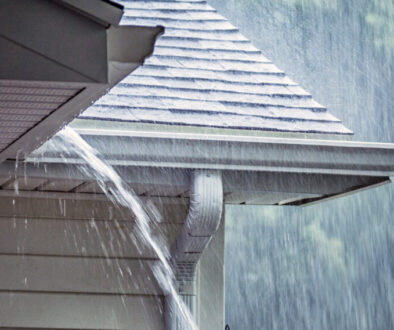
Gutters only protect your home if water actually enters the gutter. When runoff slips behind the back edge, it doesn’t just “miss” the gutter—it repeatedly wets the materials that were never meant to stay damp.
Over time, that pattern is how small roof-edge issues become bigger ones: peeling paint, dark streaks, swollen trim, and eventually fascia rot from gutter overflow that keeps returning even after cleanouts.
Drip Edge vs. Gutter Apron (What’s the Difference?)
These terms get used interchangeably, but they’re not the same. Both are metal flashing pieces used at the roof edge, but they have different shapes and solve different roof-edge water behaviors.
Drip edge (the standard roof-edge flashing)
Drip edge is installed along the roof edge under the shingles. Its job is to:
- direct water away from the fascia and roof decking
- create a clean drip line so water drops into the gutter instead of clinging underneath
- help protect the edge of the roof structure from repeated wetting
Gutter apron (the “bridge” into the gutter)
Gutter apron is a wider style of flashing designed to guide water into the gutter more aggressively. Think of it like a bridge that closes the gap between the roof edge and the gutter.
A gutter apron is commonly used when:
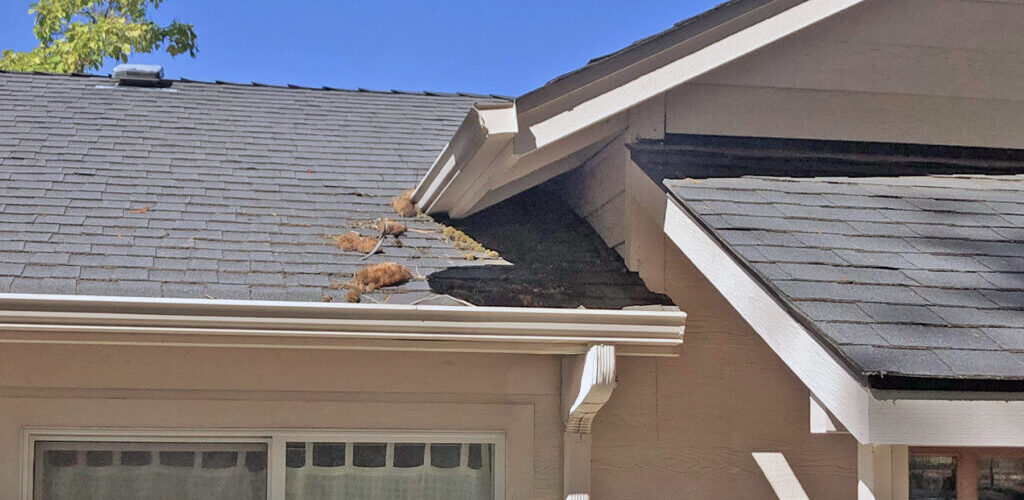
- drip edge is missing or too short to reach over the gutter back edge
- the roof edge drip line ends up behind the gutter
- older homes were built without modern edge flashing
- water keeps getting behind gutters even when they’re clean
Simple way to remember it: Drip edge protects the roof edge. Gutter apron helps ensure the water actually enters the gutter.
Signs Your Problem Isn’t a Clog (It’s Roof-Edge Water Routing)
If you’re dealing with clogs, you’ll usually see overflow over the front of the gutter, or water backing up and dumping at corners. Roof-edge routing problems look different.
Here are the most common tells that the water is going behind the gutter:
- Water streaks that start under the roof edge and run down behind the gutter line
- Peeling paint or bubbled paint on fascia boards behind the gutter
- Dark vertical streaks on fascia/soffit that return even after cleaning
- One corner always looks wetter than the rest, even when gutters are clear
- Drips and stains that make you worry about a roof leak—but show up mainly during runoff-heavy storms
If you’re chasing stains and drips and you’re not sure whether it’s a roof leak or gutter behavior, this quick breakdown can help: Soffit stains & drips: roof leak or gutter overflow?
Why One Corner Becomes the Repeat Offender
Even when edge flashing is decent, corners are where runoff concentrates. Multiple roof planes often feed the same gutter corner, and during real storms that one exit point sees a lot of volume fast.
That’s why a corner can look like a “gutter problem” when the real issue is where water is landing or how it’s being routed at the edge. If corners stay wet or trench beds repeatedly, your fix may be less about cleaning and more about where that downspout dumps water after it exits.
When you’re dialing in the landing zone, this guide is the best reference: Downspout extensions: how far should water discharge from the house?
The 5-Minute Inspection (No Ladder Needed)
You can learn a lot without climbing up. The goal is to spot evidence of water taking the “wrong path.”
1) Look for a consistent drip line behind the gutter
Stand back and look along the fascia line. If you see a darker band behind the gutter or repeated streaking, water may be flowing down the back edge.
2) Check fascia paint and trim condition
Paint failure is often an early warning. If you see peeling, bubbling, or swelling trim behind the gutter, it’s usually repeated wetting—not one-off splash.
3) Watch what happens during moderate rain
The clearest diagnostic is during real rain:
- Does runoff drop cleanly into the gutter?
- Or does it cling underneath and run behind the gutter?
- Does one corner dump faster than the rest?
4) Note whether symptoms return after cleanouts
If you’ve cleaned the gutters and the same drip lines and wet fascia behavior returns quickly, you’re likely dealing with flashing/edge behavior rather than debris volume.
When Drip Edge and Gutter Apron Matter Most in Southern Oregon
In Southern Oregon, the “problem season” is less about constant drizzle and more about storm cycles. When rain arrives in clusters, roof runoff becomes concentrated and repetitive—and that’s when roof-edge mistakes show up fast.
If you want the bigger climate context (and why the valley can feel wetter than the annual total suggests), this helps: How much rain does the Rogue Valley actually get?
Practical takeaway: when storms stack, anything that keeps the roof edge wet (even slightly) becomes a compounding problem—especially on shaded sides of the home where materials dry slowly.
So Which One Do You Need?
If you’re trying to solve a specific symptom, here’s the simplest rule of thumb:
-
Choose drip edge when you’re improving basic roof-edge protection (especially during reroofing) and you want water to shed cleanly off the roof edge.
-
Choose a gutter apron when water is consistently getting behind the gutter—even when the gutter is clean—and you need a “bridge” that forces runoff into the gutter.
-
If you’re not sure: watch one section during moderate rain. If water clings underneath and tracks behind the gutter, apron is often the fix. If water drops cleanly but you still get overflow, the issue is more likely outlets/corners.
What “Normal Rain” Does to Gutters (Common Failure Points)
Even in typical winter rain, gutters tend to fail in predictable places:
- Outlet bottlenecks (top elbow / outlet restriction)
- Corner concentration (multiple roof planes feeding one exit)
- Behind-the-gutter flow (edge flashing mismatch)
If you’re seeing sagging, repeated leaking, or the gutter pulling away—those are system-level warnings, not just maintenance reminders. This checklist is a good quick reference: Signs your gutters are failing in Southern Oregon.
When to Call a Pro
Some fixes are simple, but roof-edge water problems can turn into expensive repairs when they’re ignored. It’s time to call a pro if you notice:
- Soft wood along the fascia or trim behind the gutter
- Peeling paint + dark streaks that keep returning
- Recurring overflow at the same corner even after cleaning
- Gutters pulling away or visible gaps behind the gutter
- Water running behind the gutter during moderate rain
The goal isn’t just to stop water for one storm—it’s to stop the repeat wetting pattern that causes rot, staining, and long-term damage.
FAQs
-
Often, yes. Gutters collect water, but drip edge helps ensure water leaves the roof edge cleanly instead of clinging underneath and wetting the fascia.
-
Drip edge protects the roof edge and helps form a drip line. Gutter apron is a wider flashing designed to guide water into the gutter more directly—especially when water tends to run behind the gutter.
-
Because the issue may be the roof edge: missing/short drip edge, a gap between roof edge and gutter, or water clinging underneath due to how the edge is built.
-
It can contribute. When water repeatedly wets fascia boards behind the gutter line, paint fails first—then the wood can soften and rot over time.
-
In most cases, it’s smart to address it during reroofing because access is easiest. Proper edge flashing is a small detail that helps prevent bigger water problems later.