Downspouts & Drainage in Southern Oregon (Where Should the Water Go?)
Key Takeaways
Gutter cleaning doesn’t matter if water isn’t directed away from the foundation.
In Southern Oregon, downspouts should discharge at least 4–6 feet from the home, more on sloped lots.
Splash blocks are common — but often misaligned or ineffective.
Underground drain lines can work well, but clogging is common in ash- and needle-heavy areas.
Poor drainage contributes to foundation moisture, crawlspace issues, and erosion over time.
Why Downspouts Matter More Than Most Homeowners Think
Understanding downspouts and drainage in Southern Oregon isn’t just about moving water — it’s about protecting your foundation from long-term moisture damage.
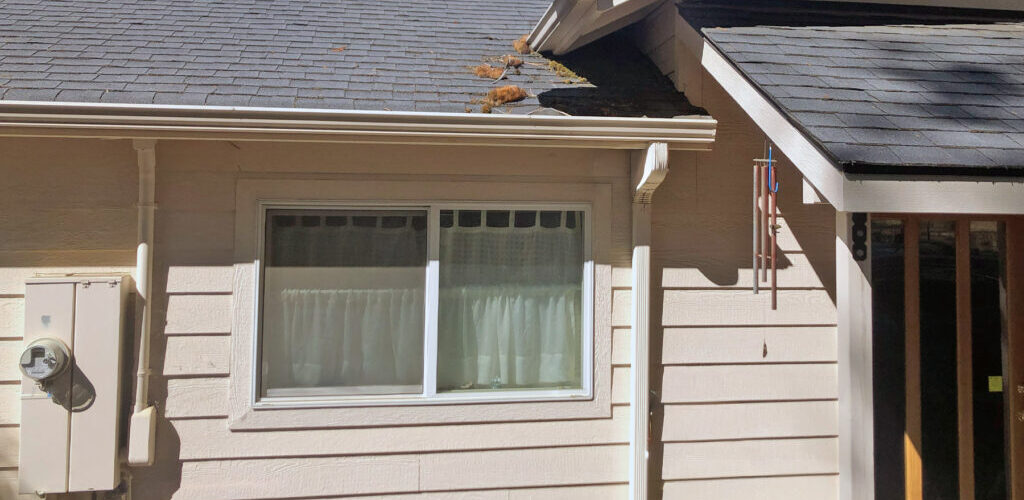
Most people focus on the gutter trough — the part you can see.
But the real job of your gutter system happens at the bottom of the downspout.
Gutters collect roof runoff.
Downspouts control where that water ends up.
If water lands at the foundation, the system isn’t working — it’s just relocating the problem.
In Southern Oregon, this matters more than many homeowners realize. Long dry summers allow the soil to contract. When heavy fall rains arrive suddenly, concentrated water at the base of the home can accelerate:
-
Soil erosion
-
Foundation settling
-
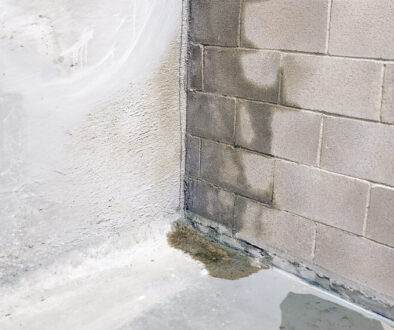
Crawlspace moisture
-
Landscaping washout
If you want the full system overview — from roof edge to foundation — start with our Complete Guide to Gutter Maintenance in Southern Oregon.
This article focuses specifically on the drainage side.
How Far Should Water Discharge From the Foundation?
As a baseline, water should discharge at least 4–6 feet away from the foundation.
On sloped lots or heavy clay soil, more distance is often better.
Here’s why:
When water repeatedly lands within a foot or two of the foundation, it:
-
Saturates the soil immediately adjacent to the home
-
Increases hydrostatic pressure against foundation walls
-
Creates moisture migration into crawlspaces
-
Encourages moss and algae growth along the lower siding
In the Rogue Valley, many homes sit on expansive or clay-heavy soils. These soils don’t drain quickly — they hold moisture longer than homeowners expect.
Repeated saturation near a foundation can increase hydrostatic pressure — a common contributor to foundation moisture intrusion, as explained by the International Association of Certified Home Inspectors (InterNACHI).
That means repeated short-distance discharge can compound over time.
What “Good” Discharge Looks Like
-
Downspout extension directing water 4–6+ feet away
-
Splash block angled away from the home
-
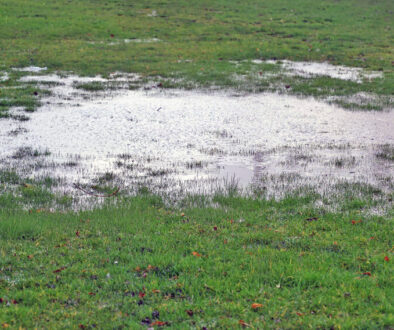
No pooling within 24 hours after moderate rain
-
Water is not flowing back toward the structure
If you’re already cleaning gutters regularly but still see moisture near your foundation, the issue may not be debris — it may be drainage direction.
Common Drainage Mistakes in Southern Oregon
Even well-maintained gutters can fail at the ground level. If debris buildup is contributing to overflow before water even reaches the downspout, review how often gutters should be cleaned in Southern Oregon to make sure the system itself isn’t overloaded.
In the Rogue Valley, these are some of the most common drainage mistakes we see:
1) Splash Blocks Pointed the Wrong Direction
Splash blocks are simple — but often misaligned.
If they’re:
-
Angled slightly back toward the home
-
Sitting on soil that slopes inward
-
Installed too close to the foundation
…they can quietly direct water exactly where it shouldn’t go.
A quick check during light rain will show whether water is actually flowing away — or curving back toward the structure.
2) Downspouts Dumping Onto Driveways or Walkways
It may look clean and convenient, but hard surfaces can redirect water unpredictably.
Water that hits a driveway can:
-
Flow back toward garage slabs
-
Pool near expansion joints
-
Run along the foundation edge
Concrete doesn’t absorb water — it redirects it. And sometimes, it redirects it poorly.
3) No Extensions at All
Many homes simply have downspouts that end a few inches above the soil.
This might look harmless in summer.
But during heavy fall rain events — which Southern Oregon sees regularly — concentrated runoff can saturate soil quickly and repeatedly in the same location.
Over time, that repeated saturation adds up.
4) Buried Drain Lines That Haven’t Been Inspected
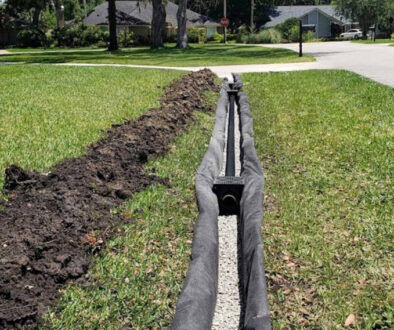
Underground drain lines (often called “tightlines”) can work well — when they’re installed correctly and maintained.
But in this region, they’re vulnerable to:
-
Pine needle accumulation
-
Fine ash compaction
-
Root intrusion
-
Settling or slope failure
When buried lines clog, the problem becomes invisible. Water backs up inside the pipe — and may surface right at the foundation before anyone notices.
What About Underground Drainage Systems?
Underground systems can be a smart upgrade, especially for:
-
Steep lots
-
Homes with limited yard space
-
Areas where extensions are impractical
When functioning correctly, they move water well away from the home — sometimes all the way to street drains or daylight outlets downhill.
However, they require:
-
Proper slope
-
Cleanout access points
-
Occasional flushing or inspection
If you’ve had gutters cleaned but still experience overflow at the bottom of the downspout, the restriction may be underground — not in the trough.
From an inspection standpoint, that’s a “follow the flow” moment: the gutter can be clear, but if the discharge line is partially blocked or back-sloped, the system will still act like it’s clogged. The symptoms show up before the cause does.
Signs Your Drainage Is Failing
Drainage failures rarely look dramatic at first. They tend to show up subtly.
Watch for:
- Soil erosion beneath downspouts
- Water pooling near the foundation after rain
- Persistent damp soil along the perimeter
- Moss or algae growth along lower siding
- Crawlspace musty smells after storms
- Downspouts that “burp” or overflow at the base
If you notice these patterns, the issue may not be cleaning frequency — it may be water direction.
The U.S. Environmental Protection Agency also notes that persistent moisture around a home can contribute to crawlspace humidity and indoor air concerns.
Excess roof runoff combined with debris buildup can compound the issue — especially if roof moss is shedding into the system. Our guide on why roof moss grows so fast in Southern Oregon explains how these systems connect.
How Drainage Fits Into a Full Maintenance Plan
Roof runoff is a chain:
Roof → Gutters → Downspouts → Ground → Soil Movement → Foundation
If any link fails, the whole system underperforms.
That’s why drainage shouldn’t be treated as an afterthought.
A well-maintained home in Southern Oregon typically includes:
-
Annual gutter inspection
-
Downspout flow check
-
Extension or tightline inspection
-
Fall cleaning before major rains
-
Occasional grading review around the foundation
Gutters collect water.
Downspouts decide where it goes.
Grading determines what happens next.
Simple Drainage Checklist
If you want a quick self-check, here’s what to look for:
-
Water discharges at least 4–6 feet away
-
No pooling after moderate rainfall
-
Splash blocks are angled correctly
-
Downspouts firmly attached
-
No visible erosion trenches
-
No foundation staining
If even one of those fails, drainage is worth addressing before the rainy season ramps up.
When It’s a Red Flag
Most drainage issues are fixable with basic corrections. But these signs usually mean water is affecting materials, structure, or indoor air quality — and it’s time to take it more seriously.
- Water persists against the foundation long after storms (standing water, saturated perimeter soil that never dries).
- Active water intrusion inside the crawlspace/garage/basement (pooling, repeated wet insulation, recurring interior staining).
- Visible erosion or undermining near slabs, walkways, or corners (washouts, settled edges, trenching).
- Downspouts “burp,” back up, or overflow at the base (often a buried-line clog or slope issue).
- New or worsening movement signs after the wet season (new cracks, sticking doors/windows, sudden grade changes).
- Musty crawlspace air that repeats every winter, even after obvious discharge corrections.
When to Call a Pro
From an inspector’s point of view, drainage is worth outsourcing when the fix requires safe access, long trench runs, or you need a clear “source + path” diagnosis before you spend money.
- You can’t safely confirm flow (two-story rooflines, steep pitches, awkward ladder setup, wet-season conditions).
- Buried drain lines are suspected but there are no cleanouts and you’re seeing backups at the foundation.
- You need grading and drainage planned together (hardscapes, retaining walls, tight setbacks, complex slopes).
- You’re seeing rot, repeated staining, or chronic splash zones and want the exit point corrected — not just cleaned.
- You’re considering an underground system and need slope/outlet confirmed before trenching.
- You want documentation (before/after photos, inspection notes) for resale or insurance conversations.
Final Field Note
The gutter isn’t the finish line — the discharge point is. If you only change one thing, make sure water consistently leaves the foundation zone. The best systems don’t just move water; they move it somewhere predictable, every time it rains.
FAQs
-
Downspouts should discharge at least 4–6 feet away from the foundation. On sloped lots or clay-heavy soil (common in Southern Oregon), directing water even farther can help reduce moisture buildup and erosion.
-
They can be — if they’re angled correctly and sit on soil that slopes away from the home. However, many splash blocks are misaligned or too close to the foundation, allowing water to flow back toward the structure.
-
Yes, especially in areas with pine needles, wildfire ash, or root intrusion. Buried drain lines should have accessible cleanouts and occasional inspection to prevent hidden backups near the foundation.
-
Over time, yes. Repeated water saturation near the base of a home can contribute to soil erosion, crawlspace moisture, and increased pressure against foundation walls.
-
Absolutely. Cleaning the gutter trough is only part of the system. Downspouts should be checked for flow and flushed if necessary to ensure water is actually moving away from the home.