Downspout Drain Line Clogged (Signs + What Actually Fixes It)
A clogged downspout drain line usually isn’t random—it’s sediment, a sagging/crushed section, or an outlet that can’t pass water. This guide shows you what to look for during rain, how to diagnose it from the surface, and what fixes the problem long-term.
Key Takeaways
Most “clogged downspout drains” are either sediment buildup, a crushed/sagging section, or an outlet failure (pop-up/daylight buried).
The fastest clue is what happens during steady rain: backing up at the downspout, bubbling at the yard, or water surfacing along the line.
Cleaning the gutters helps, but the real fix is usually clearing the line, fixing the outlet, and preventing sediment from entering.
If your yard is a “no outlet” bowl, a downspout drain can look clogged when the real issue is no place for water to go.
If water is reaching a crawlspace, slab edge, or interior, treat it as high-stakes drainage and bring in help.
What A Downspout Drain Line Is Supposed To Do
A downspout drain line is a buried pipe that carries roof runoff away from the structure and discharges it to a safe location (daylight, pop-up, storm connection, or approved infiltration).
When it clogs or fails, roof water often does the worst possible thing: it returns to the foundation zone.
Common Signs Your Downspout Drain Line Is Clogged
The best time to diagnose a downspout drain line is during steady rain, when the system is under load. These are the most common field signs I look for—most show up at the downspout, along the pipe route, or at the outlet.
Downspout Backing Up or Overflowing
- Water spills out of the downspout connection or gutter outlet.
- Gutters overflow at the downspout even when the rest of the gutter run looks fine.
Gurgling, Glugging, or “Chugging”
That sound usually means the pipe is partially blocked and air/water are fighting for space.
Water Surfacing “Out of Nowhere”
- A wet stripe appears along the pipe route.
- You see bubbling in the lawn, gravel, or planter beds.
- Soil gets soft or sinks slightly along a line.
The Outlet Stops Flowing
If you have a daylight outlet or pop-up emitter and you never see it discharge during steady rain, assume there’s a blockage—or the outlet is buried/failed.
If you’re deciding between outlet types (or troubleshooting one), this comparison of pop-up emitters vs daylight discharge can help you spot the failure pattern faster.
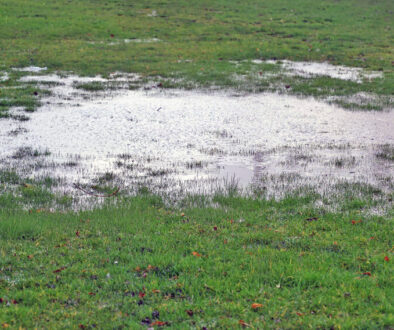
The Area Stays Wet Long After Rain Stops
If the discharge area stays soggy 24–72 hours after the last decent rain, it may not be a “clog” at all—it may be a no outlet/saturation issue.
The Three Most Common Root Causes
In the field, clogged downspout drains usually come from one of these:
1. Sediment and Roof Grit Build-Up
Asphalt shingle granules, fine silt, needles, and leaf fragments settle in low spots and build a plug over time.
2. Crushed Pipe, Sagging Sections, or Bad Connections
A pipe doesn’t need to be “fully crushed” to fail—one low belly can trap sediment and behave like a recurring clog.
3. Outlet Problems (Not The Pipe)
The pipe can be fine and still “fail” if:
- a pop-up emitter is stuck/buried in mud
- a daylight outlet is buried by soil/landscaping
- the outlet discharges into a saturated area with no fall
Quick Diagnosis Test (Field-Friendly)
Before you start trenching, assume one thing: most downspout drain problems can be diagnosed from the surface if you know what to look for.
The goal of this quick test is to figure out whether you’re dealing with a true blockage, a crushed/sagging section, an outlet failure, or a “no outlet” situation where the system is backing up because water simply can’t leave fast enough.
Do these steps during steady rain if you can—storm behavior tells the truth a lot faster than guesswork with a shovel.
Step 1: Watch The System During Steady Rain
- If water backs up immediately at the downspout: likely a near-inlet clog or no outlet.
- If it works in light rain but fails in heavy rain: likely a capacity/outlet issue or a partial clog.
Step 2: Find The Outlet and Verify Discharge
If you can’t find a visible outlet, treat the system as unknown until you can confirm where it goes.
Step 3: Look For Surface Clues Along The Route
Soft soil, a wet line, or bubbling points to a blockage, break, or low spot.
Step 4: Ask The “No Outlet” Question
If the outlet area is flat, soggy, or lower than any safe exit, the system may be behaving like a clog because gravity can’t win. Start here: No Outlet Drainage: What To Try Before A Sump Pump.
What Actually Fixes It (In The Right Order)
This is the part most homeowners want. Here’s the order that avoids repeat failures.
Fix 1: Clear The Line (But Don’t Stop There)
Clearing the blockage is step one—but if you don’t fix why it plugged, it returns.
- If the line repeatedly clogs, assume there’s a low belly, crushed section, or sediment source feeding it.
Fix 2: Fix The Outlet So Water Can Leave
If the outlet can’t pass water reliably, the pipe becomes a storage area and backs up.
- Pop-ups need enough slope and can’t sit in mud bowls.
- Daylight outlets need to stay open, visible, and protected from being buried.
Fix 3: Reduce What Enters The System
This is where most long-term wins happen:
- Keep gutters reasonably clean.
- Use downspout screening/pre-filtering where appropriate.
- Avoid routing runoff through areas that dump sediment into the inlet.
If you want a practical baseline for routing and discharge distance, start here: Downspout Extensions: How Far Should Water Discharge?
Fix 4: Correct The Underlying Drainage Plan
If the system has nowhere to discharge safely, you may need to:
- reroute to a better outlet
- create slope through grading
- consider infiltration with overflow planning
- consider pumping only when gravity truly can’t work
Mistakes That Create Repeat Clogs
A clogged line is frustrating—but the repeat clogs usually aren’t “bad luck.” They come from the same handful of mistakes that turn a drain line into a sediment trap or a buried holding tank. The most common one I see is assuming the outlet will take care of itself.
- Treating A Pop-Up Emitter Like A “Set and Forget” Outlet
They’re clean-looking, but they’re sensitive to low slope and mud. - Combining Multiple Downspouts Into One Marginal Line
More water + same pipe + unknown slope = overwhelm during storms. - Using The Buried Line As The Only Plan
A pipe is a transport tool, not a complete drainage strategy.
When It’s A Red Flag
Bring in a professional when:
- water is reaching a crawlspace, slab edge, garage, or interior
- you can’t identify the outlet/discharge route
- there are retaining walls, steep slopes, or foundation-adjacent constraints
- the yard behaves like a bowl and stays saturated for days
- the line clogs repeatedly (likely grade/pipe failure, not just debris)
Final Field Note
Most “clogged downspout drain” stories aren’t solved by one cleaning. The real fix is usually: clear the line → verify a working outlet → reduce sediment entry → confirm the discharge plan works in a hard storm.
FAQs
-
Backups at the downspout during rain, gurgling, no flow at the outlet, or water surfacing along the pipe route are common signs.
-
Sometimes for minor debris, but recurring clogs usually involve sediment build-up, a low belly, or an outlet problem.
-
That’s often a partial clog, an undersized/outlet-limited system, or a discharge area that can’t accept water when saturated.
-
They can. If slope is low or the emitter sits in a muddy low spot, it may not open reliably and the line can back up.
-
A verifiable outlet, reduced sediment entry, and a discharge plan that still works during heavy storms.