Does Roof Moss Damage Shingles? What’s Real vs Exaggerated
Key Takeaways
Light moss is usually a moisture signal, not immediate damage — but it can become a damage multiplier over time.
The biggest risks are moisture retention, granule loss, and lifted shingle edges from thick growth.
Moss damage is slow. If you act early, it’s often preventable without aggressive methods.
The real danger is often the removal method (pressure washing, harsh scraping) more than the moss itself.
In Southern Oregon, moss tends to thrive where roofs are shaded, slow-drying, and debris-loaded.
Moss on a roof looks ugly fast — and around Southern Oregon, it’s common enough that homeowners hear a lot of big claims (some true, some… not). The reality is more nuanced: moss doesn’t instantly “ruin” shingles, but it can shorten a roof’s useful life when it’s thick, persistent, and paired with moisture and debris.
This guide breaks down what moss actually does to asphalt shingles, what’s mostly exaggerated, and how to decide whether you’re looking at a cosmetic problem or a roof-health problem.
What Moss is Actually Doing on Your Roof
Think of moss as a sponge + wedge combination:
1) It Holds Water Where Shingles Want to Dry
Asphalt shingles are designed to shed water and dry out between storms. Moss can keep the surface damp longer, especially:
- along valleys
- at the lower courses near gutters
- under overhanging branches
That repeated dampness can accelerate wear.
2) It Can Lift Shingle Edges (When Growth Gets Thick)
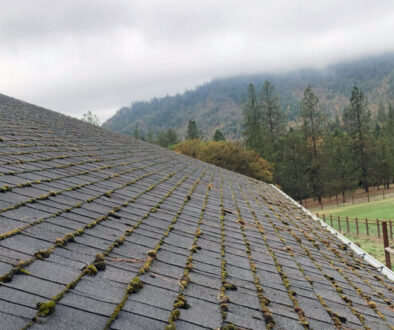
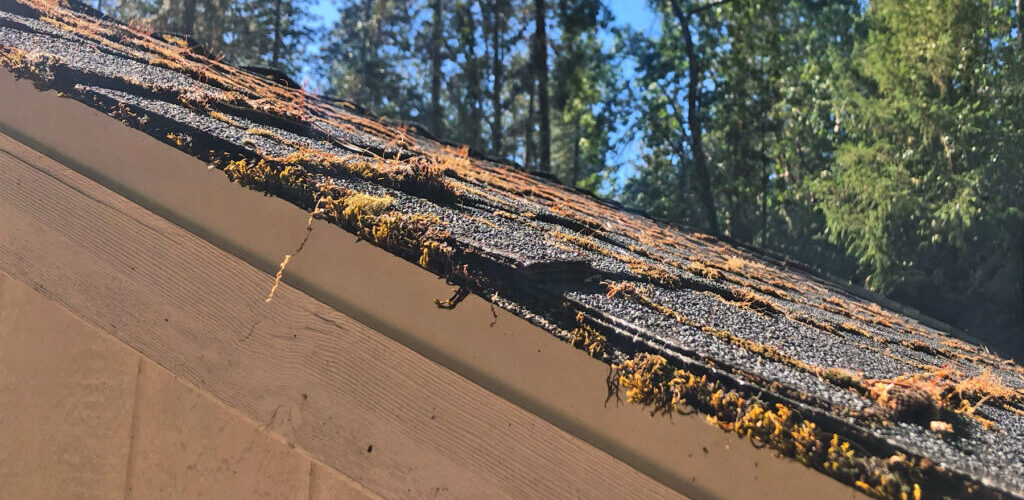
Moss often grows up and under the lower edges of shingles. When it thickens, it can slightly lift edges and create tiny “catch points” where:
- wind-driven rain can work its way under
- debris gets trapped
- freeze/thaw cycles do more damage (less common here than in colder climates, but still relevant in some microclimates)
3) It Can Contribute to Granule Loss (Indirectly)
Moss itself doesn’t “eat” asphalt shingles, but:
- persistent moisture softens the asphalt over time
- debris + foot traffic during cleaning can dislodge granules
- improper cleaning methods can strip granules quickly
Granule loss matters because granules protect the asphalt from UV and weather.
What’s Exaggerated (and What’s Real)
I’ve found moss is one of those issues that triggers big opinions fast — and not all of them are grounded in how roofs actually fail. Let’s clear out the common exaggerations first, then we’ll get into what does deserve your attention.
Exaggerated Claims
- “Any moss means your roof is failing.”
Not true. A small patch can be purely a shade/slow-drying issue. - “Moss will cause leaks quickly.”
Moss increases risk over time, but most leaks come from flashing, penetrations, valleys, or aged shingles. - “You must remove moss with pressure washing.”
Pressure washing is often the fastest way to shorten shingle life.
Real Concerns
- Thick moss mats, especially in valleys and lower roof sections
- Debris buildup trapped in moss (needles, leaves) that slows drying
- Edges lifting or visible separation between shingle courses
- Recurring moss within 6–18 months after removal (signals underlying conditions weren’t addressed)
If you’re wondering why this shows up so aggressively here, it helps to understand why roof moss grows so fast in Southern Oregon—the short version is shade, moisture retention, and roofs that simply don’t dry out as quickly.
Why Moss Happens in Southern Oregon
Moss usually shows up where roofs are:
- shaded (north-facing slopes are classic)
- under tree canopy
- near creeks or consistently damp areas
- slow to dry due to airflow/roof pitch
- holding debris (pine needles are especially “sticky”)
Timing matters, too—if you’re planning a cleaning or treatment, the best time of year for roof cleaning in Southern Oregon can make a noticeable difference in how long results last.
What to Check (a Quick Homeowner Inspection)
You don’t need to climb on the roof to learn a lot. From a ladder at the eave line (or binoculars from the yard), look for:
Moss Severity (Simple Grading)
- Level 1: small patches / light fuzz
- Level 2: multiple patches, thicker texture, spreading into shingle seams
- Level 3: thick mats, obvious edge lifting, debris trapped, valleys affected
Roof-Condition Clues That Matter More Than Moss
- Granule piles in gutters/downspouts (looks like coarse sand)
- Shingle edges curling or lifting
- Valley debris (needles/leaves stuck and dark)
- Soft-looking shingle surfaces (spongy appearance)
- Cracked caulk or rusted flashing nearby
And if you’re weighing DIY versus hiring it out, it’s worth skimming a quick breakdown of roof cleaning methods (soft wash vs pressure washing vs manual removal)—because the wrong approach can take more life off shingles than the moss ever would.
Fixes That Work (in the Right Order)
Most moss “solutions” fail because they jump straight to removal without fixing why the roof stays damp in the first place. If you tackle the conditions that feed moss first, the cleaning is safer, the results last longer, and you’re less likely to be back in the same spot next season.
Tier 1: Reduce the Conditions Moss Loves
These steps often slow regrowth as much as cleaning does:
- Trim back branches to increase sun and airflow
- Clear roof valleys and debris (carefully; avoid aggressive sweeping)
- Improve gutter performance so roof edges dry faster
(Your gutter cluster can support this without turning the post into “gutter content.”)
Tier 2: Remove Moss the Roof-Safe Way
Best practice is usually a combination of:
- gentle physical removal (low-force, controlled)
- treatment that kills residual growth
- time (some moss releases after treatment rather than needing heavy scraping)
Avoid:
- high-pressure washing
- wire brushes
- harsh scraping across the shingle surface
Tier 3: Add Prevention Where it Makes Sense
- Zinc/copper strips can help in some scenarios (especially near ridge lines)
- But prevention works best when paired with:
- reduced shade
- debris control
- a reasonable maintenance cadence
If you’re considering metal strips, here’s a practical comparison of zinc vs copper strips for moss prevention—including where each one tends to work best and what expectations are realistic.
When Moss Actually Does Become a Shingle-Damage Problem
Moss is most likely to shorten shingle life when you have two or more of these conditions:
- Thick moss mats (Level 3)
- Valleys or transitions packed with debris
- Edge lifting, you can see from the ground
- Granule loss showing up in gutters
- Repeated regrowth shortly after cleaning
- A roof is already near the end of its expected lifespan
At that point, the question shifts from “Is moss bad?” to:
“Is this roof still healthy enough for a standard cleaning approach, or does it need repair first?”
Red Flags: When to Stop DIY and Get a Pro Opinion
If you see any of the following, don’t treat this as a basic cleaning project:
- visible shingle lifting in multiple areas
- large bare patches where granules are gone
- brittle shingles are cracking at the edges
- active leaks or interior staining (even small)
- damaged flashing at chimneys/vents/valleys
- moss so thick you can’t see the shingle definition beneath it
When to Call a Pro
If you’re seeing Level 2–3 moss, valley buildup, or any shingle lifting — or if you simply don’t want to gamble with cleaning methods — it’s worth getting an assessment.
If you’d rather have this evaluated locally, you can find help for roof moss in Southern Oregon—especially if you’re seeing lifted edges, heavy valley buildup, or moss that returns quickly after treatment.
Final Field Note
Moss rarely destroys a roof overnight. The real threat is time: moss keeps shingles wetter longer, traps debris, and encourages wear — and the wrong removal method can do more damage than the moss ever would.
If you treat it early and keep the roof drying properly, most homeowners can avoid the “panic replacement” scenario entirely.
FAQs
-
Not directly, and not quickly in most cases. Moss increases the odds of leaks over time by trapping moisture and lifting edges, but leaks are more commonly tied to flashing, penetrations, valleys, or aged shingles.
-
Moss is usually more problematic on asphalt shingles because granules and shingle seams give it places to anchor. Metal roofs can still grow moss in shaded/debris areas, but the failure modes are different.
-
If it’s a small patch (Level 1) and the roof is otherwise healthy, you can watch it — but moss tends to spread. Early action is usually cheaper and safer than waiting for thick mats.
-
On asphalt shingles, it’s rarely the best choice. Even when it “looks clean,” pressure can strip granules and shorten lifespan. If you’re comparing methods, use your method comparison post as the reference point.
-
It depends on shade, tree cover, and roof pitch. Many roofs in damp/shaded areas need a recurring maintenance cadence rather than a once-and-done approach.