Gutter Guards in Southern Oregon (Do They Actually Work?)
Key Takeaways
- Gutter guards reduce debris buildup but do not eliminate maintenance.
- Pine needles, oak leaves, and wildfire ash behave differently than debris in other regions.
- Some guard systems perform better under Southern Oregon tree conditions than others.
- Installation quality matters as much as the product itself.
- Even with guards, annual inspection is still recommended.
Gutter guards are often marketed as a permanent solution.
“No more cleaning.”
“Never climb a ladder again.”
“Install once and forget it.”
In Southern Oregon, the reality is more nuanced.
Gutter guards can help — but they don’t eliminate maintenance. And in some cases, they create different problems if expectations aren’t realistic.
Here’s what actually works in the Rogue Valley climate.
Why Southern Oregon Is Hard on Gutter Guards
Not all debris behaves the same.
In Southern Oregon, homes deal with:
- Dense oak leaves that mat together when wet
- Pine and fir needles that slip through larger screens
- Fine wildfire ash that settles and compacts
- Long dry summers followed by sudden heavy rain
When the first fall storm hits, any weakness in the system gets exposed immediately.
If you want a neutral overview of why guttering and drainage matter for protecting foundations and exterior materials, the FEMA site has solid home flood/damage-prevention resources.
If you want the bigger picture on how gutters protect your roof edge, fascia, siding, and foundation, start with our Complete Guide to Gutter Maintenance in Southern Oregon. Guards are just one component of that larger water-management system.
The Most Common Types of Gutter Guards
Before we break down each option, it helps to understand how different designs handle the specific debris we see here — from pine needles to compacted oak leaves.
1) Micro-Mesh Systems
These use a fine stainless or aluminum mesh designed to block small debris.
In mixed debris environments (oak + pine + ash), micro-mesh systems generally outperform wide-screen designs because they limit needle penetration. However, surface accumulation still happens. When pine needles layer across the top, water can temporarily sheet over the edge during intense rainfall.
Translation: they work — but they still need seasonal inspection, especially before fall storms.
Pros:
- Effective against larger leaves
- Handles moderate rainfall well
Cons:
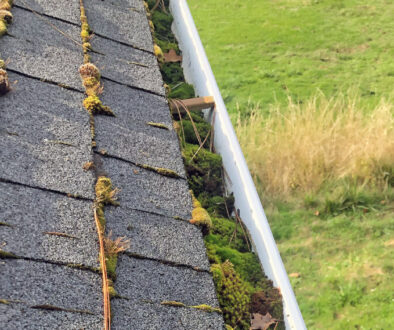
- Pine needles can accumulate on top
- Fine ash can still settle and create a film
- Requires occasional brushing or rinsing
In many Southern Oregon neighborhoods, this is one of the better-performing options — but it is not maintenance-free.
2) Reverse Curve (Surface Tension) Systems
These rely on water adhering to a curved surface while debris falls off the edge.
Pros:
- Good at shedding larger debris
- Durable construction
Cons:
- Can overflow during intense rainfall
- Heavy oak leaves sometimes stick
- Installation precision matters greatly
In heavy rain events — which Southern Oregon sees in fall — overflow can still happen if debris builds along the edge.
These systems depend heavily on precise installation angle and roof pitch. If improperly aligned, water can overshoot the curve during high-volume rain — something Southern Oregon sees during early winter storm cycles.
Under a heavy oak canopy, leaves can also cling to the curved lip rather than sliding off cleanly.
3) Foam Inserts
These sit inside the gutter and allow water to pass through porous material.
Pros:
- Inexpensive
- Easy to install
Cons:
- Trap fine debris
- Deteriorate faster in ash-heavy environments
- Often needs replacement
In this region, foam systems tend to clog faster than homeowners expect.
Do Gutter Guards Eliminate Cleaning?
Short answer: no.
More accurate answer: they shift the maintenance — they don’t erase it.
They reduce the amount of debris that enters the trough — but they do not eliminate:
- Surface buildup
- Downspout clogs
- Fine sediment accumulation
- Inspection needs
Even with guards installed, most Southern Oregon homes still benefit from at least one inspection per year, especially before fall rains.
If you want a realistic schedule (by tree cover), see how often to clean gutters in Southern Oregon.
How to Tell If Your Gutter Guards Are Failing
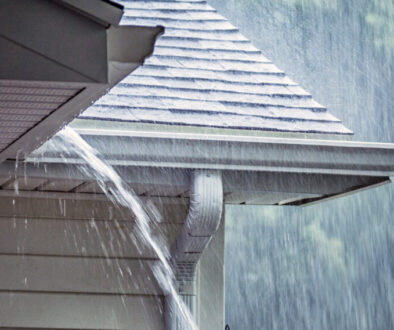
Even good guard systems can underperform if debris builds up on top, seams open, or water is overshooting the edge. A quick check during light rain can tell you a lot.
- Water sheeting over the front edge instead of entering the gutter
- Drip lines or staining on fascia or siding beneath the gutter run
- Overflow at valleys where roof runoff concentrates
- Downspouts that “burp” or back up during moderate rain
- Debris dams (especially pine needles) sitting on top of the guard surface
If you notice any of these, it usually means the guard needs cleaning, the pitch is off, or the system is allowing debris to collect in the wrong place — not that your home “needs bigger gutters.”
When Gutter Guards Make Sense
Guards tend to make more sense when:
- You have heavy pine needle exposure
- Your roofline is steep or difficult to access
- You want to reduce (not eliminate) maintenance frequency
- You plan to stay in the home long-term
They’re less impactful for homes with minimal nearby trees.
Either way, pairing guards with a simple fall routine helps — here’s a Southern Oregon fall gutter maintenance checklist you can follow.
When Gutter Guards Can Cause Problems
Improper installation can:
- Void roof warranties
- Create hidden water intrusion at the fascia
- Trap moisture against shingles
- Reduce gutter capacity during storms
That’s why installation quality matters as much as product selection.
Cost Considerations
Gutter guards add upfront cost — sometimes significant cost — but can reduce cleaning frequency over time.
Installation pricing varies based on:
- Linear footage
- Roof pitch
- Guard material quality
- Whether existing gutters need adjustment
It’s also important to factor in long-term maintenance. Some systems reduce cleaning from 2–3 times per year to once per year. Others mainly reduce debris volume but not frequency.
Before investing, compare the guard cost against your current cleaning frequency. Our breakdown of what impacts gutter cleaning prices in Southern Oregon can help you run that math realistically.
The Southern Oregon Reality
The performance question isn’t “Do gutter guards work?”
It’s “Do they work under Southern Oregon tree conditions?”
In this climate:
- Heavy oak canopy = still needs cleaning
- Pine needles = surface buildup is common
- Wildfire ash = fine sediment is inevitable
The right expectation isn’t “never clean again.”
It’s “less debris inside, easier maintenance overall.”
Simple Rule of Thumb
If you install gutter guards in Southern Oregon:
- Plan for annual inspection
- Expect reduced (not eliminated) cleaning
- Choose products that handle fine debris
- Ensure proper installation
Guards are a tool — not a permanent solution.
Field Guide Note
Gutter guards can absolutely reduce debris buildup in Southern Oregon — especially under heavy pine or mixed canopy. But they’re not “set it and forget it.”
The win is reduced maintenance and easier inspections, not zero maintenance.
FAQs
-
They can be, especially under heavy pine or oak exposure. But they reduce maintenance — they don’t eliminate it.
-
Micro-mesh systems tend to perform better under mixed debris conditions, but installation quality is critical.
-
They reduce needle entry, but needles can still accumulate on top of the guard surface.
-
Not always. Fine sediment and compacted debris can still cause blockages.
-
Yes. Annual inspection and occasional cleaning are still recommended.