Catch Basins & Area Drains (and Where They Work Best Around Southern Oregon Homes)
Key Takeaways
- Catch basins work best for surface pooling in low spots — not for fixing roof runoff dumped at the foundation.
- The most common failure is simple: no real outlet (the drain collects water but can’t move it away).
- Area drains need slope + cleanable piping to stay reliable through debris season.
- Fixes work best in order: roof runoff → downspout discharge → grading → then drains.
- If you’re seeing recurring saturation near the home, start with the full system view (roof runoff, discharge, grading, and soil patterns) before you add drains.
Pooling water usually isn’t a “mystery problem.” It’s water following the easiest path — and finding the lowest spot.
If you want the full “start-to-finish” way to diagnose it, this Drainage & Water Control in Southern Oregon guide lays out the order I use in the field—roof runoff first, then discharge, then grading, then drains.
From an inspector’s point of view, catch basins and area drains are great tools when the issue is surface water that collects in predictable locations. The key is making sure the drain has slope, capacity, and a legitimate discharge path—otherwise you’ve basically installed a grate over a recurring puddle.
Why Catch Basins Get Recommended So Often
Catch basins get recommended because they’re visible, straightforward, and they feel like an instant solution: “Put a drain where the water is.”
That can work — if the water is pooling on the surface and you’re intercepting it at the right point. But if the real issue is roof runoff dumping in the wrong place or a slope that pushes water toward the home, a catch basin can become a band-aid.
What Catch Basins & Area Drains Actually Do
Think of them as collection points.
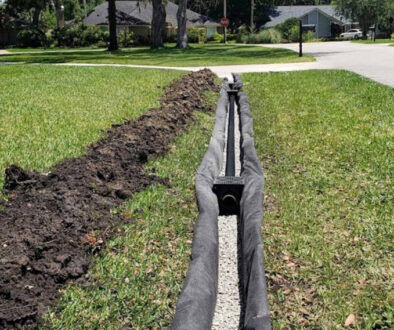
- A catch basin collects water at the surface and routes it into piping.
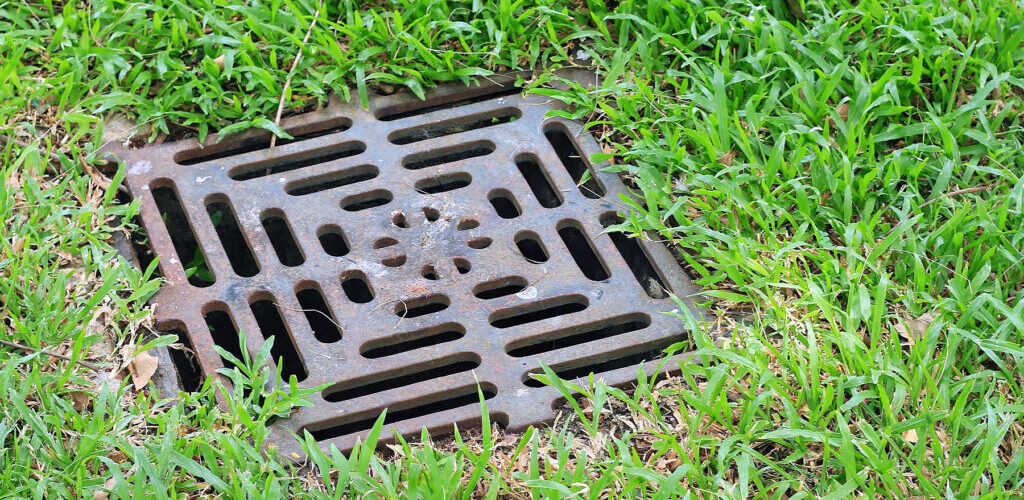
- An area drain (often a flat grate) collects surface water and sends it into the same kind of drain line.
Neither one “solves drainage” on its own — they’re only as good as the pipe run, slope, and discharge location.
Where Catch Basins Work Best Around Homes
These are the “best case” installs—where drains tend to stay reliable because the low point is obvious and the outlet is real.
1) Low Spots That Always Pond After Rain
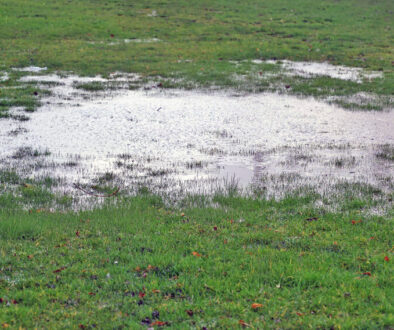
If a specific spot holds water after every storm—same location, same pattern—that’s usually a good catch basin candidate.
You’ll usually see:
- Water collecting in a shallow bowl
- Saturated turf that never fully dries in winter
- Muddy footprints in one repeat zone
2) Bottom of Stair Landings, Walkways, and Patio Edges
Hardscapes often settle or get built with a subtle inward pitch. Water hits the slab and runs to the lowest edge — then sits there.
A catch basin works well if it’s placed at the true low point, and the drain line can run with continuous fall to an outlet.
3) Driveways That Funnel Water Into Garages
This is one of the most practical uses of a trench drain or area drain: intercepting surface flow before it hits the garage threshold.
The win here is simple: you’re stopping the water before it becomes a garage, slab, or interior issue.
4) Downhill Yard Collection Points (When You Can Discharge Lower)
If the property has a natural low area that drains away from the home, a catch basin can act like a controlled “collection + exit” system.
The critical piece: the discharge needs to be lower than the basin and stable enough not to erode.
Where Catch Basins Don’t Help (or Aren’t the Right First Fix)
This is where people spend money and still end up with wet soil or splash marks.
1) Downspouts Dumping Near the Foundation
If roof runoff ends at the footing, a catch basin is often used to treat the symptom. The simpler fix is usually moving the discharge first.
If you want a clean reference for what “good” looks like, start with downspout drainage in Southern Oregon — it’s often the simplest fix before adding anything underground.
2) Gutter Overflow (Water Isn’t Staying in the System)
If gutters are overflowing, the water is landing where it shouldn’t — and you’ll chase it forever with drains until the roof edge problem is fixed.
If you’re trying to pinpoint where roof water is actually exiting, use this damage-pattern guide once: gutter overflow damage (fascia rot vs. siding stains vs. foundation splash).
3) Inward Pitch or Bad Grading Pushing Water Toward the House
If the yard or hardscape pitches toward the foundation, drains can help — but grading is often the main fix.
If you’re deciding whether this is mainly slope or roof runoff, this quick diagnostic usually makes it obvious: grading problem or gutter problem?
4) No Real Outlet Exists
This is the biggest silent failure: the basin collects water… but the pipe has nowhere to discharge.
When that happens, you don’t get “drainage.” You get a buried container that fills, slows down, and eventually backs up.
What to Check Before You Install One
Before you dig, I like to confirm a few basics that prevent most “we installed a drain, but it still puddles” outcomes — because nearly every failure I see traces back to placement, slope, or discharge.
Step 1: Confirm You’re Dealing With Surface Water
Catch basins are best for surface pooling. If the ground is soggy for days with no visible pooling, you may be dealing with subsurface seepage (different solution).
Step 2: Find the True Low Point
A basin placed near the low point can still fail. The water will always choose the lowest spot — and ignore your drain if it’s 12 inches higher.
Step 3: Confirm Continuous Slope in the Pipe Run
A pipe that bellies (holds) water. Water that sits in a pipe holds sediment. Sediment becomes a clog.
Step 4: Verify the Outlet Won’t Cause Another Problem
Discharge should go somewhere:
- Lower than the basin
- Stable (won’t erode)
- Not toward a neighbor or property line conflict
- Not into an area that becomes saturated and backs up
Common Reasons Catch Basins Fail
Most failures come down to predictable issues:
- No slope (or sections that belly)
- No real outlet (the system collects but can’t discharge)
- Undersized or poorly placed basin (not at the low point, can’t keep up in downpours)
- Sediment/debris buildup (no maintenance plan)
- Tying roof water in without debris control (roof grit + needles + sediment = fast clogging)
Fixes in the Right Order (Lowest Cost to Highest)
- Make sure gutters handle roof water (flow + no overflow)
- Fix downspout discharge direction and distance
- Correct obvious grading/hardscape pitch issues
- Add catch basins/area drains at confirmed low points
- Only then consider more invasive trenching or pumped systems
When It’s a Red Flag
- Water persists against the foundation long after storms
- You see erosion undermining hardscape edges
- Crawlspace smells musty even after exterior corrections
- You can’t identify where the drain outlet would go without risk
- Water is entering the garage or interior repeatedly
When to Call a Pro
Bring in help when:
- You need grading + drainage planned together
- You’re near foundations, retaining walls, or slabs that could be undermined
- The system may require a pump or complex routing
- You want documentation for recurring moisture issues (resale/insurance conversations)
Final Field Note
Catch basins are great when they’re used for what they’re designed for: surface water that pools in predictable places. But they don’t replace roof runoff control, downspout discharge, or basic slope. Follow the water during the next heavy rain — the path tells you what fix comes first.
FAQs
-
They can, but clay drains slowly and holds water. The basin will collect surface water — but the system still needs slope and a real outlet to avoid slow draining and backups.
-
Deep enough to trap sediment and keep water moving into the outlet pipe. There’s no single depth that fits every yard — what matters more is placement at the low point and a cleanable outlet line.
-
Sometimes, but roof runoff often brings grit and debris. If you tie in roof water, plan for filtration and cleanouts — and make sure the gutter system is actually performing first.
-
They can be fine when installed correctly, but they still need slope and they can clog. Daylight discharge is simple and visible (which makes problems easier to spot).
-
If water is flowing across the surface toward the home, grading or hardscape pitch is usually the primary fix. Drains are best for low-point pooling when the slope can’t be corrected easily.