Can Clogged Gutters Attract Pests in Southern Oregon?
Key Takeaways
- Clogged gutters create standing water + wet debris, which can attract insects and nesting pests.
- Mosquitoes are the biggest “water” risk; rodents and birds show up when debris becomes shelter.
- Overflow can soak fascia and siding, creating moist wood that invites ants and other insects.
- The most important checkpoint isn’t the gutter run — it’s the outlet/downspout, where clogs start.
- A simple two-pass fall routine prevents most pest-friendly gutter conditions.
The Short Answer
Yes — clogged gutters can attract pests. The gutter itself isn’t the “bait.” The problem is what clogs create: wet organic debris, standing water, and sheltered pockets that pests use for breeding or nesting.
In Southern Oregon, that risk spikes in fall because dry-season buildup compacts, then the first real storms create persistent wet zones.
Fall is when this gets real in Southern Oregon — dry debris compacts all summer, then the first storms create the standing-water pockets pests love. For a repeatable seasonal rhythm that prevents most of this, use our Southern Oregon fall gutter maintenance checklist.
Why Clogged Gutters Are Pest-Friendly
Clogged gutters turn into a mini-habitat:
- Wet leaves + needles = nesting material and cover
- Standing water = breeding and drinking source
- Overflow + constant moisture = insects that prefer damp wood and shaded edges
Even if you don’t see pests in the gutter, the conditions can pull them toward the roofline, eaves, attic vents, or crawlspace zones.
If you’re trying to eliminate pests, the goal isn’t just “cleaner gutters” — it’s removing the moisture pattern that keeps coming back. A quick way to spot those patterns is to learn the signs your gutters are failing, because repeat overflow and standing water almost always point to a specific choke point.”
The Most Common Pests Linked to Clogged Gutters
Mosquitoes (Standing Water)
If water sits in a gutter channel, mosquitoes can use it. The risk rises when:
- the gutter holds water in a low spot (pitch issue)
- the downspout outlet is partially blocked
- debris creates a dam that traps water after each rain
Good rule: If water remains more than a day or two after rainfall, treat it as a real warning sign.
Ants and Other Insects (Moisture + Decay)
Wet fascia, damp roof edges, and overflow zones can attract:
- ants (especially where moisture softens wood)
- wasps (sheltered eaves)
- spiders and other insects that follow the food chain
Even if the gutter isn’t “full,” a partially clogged outlet can cause overflow that keeps wood damp and encourages insect activity near the roofline.
Rodents (Shelter + Access)
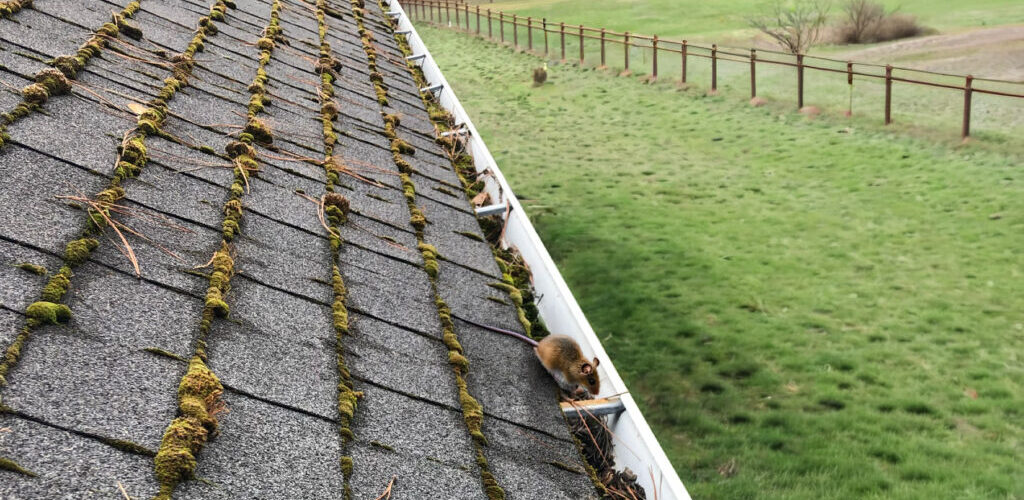
Rodents don’t usually live in the gutter long-term, but clogged gutters can:
- provide cover along the eaves
- support nesting in nearby roofline areas
- create easier access to attic entry points (gaps, vents, roof edges)
If you notice scratching, droppings near downspouts, or activity along the eaves, don’t ignore the moisture source.
Birds (Nesting Material + Ledges)
Birds may use clogged sections as:
- a staging ledge
- a source of nesting material
- a protected pocket near corners and roof transitions
Once birds start nesting near the roofline, you can end up with additional mess, blockage, and damage in the same areas.
Signs Your Gutters Are Attracting Pests
Look for these common signals:
- Buzzing/biting insects near one roof corner after rain
- Overflow streaks or dark staining below a specific section
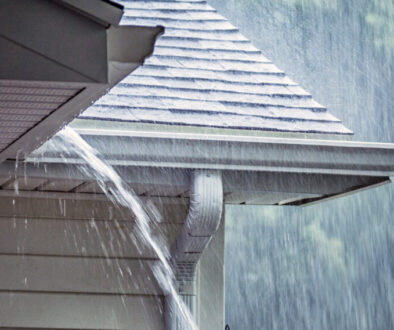
- Standing water visible from the ground (or dripping long after storms)
- Nesting material (twigs, moss clumps, leaf mats) at corners/outlets
- Activity near downspouts (insects, droppings, disturbed debris)
If the same corner keeps showing these signs even after cleaning, the issue may be pitch, sagging, or outlet geometry — not just debris.
When the same corner keeps showing activity, it’s usually because water isn’t exiting cleanly — not because the whole gutter run is “dirty.” Start by checking downspouts and drainage so you can confirm where water is actually discharging and whether it’s pooling near the home.
Why Downspouts Matter More Than the Gutter Run
Most “clogged gutter” problems are really downspout outlet problems.
A gutter can look mostly clear but still overflow if:
- the outlet is packed with needles/grit
- the elbow is restricted
- the downspout line has a buildup or a pinch point
When water can’t exit freely, it backs up — and backed-up water is what creates pest-friendly conditions.
The Fix: A Simple, Repeatable Routine
Before you start scooping anything out, zoom in on the areas that fail first. Most gutter “clogs” in Southern Oregon aren’t spread evenly — they build up in corners, low spots, and right at the outlet where water has to funnel into the downspout. That’s why the first step is less about cleaning everything and more about clearing the choke points that trap wet debris and hold water.
Step 1: Clear Wet Debris (Focus on Corners + Outlets)
Start where clogs form first:
- corners
- low spots
- the first 2–3 feet around downspout outlets
Remove wet leaf mats and needle buildup completely (that’s the nesting/breeding base layer).
Step 2: Confirm Flow
Run a hose briefly and confirm water exits fast and clean at the discharge point.
If water backs up, you likely need to clear:
- the outlet opening
- the elbow
- the downspout run
If flow still looks weak after clearing obvious debris, don’t keep repeating the same cleanout — that’s how problems linger for weeks. Use do your gutters need cleaning or repair to quickly tell whether you’re dealing with a clog you can clear, or a pitch/hanger/seam issue that needs adjustment.
Step 3: Watch During Rain (Best Diagnostic)
During moderate rain, do a quick walk:
- Are any corners dumping?
- Is water running behind the gutter?
- Is one downspout weak compared to others?
That 5-minute check prevents most “mystery moisture” that pests take advantage of.
Most homeowners don’t need a complicated system — they need a reliable schedule that prevents the “wet debris + standing water” combo from returning. If you want a simple cadence you can repeat every year, our gutter maintenance plan for Southern Oregon lays out when to check, what to prioritize, and how to stay ahead of fall compaction.
When It’s Not Just Cleaning
If you clean the gutters and still see:
- standing water
- the same corner overflowing
- persistent staining
- sagging or seam dripping
…you’re likely dealing with a repair or adjustment issue (pitch, hangers, seams, outlet position). Fixing the structure is what removes the “standing water habitat” permanently.
FAQs
-
Yes. If clogged gutters hold standing water, mosquitoes may use it as a breeding site. The key risk is water that sits after rain.
-
They can. Wet debris and sheltered roofline zones can encourage nesting nearby, and clogged sections can increase moisture and cover along eaves.
-
Often it helps quickly by removing wet debris and standing water. If water still sits after cleaning, the underlying issue may be pitch, sagging, or a blocked outlet.
-
Standing water and repeat overflow in the same spot. Those usually mean drainage is restricted and moisture is lingering where pests prefer.
-
Many homes do well with a fall routine (pre-storm + mid–leaf drop re-check) and quick checks after major wind events, especially in tree-heavy areas.