Basement and Crawlspace Moisture: Is It Runoff, Groundwater, or Plumbing?
Key Takeaways
Moisture source matters more than the symptom. The same puddle can be runoff, seepage, plumbing, or condensation.
Start with the easiest “yes/no” checks: timing, location, smell, and whether it happens only during rain.
Most crawlspace moisture starts outside (roof runoff + grading), not below the slab.
Groundwater/seepage problems are pattern-based (wet band, uphill side, long rainy periods).
Plumbing leaks behave differently (independent of weather, often constant, sometimes warm water).
Don’t start with a solution. Start with the source. Here are 7 steps to pinpoint what’s feeding the moisture, so you can fix the right problem the first time.
Why This Checklist Exists
Basement and crawlspace moisture gets misdiagnosed all the time.
In the field, a lot of homeowners get pitched expensive drainage work when the real issue is roof discharge, grading, or a simple plumbing leak.
This guide is a source test—a quick way to determine which bucket you’re in:
- Runoff (roof + surface water)
- Groundwater / seepage (subsurface movement)
- Plumbing (pressurized supply or drain leak)
- Condensation / humidity (air + temperature, not “water intrusion”)
If you already suspect gutters/downspouts are involved, this deeper breakdown is your next step: Crawlspace Moisture and Gutters/Downspouts in Southern Oregon
Step 1: Does it Happen Only When it Rains?
Start with timing, because moisture that tracks storms behaves very differently than moisture that shows up in dry weather. If the wetness appears during rain (or right after), you’re usually looking at runoff or seepage—while moisture that persists regardless of weather is more likely plumbing, condensation, or a constant source.
If it Only Shows Up During Rain (or Right After)
You’re usually looking at:
- Roof runoff
- Surface runoff
- Seepage / lateral flow (especially after long storms)
If it Happens Even in Dry Weather
That leans toward:
- Plumbing leak
- Condensation / humidity
- Irrigation leak (seasonal, but not rain-driven)
Field tell: If you can reproduce the moisture on a dry week, it’s rarely “groundwater.”
Step 2: Where is the Moisture Showing Up?
Once you know when it happens, focus on where it shows up first—not where it ends up. Moisture patterns tend to repeat in the same zones, and the first location you find it is often the closest clue to the source (roof corners, uphill walls, plumbing runs, or a low-point collecting everything).
Perimeter Walls or One Specific Corner
Common causes:
- Downspout discharge near that corner
- Splash-out/overflow during storms
- Negative grade (soil slopes toward the foundation)
This is where roof water control is the first lever. If you want the full gutter/downspout checklist, start here: Crawlspace Moisture in Southern Oregon (and How Gutters & Downspouts Trigger It).
A Wet Band Along the Uphill Side
That pattern is classic:
- Hillside seepage
- Perched water
- Lateral flow toward the foundation
If the wet band appears after long rains and returns in the same strip, think subsurface movement, not surface puddling.
Middle of the Crawlspace or Under the Vapor Barrier
This often points to:
- High humidity / condensation
- Missing or damaged vapor barrier
- Standing water traveling to the low point
- Plumbing leak (if localized)
Step 3: What Does the Water “Look and Smell” Like?
Now shift from location to characteristics, because not all “water” is the same in a crawlspace or basement. Clear water after a storm points one direction, while staining, odor, warmth, or persistent dampness points another—and those details can save you from chasing drainage work for a plumbing problem (or vice versa).
Clear Water With No Odor
Often:
- Rain-driven runoff
- Groundwater seepage
- Condensation drip
Musty Odor and Damp Wood
Often:
- Long-term humidity / ventilation issues
- Chronic runoff (repeated wetting)
- Slow seepage
Sewage Smell, Gray Water, or Staining
Often:
- Drain line leak
- Failed wax ring (bathroom above)
- Septic-related issues
Warm Water or Continuous Drip
Often:
- Pressurized supply leak
- Water heater line issue
Field move: If you suspect plumbing, shut off all fixtures and watch your water meter. Movement can indicate a leak.
Step 4: Runoff Check (Most Common)
Before you assume groundwater, rule out runoff—because it’s the most common driver and the cheapest to correct when caught early. Roof discharge, overflow, and splash-back can saturate perimeter soil fast, and once that soil stays wet long enough, the crawlspace starts acting like the symptom instead of the source.
Roof Runoff and Downspouts
Check during rain:
- Are gutters overflowing at one section?
- Are downspouts dumping at the foundation?
- Are buried downspout lines backing up?
If one corner is always the wettest, roof discharge is often the reason.
Surface Runoff and Grade
Even with perfect gutters, surface water can still run toward the house if:
- Soil slopes toward the foundation
- Hardscape funnels water (walkways, patios)
- Neighboring water crosses the property line
A lot of “basement leaks” are simply water being directed at the house.
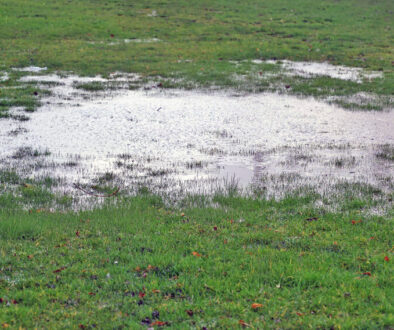
If you’re trying to separate a true grading problem from roof discharge, use this quick checklist: Standing Water in Yard After Rain: 5-Step Diagnosis Checklist.
Step 5: Groundwater and Seepage Check
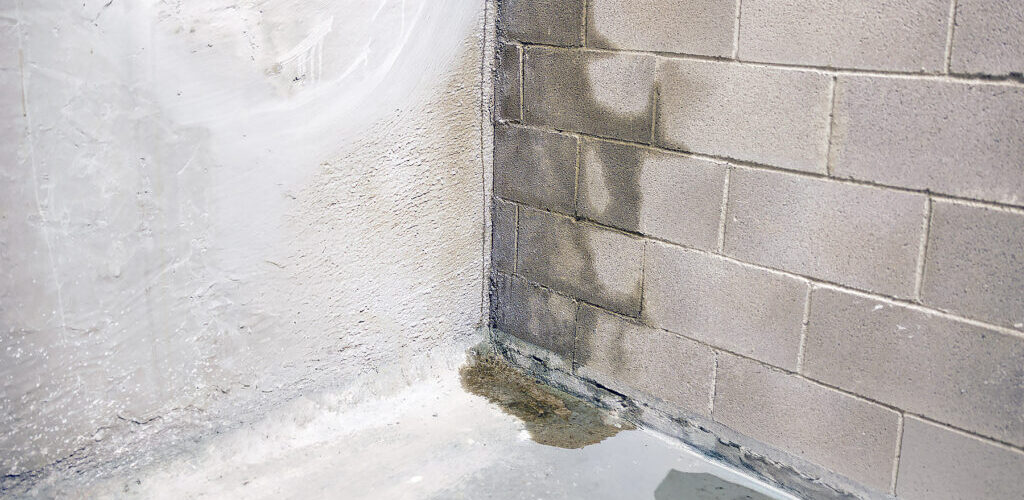
If runoff checks out but moisture still builds after long rainy stretches, start thinking in terms of subsurface movement. Seepage usually leaves a repeatable footprint—often on the uphill side, near retaining walls, or as a damp band that comes back season after season—especially in clay or poor infiltration soils.
- Worse after long rainy periods
- Concentrated on the uphill side
- Associated with retaining walls or hillside lots
- Slow to dry out
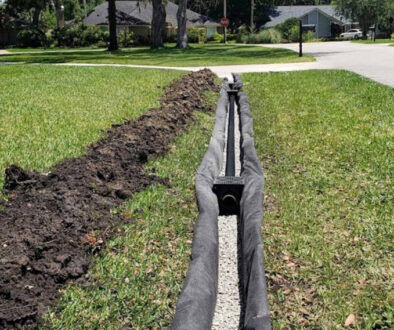
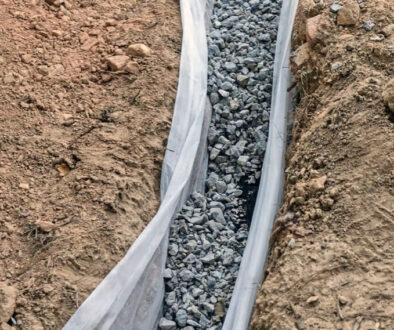
When French Drains Actually Help
A French drain is most useful when it:
- Intercepts water moving through the soil
- Is placed uphill of the wet zone
- Has a real discharge plan (daylight, proper dry well, or approved system)
If your site is clay-heavy, this matters even more: Do French Drains Work in Clay Soil and Poor Infiltration Areas?
And if the proposed outlet is a dry well: Dry Wells in Southern Oregon: When They Work and When They Don’t
Step 6: Plumbing and Irrigation Check
Plumbing is the bucket you want to eliminate early, because it can mimic “foundation moisture” while continuing to feed water even when the weather is dry. The key difference is consistency: leaks follow fixtures, pressure, and drains—not storms—so if moisture shows up on clear weeks or stays active between rains, plumbing (or irrigation) moves to the top of the list.
Signs It’s Plumbing (Not Drainage)
- Moisture appears in dry weather
- The wet area is localized (one spot)
- Water is warm or continuous
- There’s staining or odor
- You see active dripping from a line, fitting, or trap
If you can’t confirm the source quickly, plumbing is one of the few cases where it’s worth calling early—because constant leaks don’t wait for the next storm.
Step 7: Condensation and Crawlspace Humidity Check
Finally, confirm whether you’re dealing with water entry or a humidity problem, because condensation can create wet surfaces without any leak at all. When damp air meets cooler ducts, pipes, or framing, it can look like “intrusion,” but the fix is usually air sealing, vapor control, and humidity management—not trenching.
Common drivers:
- Missing/failed vapor barrier
- Venting strategy mismatched to the season
- Duct leaks (cool air + warm humid air)
- Low airflow + cold surfaces
Quick Condensation Clues
- Water droplets on ductwork or insulation
- Even dampness over a wide area
- Worse during temperature swings (not just storms)
- Musty smell without obvious water entry
Quick Takeaway
If you want the fastest diagnosis, answer these three questions:
- Does it happen only when it rains?
- Is the wettest area at the perimeter/corner, or the uphill side?
- Can you identify a discharge path (where water should go)?
Once those are clear, your fix becomes a lot more obvious—and usually cheaper.
When to Call a Pro
Call for help when:
- Moisture is near the foundation, sill plate, or framing
- You see signs of mold, rot, or a persistent odor
- The lot is hillside, and seepage patterns repeat
- You’re considering drainage work without a clear discharge plan
- You suspect plumbing, but can’t confirm it quickly
Final Field Note
The biggest mistake isn’t “not enough drainage.”
It’s treating moisture like one problem.
Basement and crawlspace moisture is a category—runoff, seepage, plumbing, or humidity—and each one has a different fix.
FAQs
-
That usually points to roof runoff, surface runoff, or seepage. Start by checking downspouts, grading, and whether water is feeding the wet area during storms.
-
Runoff issues tend to show up fast during rain and often trace back to a corner/downspout or surface flow path. Groundwater/seepage shows up after long rains and often forms a wet band on the uphill side.
-
Yes. Plumbing leaks can keep areas damp even in dry weather and may create localized wet spots, staining, odor, or continuous dripping.
-
Only if the moisture source is seepage/lateral flow and you have a real discharge plan. French drains are less effective when the issue is roof discharge, poor grading, or high humidity.
-
Start with the simplest, highest-payoff steps: correct roof runoff and downspout discharge, confirm grade slopes away from the home, then evaluate seepage vs humidity.